What is SDLC (Software Development Life Cycle)?

All industries have undergone a digital transition. Whether you are creating software or any digital product to run your business operations or selling it directly to clients, your company needs to establish trust in it while maintaining the speed and agility necessary to remain competitive in your industry.

And in the era where we all are always demanded to deliver more than our expectations, SDLC (Software Development Life Cycle) is the way to accomplish more than one can imagine. Keep reading on and learn more about SDLC, how it benefits and what are the popular practices.

Table of Content

What is the SDLC?

Benefits of SDLC

SDLC Stages

SDLC Methodologies

At the end

What is the Software Development Life Cycle?

The software development life cycle aka Application development life cycle is an amalgamation of standard business practices for developing software applications. Typically, the whole cycle consists of six to eight stages, including Planning, Requirements, Design, Building, Document, Test, Deploy, and Maintain. Depending on the size and complexity of the project, a leading web app development company will combine, divide, or eliminate steps. A software development initiative must include these fundamental elements.

The SDLC is a tool for tracking and enhancing the development process. It enables a detailed examination of every stage of the procedure and promotes efficiency at all stages. As the demand for software and developers rises and processing capacity increases exponentially, Software must be provided more quickly with lowered costs. In addition, the expectations of clients must be kept or surpassed. And that’s where SDLC comes in to aid the accomplishment of these objectives through the detection and correction of inefficiencies.

How the Software Development Life Cycle works

Simply put, the Software Development Life Cycle is a list of all the stages required to build a software program. It minimizes wastage and enables maximum efficiency in the development process. Additionally, regular monitoring and evaluation assure that the project runs smoothly and that the investment is worthwhile.

Many firms will divide these steps into easier-to-manage chunks. Three different sorts of planning are possible: a cost-benefit analysis, marketing research, and technology research. Other activities might interact with one another. The testing and development phases can coexist as developers are responsible for fixing errors that arise during testing.

Here are a few of the main benefits of a secure SDLC strategy

  • It is safer to use your program.
  • Every stakeholder is aware of the security issues.
  • Early design flaw detection prevents them from being coded into existence.
  • Due to the early discovery and correction of problems, you lower your costs.
  • Lowers the organization’s overall underlying business risks.

Stages of Software Development Life Cycle

What is Software Development Life Cycle? (SDLC)

Define Requirements

This phase is where the team collects information and defines current challenges, requirements, and customers’ expectations related to particular app development. The activities included in this stage are: drawing up a detailed plan, documenting the project, and selecting the right resources. By doing so, the team can map directions and gather necessary insights to deliver tech solutions. 

Design and Prototyping

The team decides on the architecture and design of the software solution during this phase of the project. This encompasses developing design documentation and coding standards and researching the frameworks, runtimes, tools, or techniques that will assist the team in fulfilling the priorities outlined in the requirements collecting phase.

Prototyping is also a part of this stage. As part of a methodically organized software development approach, a prototype is equivalent to the initial form of any digital product. It gives a practical sense of how the application seems and operates. Stakeholders can see this as a ” more concrete ” solution. Developers and designers can utilize suggestions to enhance the application. Prototyping changes are less expensive to implement than rewriting existing code to apply changes in the development phase.

Software Development

This is the phase where implementation begins. On feature development and coding tasks, several independent teams and individuals work together. Within the development environment, developers create their codebases before merging them with the codebases of other cooperating teams.

The feedback from the development teams is examined for potential changes in the design strategies even when the requirements analysis and design choices have already been established.

Software testing and deployment, the most significant step in the SDLC pipeline, are supported by this step.

Testing

Now comes one of the crucial steps to check the performance of the software: Testing

The following steps are undertaken during this phase:

Find and name potential problems that need fixing or addressing.

Developing a test plan is based on predetermined software requirements. The test strategy is laid out by:

  • Determining the available testing resources.
  • Giving testers directives and assignments.
  • choosing the tests that will be run
  • Choosing what data to provide to technical executives and decision-makers.

To enhance test results, testers frequently collaborate with development teams and update the codebase.

Before moving on to the latter stages of deploying and distributing the product, teams frequently repeat the development and testing phases multiple times.

Deployment

Deployment can be difficult as well. One instance can be switching from a previously designed application to a company-wide database. The database uses many other systems, so integrating the upgrade might require additional time and effort.

The software is installed into a working environment during this phase of the project. The software service’s customers and users get access to the work that has been gathered, designed, built, and tested. This procedure entails establishing a software deployment strategy for delivering the modifications to a customer as well as providing infrastructure within an on-premises or cloud provider.

Maintenance

The application is operationalized during this stage of the project to make sure there are no problems or events connected to the deployment. Analyzing, comprehending, and keeping an eye on the configuration of the network, the infrastructure, and the functionality of the services in use are all possible tasks at this point in the project. In the case of any problems or modifications that may have an impact on a customer or user base, this process involves incident management or resolution.

SDLC Methodologies

In conventional SDLC approaches like Waterfall, the phases mentioned above are completed sequentially and independently by various teams. These phases are carried out using the Agile methodology in quick, dynamic, progressive deployments.

Waterfall

The traditional approach to development is the Waterfall SDLC model. The project continues into the following stage once each phase is finished. This model has been tried and proven, and it is effective. The Waterfall methodology has the benefit of allowing you to assess the efficacy and consistency of each process before moving on. Nevertheless, because one stage must end before the next can begin, its speed is constrained.

Agile

Developers created the AGILE model to prioritize the needs of the client. This approach places a lot of emphasis on user intervention and engagement. This fixes a lot of the issues with earlier software that was complicated to use. Additionally, it greatly improves the software’s responsiveness to user feedback. Agile aims to swiftly release software cycles to adapt to a shifting market. A capable staff with great communication skills is necessary for this. By relying too much on client feedback, it might also result in a project deviating from its original course.

DevOps

The operations, or the users of the program, are integrated into the development cycle by the DevOps security paradigm. This aims to increase the usefulness and relevance of apps, much like Agile. The input from actual software users on the design and implementation processes is a key benefit of this methodology. Its requirement for active cooperation and communication is one downside. Parts of the development process can be automated to reduce those extra expenditures. According to Zippia, 71% of U.S. companies are using Agile over DevOps.

Conclusion

DevOps and Agile SDLC frameworks encourage cross-functional teams to collaborate across these phases. For example, the DevOps model promotes collaboration between Developers and QA engineers for ongoing development, testing, and deployment tasks. To find software flaws before it’s too late to correct them, the testing process is also moved left and early in the SDLC pipeline. Domain experts, architects, systems developers, engineers, and leaders all have a stake in delivering high-quality software. If you’d like to deliver digital products with genuine value, then contact us to disrupt the market.

Trending App Ideas for 2023 That Haven’t Been Made Yet

The top mobile app concepts for 2022 are already in use, and they have been seized by corporations, business leaders, and other IT companies.

Even yet, it is not hard to come up with an app idea that is original to the market. You can develop something groundbreaking with thorough analysis and in-depth market understanding.

The next stage after defining your app idea would be to turn it into a lucrative million-dollar app, which can be as demanding. And that is where it is ideal to get help from a web and mobile app development company with experts who can turn your creative app idea into a fully functional reality.

Now that you know what you will need to bring something innovative to the market let us begin browsing the mobile app ideas we have compiled for you after thorough research. And even if some of the app ideas you are about to consider are currently on the market, we think that for them to grow as quickly as possible, tech and experience integration is still necessary.

Now, with that said and done – let’s get your mind buzzing with ideas.

Augmented Reality 

Without a doubt, everyone’s interest in augmented reality was sparked by the game Pokémon Go. Following the game’s release, numerous industries began investigating this technology. There are several instances of successful execution, including products like IKEA Place, Amazon AR View, and many others.

Moreover, we advise adding AR capabilities to established apps that assist users with their regular duties if you want to create something innovative. Since AR games are currently available on the market, it is simple to determine what is making them so successful.

Virtual Reality

With the help of a VR headset, this technology offers a completely new way to explore and experience the digital world at 360 degrees. You can also engage with the virtual environment that VR has built. And since the technology is viewed as a game-changing move towards the future by many tech executives worldwide, utilizing it to develop an app that addresses a particular issue or simply serves to amuse users will undoubtedly be a successful app idea.

Additionally, a virtual world walkthrough is fascinating, will undoubtedly result in multiple discoveries, and will transform intricate theories and extensive study into simple simulations. Also, prominent VR applications include 3D games and 3D films.

Artificial Intelligence

Cross-platform software development has been heavily influenced by artificial intelligence (AI).

According to reports, technology will continue to develop its capacity for consumer engagement and implement AI models efficiently and effectively. Let’s look at some of the most profitable AI developments for 2023 in the fiercely competitive tech sector.

  • Predictive analytics advancement
  • Extensive language models
  • Introduction of more advanced autonomous systems Information security (InfoSec)

To provide customers with a better user experience, businesses are incorporating this technology into their apps.

Cybersecurity

The technological technique of defending computer systems, networks, servers, applications, and digital devices against hostile intrusions is known as cybersecurity. It covers operational security, application security, network security, and information security.

Since the start of the COVID-19 epidemic, working remotely has become commonplace. E-commerce website usage has surged as a result of pandemic lockdowns. Collectively, these circumstances have increased the cybercriminals’ ability to compromise computer and network systems. As a result, one of the most sought-after tech expertise is cybersecurity.

Data Science and Big Data

Our everyday electronics are evolving, becoming more complex, and generating enormous amounts of data daily. Organizations collaborate with data scientists to commercialize this data, but they also require business intelligence analysts that can handle big data in a distributed architecture.

Edge Computing

Edge computing has skyrocketed in popularity in the software business thanks to its fantastic data management features and application of cutting-edge technologies. It is anticipated that the market for edge computing will grow by about 28% by 2023.

Do you understand the root of this trend? What leads experts to predict that edge computing will increase so quickly? This is because it is being used to enhance cloud computing, a rapidly developing and widely used technology.

What distinguishes edge computing from cloud computing? When connectivity to a central site is scarce, edge computing is helpful at remote locations. It can also be used to process time-sensitive data; however, cloud computing cannot be employed for this function.

Beacon Technology

Beacons are discreet wireless devices that communicate with neighboring smart devices using low-energy Bluetooth technology. They are among the most recent advancements in proximity marketing and geolocation technology. In simplest terms, they link to smart devices and send data, facilitating and improving location-based search and engagement.

Ideas for Apps That haven’t been made yet

Financial App Ideas

A financial app that can give investment-related options and suggestions. There are plenty of options in this area in recent years. Personal and consumer finance-related issues are typically resolved via financial apps, which also automate the provision of certain banking and finance services.

Given that few business owners have essential finance-related applications in the stores, there is also a sizable market share in the Finance apps segment that can still be exploited. 

Top Examples:

  • Zerodha
  • Acorns

Edtech App Ideas

Learning is now simpler because of the internet.

To raise awareness and educate the general public, a few additional tangents and pathways must be explored.

With the use of instructional videos, exercises, and practice exams, teaching disciplines like science, art, and mathematics may be made much simpler.

However, not everyone enjoys reading or watching dull lectures, that’s why for learning to take place, online learning needs to be engaging and accessible to a variety of students.

You can also build an app for educated and working professionals for upskilling. 

Top Examples:

  • Udacity
  • Udemy
  • Coursera
  • Socratic

Health and Fitness App Ideas

health and fitness app ideas

Everyone now understands the value of at-home workouts because of the Covid-19 pandemic, and an app that facilitates such sessions can be successful.

An app that especially caters to such information cannot be overlooked, from advising exercises to controlling time.

The finest aspect is that anyone can execute the exercises and accomplish their goals without even needing a coach or trainer.

The software may assist you with any exercise you need to complete, including abs, chest, biceps, and weight loss activities. You can also build an app regarding mental health issues.

Top Examples:

  • MyFitnessPal
  • Fooducate
  • Headspace

On the side note, One trending app idea that should not be overlooked is a women’s safety app. With increasing rates of violence and harassment against women, these types of apps can provide a crucial lifeline for women in dangerous situations and help facilitate a quicker response from authorities.

eCommerce App Ideas

The whole point of shopping applications is to make it simple for customers to order, get, or pick up their selected things in real-time.

eCommerce App development is popular since it has altered how consumers purchase goods and services.

Because the eCommerce industry is so large, there are many unique concepts for shopping apps.

Amazing discounts and deals, in-app social interaction, and many more advantages come with using shopping apps. A VR-powered e-commerce app would also be an interesting idea since that technology is revolutionizing online sales and e-commerce.

Top Example:

  • eBay
  • Amazon
  • Etsy

On-Demand App Ideas

We are so habituated to things happening instantly, we all have experienced instant grocery delivery, food delivery, instant cab booking with Uber and even booking tickets for various events and travel purposes. You can build apps on various necessities like on-demand doctor appointment booking apps, food donations, or even booking tutors for a particular hobby.

Entertainment App ideas

Mobile applications offer a variety of entertainment options, from TV and movies to games and social media.

When designed with a specific purpose, a useful feature set, and a fantastic user interface, an entertainment app may captivate the audience for hours.

Entertainment applications are currently used for a variety of services as the business expands.

These activities include playing games online with friends, meeting new people online and chatting with them easily, watching movies, series, and TV shows, reading reviews, and generating amusing content like memes and videos.

Top Examples:

  • Netflix
  • Spotify
  • Clubhouse

Real-Estate App Ideas

One of the most significant commercial areas in the economy is real estate. The 21st century is going to see a technological turn in an industry that has been around for millennia and is still evolving.

Realtors, brokers, estate owners, renters, and purchasers can easily see properties, check to price, observe market trends, and with the help of VR, they can even get a virtual tour of the home they intend to purchase thanks to the real estate industry’s adoption of applications.

The VR integration would not only assist buyers in making an informed decision but also assist brokers and realtors in selling the property much more quickly than ever before.

Additionally, the target market for this industry is diverse and includes domestic homebuyers, office seekers, realtors, tenants, property owners, real estate investors, etc.

Top Examples:

  • Estate Pie
  • RedFin

Travel Industry-Related App Ideas

travel app ideas

Travel apps are less technology and more companions, and while you’re on the go, they act as your ideal traveling companion, providing you with all the information you need to not only get you where you’re going but also have a great time.

This is a very diverse market, with everything from weather apps to booking applications and more.

A travel app has a sizable market to begin with because so many people are interested in taking holidays, or at the very least, they aim to do it once a year.

Additionally, as more people throughout the world transition to remote employment, the number of digital nomads increases globally, and the market for travel apps have experienced a sharp rise.

Top Examples: 

  • Roadtripper
  • Airbnb
  • Booking.com

Follow These Steps to Pick an App Idea

  • Determine an issue
  • Find a resolution
  • Consumer research and market analysis
  • Check out the opposition
  • Make some noise
  • Implement the vogue
  • Be Creative
  • Be concise and powerful.

That’s all There Is to it

The list of some of the top mobile app concepts for 2023 is finally here.

Several factors determine the viability and sustainability of an idea as entrepreneurs and app development businesses search for newer and trendier ones to invest in.

This comprises the target market, market segmentation, demand for your product or service, and so forth.

Therefore, be sure to take into account each of these elements when looking for and selecting the greatest mobile app concept to invest in for 2023.

Additionally, pick ultroneous as your ideal app development partner and Get in Touch with us to convert your innovative mobile app idea into a commercial success.

Unleash the Power of NodeJS for Enterprise App Development

Enterprise apps are a breed apart from your average run-of-the-mill apps. They are built to tackle the big guns, like keeping a watchful eye on business operations, measuring performance, and safeguarding sensitive information. With a group of intricate components and features, developing these apps can be complicated, making it all the more urgent to have the right tools in the toolkit.

Maintaining the efficacy of these apps in today’s rapidly advancing technological landscape is no mean feat. But with the right technology, you can stay ahead of the curve. That’s where NodeJS comes into play. This cutting-edge technology empowers enterprises to build fast, agile, and secure apps, allowing them to achieve their business goals and stay ahead of the pack.

In this article, we will delve into why NodeJS is a perfect fit for enterprise development. But before we jump into the deep end, let’s better understand what NodeJS is all about.

Let’s Understand NodeJS & Its Popularity

NodeJS has taken the web development world by storm, and it’s easy to see why. This cross-platform runtime environment, powered by Chrome’s V8 engine, has made it easier to develop web apps of all shapes and sizes. With NodeJS, developers can write JavaScript code outside of the browser and benefit from its lightweight, event-driven I/O model that is non-blocking and asynchronous, enabling seamless communication between the client and server sides of a web app.

In short, NodeJS has revolutionized web development by bringing client and server-side coding under one roof. It’s no wonder its popularity has skyrocketed in the past decade, with more and more developers flocking to it and discussing it on Stack Overflow.

StackOverfolow survey showing Nodejs holding 51.4% share in 2020

In 2020, NodeJS maintained its position as the most popular technology in the “miscellaneous” category for the second year in a row, according to the Stack Overflow Survey. 

And it’s not just for the average Joe – this technology has become a staple for enterprise app development. A survey conducted by the NodeJS team found that over 43% of NodeJS developers use it for this purpose.

Challenges In Enterprise App Development

Building an enterprise app is no small feat. There are several challenges that developers face when building these types of systems. Some of the key challenges include:

Scalability

Enterprise apps must handle a large amount of traffic, support multiple users, and maintain availability even under a heavy load.

Security

Enterprise apps often handle sensitive information and must be built with security in mind to protect that information.

Integration

Enterprise apps must be able to integrate with other systems and data sources, which can be a complex and time-consuming process.

Performance

Enterprise apps must provide fast and responsive performance, even under heavy load.

Maintenance & Upgrades

Enterprise apps must be easy to maintain and upgrade over time as the business and its needs change.

In a nutshell, enterprise app development is a challenging but rewarding task. It requires a deep understanding of the business requirements, a well-designed architecture, and a commitment to delivering a high-quality, secure, and scalable solution. NodeJS developers can help overcome these challenges and deliver a successful enterprise app.

How Is NodeJS Good For Enterprise Apps?

Accelerate Your Development with NodeJS

NodeJS is an accessible technology, even for Java and .NET developers, with its user-friendly learning curve. This JavaScript-based platform allows developers to work seamlessly on both the front-end and back-end of the app, with no need for separate teams. NodeJS perfectly fits with React front-end and can help with higher server load. Web developers can take their skills to the next level and develop desktop apps, reusing code and tools across platforms like Windows, Linux, and macOS. Debugging is also made easier with access to browser developer tools like Google Chrome Developer Tools. Say hello to faster development and shorter time to market, resulting in a boost in revenue for enterprises. 

Unleash High-Performance with NodeJS

Built on Google Chrome’s V8 JavaScript Engine, NodeJS provides lightning-fast code execution. This makes it a top pick for building enterprise apps that can easily handle massive traffic volumes. NodeJS’s asynchronous nature allows for the simultaneous management of multiple callbacks with minimal resource consumption. Better performance and reduced resource use equal cost savings for enterprises on their infrastructure expenses.

NodeJS brings the power of scalability to the table. 

For enterprises, pivoting and growing on the fly is crucial, and NodeJS offers just that. With the ability to handle large requests without crashing or slowing down, it’s a solid choice for complex enterprise applications that need to scale easily. NodeJS operates with a single-threaded model, utilizing event loops and callbacks for non-blocking I/O operations. Simply put, the app doesn’t have to halt and wait for one request to be processed before moving on to the next. Instead, it orchestrates multiple threads behind the scenes, delivering the output as soon as the data becomes available. This way, it can handle numerous connection requests simultaneously and use reusable RESTful APIs to manage data effortlessly. 

NodeJS empowers modular app development. 

NodeJS provides the tools to build microservice-based web applications. Microservices are small, autonomous, and modular services that can be easily deployed and managed. Using NodeJS for enterprise app development allows businesses to adapt and change quickly. Developers can work on smaller parts of the app and assemble them to create a highly dependable system. This not only streamlines the development process and makes it easier to troubleshoot, but it also allows for the easy replacement or upgrading of modules without affecting the overall app.

NodeJS boasts a robust ecosystem of modules

Thanks to its NPM package manager, NodeJS offers a vast array of third-party tools, modules, and libraries that save developers time and effort. Many of these modules are open-source and continuously updated by the thriving JavaScript developer community. NPM seamlessly integrates with other top-notch development tools, making it a breeze for developers to work with NodeJS. Additionally, an enterprise version of NPM is available for heightened security and privacy for enterprise users. 

NodeJS cuts down the cost of app ownership

An abundance of open-source tools and libraries, combined with community support, significantly reduces the learning curve, time to market, and overall app development cost for NodeJS. As NodeJS utilizes JavaScript for both client and server-side development, there’s no need for different languages and skill sets, ultimately reducing the cost of app ownership. 

NodeJS is a future-proof technology

With the internet relying heavily on JavaScript, a time-tested technology, NodeJS is built on the latest JavaScript advancements and employs an event-driven, non-blocking model. Its massive and active community ensures that enterprises won’t struggle to find resources to tackle future challenges. NodeJS stays ahead of the curve with cutting-edge technology trends like Big Data, IoT, and AI, making it an ideal choice for companies looking to create future-proof apps.

Examples of Enterprise Apps Built Using NodeJS

NodeJS is taking the enterprise world by storm, and it’s easy to see why with its impressive portfolio of real-world apps. Let’s take a closer look:

eCommerce Websites 

Online shopping has become a staple in millions of people’s daily routines. NodeJS is at the forefront of building robust and scalable eCommerce websites that can easily handle large amounts of traffic and transactions. Just look at big names like Walmart, eBay, and Groupon – all built using NodeJS.

Banking and Financial Apps 

When it comes to the financial industry, security and speed are non-negotiables. NodeJS offers precisely that, making it the perfect platform for building financial apps that are secure, fast, and reliable. For example, Capital One, American Express, and HSBC have built their financial apps using NodeJS.

Healthcare and Medical Apps 

In healthcare, it’s crucial to have protected, dependable, and quick technology. NodeJS provides just that, making it the go-to platform for building healthcare apps that can easily handle sensitive patient information while providing quick access to critical information. For example – WebMD, Mayo Clinic, and Aetna.

Government Apps 

When it comes to the government sector, data protection is the top priority. NodeJS offers a secure and reliable platform for building government apps that can easily handle sensitive information while providing quick access to critical data. The Internal Revenue Service (IRS), the Department of Motor Vehicles (DMV), and the Social Security Administration (SSA) – all these government apps are using NodeJS.

CRM Systems 

A customer relationship management (CRM) system is key for managing customer interactions and data. NodeJS offers an excellent platform for building CRM systems that can easily handle large amounts of customer data while providing quick access to important information. Salesforce, Zoho, and Hubspot – all of whom have built their CRM systems using NodeJS.

Bottom Lines

With its rise to prominence in 2015, NodeJS has quickly become a go-to choice for developers looking to build stable and speedy apps. If your enterprise app development goal is to create a seamless and efficient user experience, NodeJS is the way to go.

NodeJS streamlines the development process by bridging the gap between front-end and back-end development. With the ability to use the same language across the client and server sides, NodeJS simplifies the development journey. If your website needs a performance boost, consider switching to NodeJS.

NodeJS makes the development process easier, but it also has numerous benefits, such as efficient real-time data manipulation with fewer lines of code and resources. It’s the perfect platform for any enterprise app development project.

If you have any further questions or want to learn more about the potential of NodeJS in enterprise app development, get in touch with us immediately. We’ve delivered numerous successful projects using NodeJS and would love to show you what we can do.

What is Mulesoft? How does it help your business?

It is no surprise that we are now habitual to the communication capabilities that our applications proffer. With the press of a button or a tap on our screens, numerous technologies, gadgets, and software interact remarkably flawlessly to provide all we need. 

Whereas this interconnection is widely popular and has an impact on our lives, its implementation requires a laborious procedure that costs industries billions of dollars. That is when platforms like MuleSoft shine and open the way for a quicker, more creative, and less expensive method of transferring all of our data between various apps. Companies are now discovering the best ways for integration with the help of top-notch DevOps services. Keep reading on to get a closer look at MuleSoft and how it helps your business. 

Table of Content

What is Mulesoft?

In simpler terms, the MuleSoft Anypoint Platform integrates APIs, SaaS, and SOA (Service Oriented Architectures). Enterprises of different sizes benefit from its unparalleled level of agility due to its integration of data, devices, and applications across the cloud and on-premises. 

Now you are probably wondering what the MuleSoft Anypoint Platform is. 

One of the most popular platforms for building and developing apps, APIs, and integrated systems is the Anypoint platform, which Mulesoft introduced. Mule, a lightweight ESB (Enterprise Bus Solution) and integration platform are used by Mulesoft to fulfill all operations. Provides assistance with almost every activity you may need to perform with APIs and applications. In short, Anypoint enables a variety of functions in Mule and Threaded applications. Different components on each of the platforms offered by the Mulesoft ecosystem might assist you in using the API. 

In addition, MuleSoft has been named a Leader for the fifth consecutive time in the 2020 Gartner Magic Quadrant for Full Life Cycle API Management. 

  • In 2006, MuleSoft was founded as a MuleSource by Ross Mason and Dave Rosenberg. 
  • In 2009, MuleSource was renamed to MuleSoft. MuleSoft originally provided Messaging and Middleware capabilities, and later expanded to IPaaS through the product Anypoint Platform. 
  • In 2017, MuleSoft went public on NYSE. 
  • In 2018, Salesforce acquired Mulesoft for $6. 5 billion. 

A leading innovator in API-based application networks, MuleSoft Anypoint Platform enables countless businesses to set up API-based application networks. Increasing revenue streams, improving efficiency, and enhancing customer experiences are just some of the top benefits of application networks. 

Benefits of MuleSoft Anypoint Platform

Enhanced Adaptability 

A flexible and developing architecture that is tailored to the unique needs of your business improves agility. 

Accelerated advancements 

Innovation and acquisition of value within organizations are increased through tools that speed up the testing, development, and implementation of APIs. 

A better user experience and increased customer retention 

A better user experience with flexible services makes customers more likely to buy, thus creating a competitive advantage. 

Productivity gains 

Open technologies that can encourage versatility, reusability, and teamwork can shorten development timeframes and boost developers’ efficiency. 

How exactly does it help businesses?

Customers desire online engagement and connection development. Your customers aren’t interested in the intersections and nitty gritty of your departments’ systems. 

With the help of MuleSoft, your team can now simply automate any workflow or system thanks to a new, integrated solution for automation, integration, and Application Programming Interfaces (APIs). Your team will be better able to respond rapidly to complexity in the workplace and ongoing change. With a single perspective of the client and the ability to create connected experiences, data consolidation is made simple. 

Why do you need to use MuleSoft?

Reliability operation

After establishing security, efficiency, and speed, you should choose the most trustworthy platform possible to manage all of your data. In light of this, resilience is essential. You’ll want to have a good grasp of your company’s infrastructure so that customers can always rely on you to be dependable and stable. 

The MuleSoft platform’s runtime performances and topology graphs are designed to assist you in making wise business decisions. Since you will be aware of your existing situation, moving forward won’t require any guesswork. 

This successful operation will enable your company to solve problems more effectively while being resilient. In addition to these features, MuleSoft must provide scalability, unlike any other platform can. 

Results are delivered quickly

Not only is MuleSoft easy to use and apply, but it also works quickly. This platform offers connectors and pre-built assets that make quick integration for your projects possible. Due to the several accelerators on this platform, API development is also accelerated numerous times. 

These reusable APIs will help your system establish a strong foundation, enabling you to complete subsequent projects more quickly and efficiently. 

Dynamic environment

Platforms like MuleSoft cannot afford to be rigid if they are to succeed at all. Fortunately for all, It is not the case here, and they have redefined what flexibility means. 

The fact that the foundation of their system is designed and constructed for change means that they have one of the most adaptable platforms in the industry sector. It has a base that is future-proof and uses a plug-and-play design, both of which we are confident will be utilized to the fullest extent by many business operators. 

As it is adaptable and will adapt to any changes in requirements, you won’t have to rebuild any APIs or integrations. You will be able to change your deployment strategy or even eliminate integrations at the system API layer because it won’t significantly affect your current application network. 

Robust Security

As previously established, the AnyPoint platform, which powers MuleSoft, includes security and governance at every stage of an API’s lifetime. By seamlessly implementing the same series of security and policy requirements across all APIs, the platform complies with the normative security and logging standards. 

The opportunity to envision, create, and deploy consistently secure APIs is then given to API owners. As we all know, sending data across various platforms, applications, devices, and systems requires careful consideration of security. 

Customer-centric Approach

The objective of meeting the needs of customers from various industries is at the very heart of all these advances. Data, after all, is king in the digital era, and if data is effortlessly exchanged between systems, contentment but guaranteed. 

MuleSoft is the driving force behind plans for setup, C4E roadmaps, and enablement to ensure aligned goals and lay the groundwork for success. A cross-operational team, or one between IT and business, is created to promote reusable assets and share information. This is also accurate and beneficial for spreading API and best practices around the company. 

In a nutshell

MuleSoft will undoubtedly keep you competitive, relevant, and popular with your customers. More than just data transfer, it also involves helping your end users expand their platforms while keeping their best interests in mind. MuleSoft is one of the most inventive platforms of this contemporary era, featuring an environment designed for rapid development and out-of-the-box functionality. Leverage these aspects, and thrive in today’s constantly evolving times by getting in touch with us.

Why Are Flutter Apps Becoming More Popular With Gamers And Users?

Think about users.

When it comes to purchasing a new smartphone, there is a multitude of factors to consider. From the battery power that will keep users connected throughout the day to the camera that will capture all of life’s special moments to the display that will bring their favorite media to life, there are many important considerations. Additionally, they will want to think about the device’s memory, the cost, and any additional features that may be important to them.

Consumers will want to compare products based on reviews and features before deciding. This will allow them to choose the smartphone with the best features and functionality. 

Guess what? The same will happen when you opt for mobile app development services for your desired customers. They would wish to have the best features and user experience.

It’s worth mentioning that one of the latest technologies that developers use to make the app more engaging and interactive is a mobile app development framework called Flutter. This framework is growing in popularity among developers and users alike thanks to its many benefits. 

why flutter apps become more popularity
Table Of Content🧾

What is Flutter?
Reasons Why Flutter Is Gaining Popularity Among Game Developers
Game Development with Flutter: Is It Possible?
Conclusion

What is Flutter?

Crossing the platform divide can be tricky, but with the right tools, it’s a game anyone can win. A cross-platform framework like Flutter allows you to create a single app that’s a perfect fit for both iOS and Android. But, let’s face it, most cross-platform frameworks are like playing a game of Jenga with one hand tied behind your back; they may work, but the user experience and performance just aren’t up to par. However, Flutter is different. 

It’s a popular cross-platform framework that’s aces in the hole, and it’s only been around since 2018. Developed by Google, Flutter is a convenient toolkit that’s a slam dunk when creating animations and top-notch UI components. 

Despite being a newcomer in the cross-platform scene, Flutter app development provides smooth animations and user-friendly interface elements that are second to none. With Flutter, you can develop apps that perform like native iOS and Android apps, which is the real game-changer.

So let’s look at why users and gamers like flutter-developed apps.

Reasons Why Flutter Is Gaining Popularity Among Game Developers

Smooth & Responsive User Interface

Flutter’s high-performance and customizable widgets allow developers to create smooth and responsive apps, providing a positive experience for users. The widgets and animations are rendered by the Skia engine, which is known for its fast rendering performance. This can help create smooth and seamless UI transitions, scrolling, and animations, improving the user’s engagement with the app.

Consistent Design

Flutter’s widgets provide a consistent look and feel across different platforms, making it more effortless for users to navigate and use the app. For example, the Material Design widgets provided by Flutter are designed to match the guidelines of Material Design, which is the design system used by Android apps. This means that a Flutter app developed using Material Design widgets will look and feel similar to other Material Design apps on Android. This can help users to feel more familiar with the app.

Fast Loading

Flutter apps are known for their fast loading and launch time, which can provide a better user experience. The framework compiles the code ahead-of-time (AOT), which converts the Dart code into native machine code; this allows the app to start quickly and launch instantly, providing a more flawless experience for users.

Offline & Low Latency

Flutter allows the developer to create a responsive app even when the app is running in a low latency or offline mode. The framework provides an option to run the code on the client side, which means the app can perform the required task even if it’s not connected to the internet. This can be useful for apps that work in areas with poor or unstable internet connections.

Power of Community

The large and active community of developers using Flutter can lead to a wide range of high-quality, feature-rich apps being developed, which can provide more options for users. With the growing number of developers and companies investing in Flutter, users can expect to see more and more quality apps. Also, the community is always working on new features and updates, which can give users a better experience and more features.

Okay, now you get the picture of why app users like apps developed using Flutter. But is it actually possible to develop a gaming app using Flutter, and if yes, then what are the examples of flutter gaming apps?

Game Development with Flutter: Is It Possible?

Yes, absolutely. Developers can hit the jackpot with Flutter by creating simple yet engaging mobile games. Whether you use the Flame framework or the Flutter Casual Games Toolkit, the possibilities are endless. Keep in mind that you won’t be rolling in the dough creating AAA-level games, but you’ll still be able to develop games that will be a surefire hit with users. 

Flutter gives developers the upper hand by allowing them to create cross-platform apps for multiple platforms such as iOS, macOS, Android, Windows, Linux, and the web using a single codebase. It’s a game-changer in terms of ease of use, as it utilizes Dart, a high-level programming language, and can also be used for server and desktop apps. 

In 2022, Google pulled out all the stops and announced the Flutter Casual Games Toolkit at the Google I/O 2022. This toolkit acts as a game plan for developers, helping them easily create mobile casual games for Android and iOS. The toolkit also offers a shortcut to success by providing pre-built integrations for services like Ads, In-App Purchases, Firebase, Play Services, and Game Center.

Conclusion

Flutter is a game-changer in game development and stands shoulder-to-shoulder with other frameworks. Not only does its structure offer many advantages in performance and handling, but it also makes game development an adventure. It may be worth your while to look into this if you’re interested in game development. After all, developing games with Flutter is like embarking on an adventure full of pleasant surprises. Our developers have created a wide range of apps and games for clients. It’s your time to Contact us to turn your app and game idea into reality.

Why is Mobile Gaming App Such A Valuable And Popular Business?

One of the most significant advances in entertainment in recent years has been mobile gaming. What was once a minor component of the gaming ecosystem has grown to become an estimated $86 billion worldwide sector in its own right.

Mobile games, which are designed for devices such as smartphones and tablets, are often downloaded via app stores and provide an alternative to the traditional console-gaming experience. Their appeal to casual gamers derives from their combination of playability, portability, and low cost (either free or relatively cheap to buy). It is believed that one-third of the world’s population presently plays mobile games. With the global deployment of 5G and the continual development of mobile devices, this figure is expected to rise.

Let’s have a look at some of the reasons why mobile gaming is becoming so popular and has the potential to develop much more

Table of content:

Smartphones are becoming increasingly powerful

mobile phones are becoming faster, showing speed in light form

A smartphone is already a very powerful device. Nonetheless, smartphone makers exceed themselves yearly by releasing their most sophisticated, top-tier flagship models with faster CPUs.

As the industry matures, game creators will be able to create games with improved graphics and controls. And, soon, less expensive phones will be able to utilize the power that is currently only available to luxury models.

Not to mention how popular gaming phones have become. Playing a top-tier mobile game does not necessitate a gaming phone, even though regular phones have significant limitations. Some gamers, particularly competitive gamers, value features such as a headphone jack, an integrated cooling system, shoulder triggers, and a specific gaming mode.

Mobile gamers outnumber console gamers in terms of potential

pokemon go mobile game on device

Versus

Play station console controller

If a mobile game becomes successful, it may become more profitable than an equivalent console game. Why? While almost everyone in the world owns a smartphone, gaming consoles such as the PlayStation or Xbox must be acquired separately to participate, making them more expensive straight away.

If more people play your mobile game, you may earn more money from player purchases and in-game advertising. However, investing in anything carries a high risk and significant gain. For every successful mobile game, there are hundreds of failed ones.

Microtransactions Allow for Recurring Income

mobile gaming app microtransaction using card

People frequently dismiss paid mobile games at first glance; this is one of the primary reasons mobile gaming apps fail. Because more than 90% of all applications are free, it’s natural for users to expect mobile games to be free as well. However, many creators are instantly turned off by not receiving an upfront payment for their game.

Developers that wish to build a mobile game are required to use the freemium model, which entails forcing players to buy in-game things such as clothes or weapons through microtransactions. And, while microtransactions have a negative reputation in the gaming world, they let developers earn regular cash, providing much-needed stability.

Mobile Gaming Advances with 5G

smartphone showing 5g network

5G is not yet the worldwide mobile network standard. And, while adoption is slower than expected, 5G has a lot to offer, particularly to the mobile gaming sector. 5G will help mobile games compete with console games by providing faster download rates, lower latency, quicker loading times, and cloud gaming.

According to Ericsson, at peak speed, 5G is 20 times quicker than 4G and can reduce latency to only five milliseconds! This essentially implies that there will be no lag and that the gameplay will be buttery smooth, even when cloud gaming. In multiplayer, the game will be able to accommodate more people on the same server without encountering any bandwidth concerns.

Improvement of AR and VR

Guy playing vr game on mobile device

Aside from the multiplayer experience, 5G will improve and facilitate the integration of augmented reality and virtual reality in mobile games. There are VR applications available on the Play Store right now, but they aren’t a realistic reflection of what the technology is capable of. This is because the power necessary to adequately utilize VR and AR is something that 4G lacks.

All of this implies that there is presently a strong desire to invest in the sector. As developers seek to boost user engagement outside of the gameplay area, game design and social features will continue to grow. Hi-fidelity visuals, character design, and increasing degrees of art style will begin to create a more appealing bridge between console gaming and mobile, as Genshin Impact did last year.

There is also potential for the genre of massively multiplayer online games, such as World of Warcraft, to evolve to the point where gamers may begin playing on a PC before effortlessly transitioning to mobile to continue. Like console gaming before it, more cross-over with other sectors of the entertainment landscape may be the next important step for mobile. This change, along with our need for content and overexposure to mobile devices, implies that prospects for industry growth will continue to rise at a rapid pace.

In conclusion

The market for mobile gaming is thriving now more than ever and will continue to expand quickly so, it’s your time to invest in mobile games. Click here ✅ to turn your game idea into a gaming app.

Apple Event Recap 2022: iPhone 14, Apple Watch 8, AirPods Pro, and more

If you are not living under a rock, then you are probably aware of the Apple event and the announcements of the new iPhone, Apple Watch and AirPods, and much more. Keep reading to unveil what the event was all about and what this elite brand has brought us this time. 

Table of Content

Apple Watch Series 8

Apple Watch Series 8 has a big, brilliant always-on display with narrow borders. It has four stunning watch faces including Lunar, astronomy, metropolitan and modular. 

Even when your wrist is down, the vivid watch faces look great and are simple to read thanks to the Always-On screen’s brightness. All the text complications fit on the huge display, which also makes tapping, typing, and swiping a breeze. It is exceptionally durable. It is swim-proof, dust-proof, and crack-resistant. Below listed are the amazing features. 

Fall Detection

If you’ve fallen hard, Apple Watch Series 8 can tell. In case you can’t move, it can connect you to emergency assistance. Additionally, it is optimized for use with the Workout app. 

Two New Temperature Sensors

There are two temperature sensors on the watch: one on the back, close to your skin, and one under the display. Due to this dual-sensor design, Apple claims to be able to reduce distortion from the outside environment. New health features for women are powered by temperature sensors. The Apple Watch Series 8’s new temperature-sensing features allow women to get estimates of their past ovulation. It makes this information simple and accessible by presenting these estimations in the Health app. 

This model of Apple Watch Series 8 will measure changes in wrist temperature as small as 0. 1°C every five seconds during sleep. 

Crash Detection 

Apple Watch Series 8 is also integrating a new Crash Detection capability. 

After a 10-second countdown following the detection of a car crash, the watch will check in with the wearer and call emergency services if they are not responsive. The location of the user’s smartphone will then be sent to emergency personnel. Also given access to that information are the user’s emergency contacts. 

Apple Watch Series 8 screen showing prompt of Crash Detection.
Credit: Apple

Low Power Mode

Low Power Mode increases battery life to up to 36 hours. Selected sensors and features, such as the Always-On Retina display, heart health notifications, and more, are momentarily disabled or limited by this feature. Notably, the Apple Watch Series 4, 5, 6, and 7 will also get this capability. 

Purchase

On the purchase of the Apple Watch Series 8, you can get 3 months of fitness plus free. The shipping will start on September 16. and the price in the USA is $399 for GPS and $499 for the GPS+cellular version. In India, its price will be 45,900 rupees. 

There are two sizes of the Apple Watch Series 8 available for purchase: 41mm and 45mm. Starlight, Midnight, Silver, and RED are among the colors available for the Apple Watch Series 8’s aluminum cases, while Silver, Graphite, and Gold are available for the stainless steel cases. 

Apple Watch SE

There aren’t many improvements in this new Apple Watch SE. There’s the latest S8 processor in it, the same one used in the Apple Watch Series 8. As a result, the brand-new Apple Watch SE is up to 20% quicker than the earlier model. It also implies that the Apple Watch SE supports Crash Detection. 

New Apple Watch SE 2nd generation showing different dial screens.
Credit: Apple

It has the same aesthetic as its forerunner. Only the complementing back case, which is now composed of a nylon composite material and is significantly lighter than before, has changed physically. 

The 40mm and 44mm aluminum Apple Watch SE cases come in midnight, starlight, and silver polishes. It is available to order, and the price is $249. In India, the price is 29,900 rupees. 

Apple Watch Ultra

In watchOS 9, the Compass app has undergone a massive revamp and now proposes different viewpoints and more detailed information.

Apple Watch Ultra on wrist
Credit: Apple
  • Marking a place or point of interest in the Compass app is simple and quick using Compass Waypoints. 
  • When a user gets stuck or misled and needs assistance recalling their travels, Backtrack uses GPS data to generate a path that shows where they’ve been. 
  • Should users become stranded or hurt, an embedded 86-decibel siren is intended for crises and can help call help to a spot. 
  • The Depth app on Apple Watch Ultra makes use of a new depth gauge to show the time, actual depth, temperature of the water, time spent submerged, and maximum depth attained. 
  • With a battery that lasts up to 36 hours while in typical use and up to 60 hours when using the low power option, the Apple Watch Ultra offers the greatest battery span of any Apple Watch. 

Apple Watch Ultra, which costs $799, is available for pre-order, and buyers get the delivery on September 23. In India, the price will be 89,900 rupees. 

iPhone 14 and iPhone 14 Plus

iPhone 14 and iPhone 14 Plus showing the screen size of each device
Credit: Apple
iPhone 14 and 14 Plus features details
Credit: Apple

Size

Of course, the inclusion of the iPhone 14 Plus is the major change here. This model, which has a 6. 7-inch display, substitutes for the lineup’s “mini” size. 

A15 Bionic Chip

The A15 Bionic CPU, a minor improvement over the iPhone 13 from a year ago, powers the iPhone 14 and iPhone 14 Plus. It has a 5-core GPU. Like the Apple Watch, they also provide capabilities for crash detection. 

Credit: Apple

Display

Both models have Super Retina XDR displays with OLED technology that offers 1200 nits of maximum HDR brightness as well as an upgraded internal architecture for stronger thermal performance. 

Camera Features

The enhanced 12MP Main camera on the iPhone 14 and iPhone 14 Plus has a bigger sensor and sharper pixels. 

A new Photogenic Engine has also been added by Apple, which leverages hardware and software to increase all cameras’ low-light and mid-light performance by up to 2x on the Ultra Wide, 2x on the TrueDepth, and 2. 5x on the new Main cameras. 

The complete list of camera improvements:

  • A new Main camera that has a larger ƒ/1. 5 aperture and 1. 9 m pixels allows for higher quality photos and videos in all lighting conditions for greater details and motion freezing, less noise, quicker exposure times, and sensor-shift optical image stabilization. 
  • A new front TrueDepth camera with an f/1. 9 aperture for improved low-light photo and video capabilities. It can focus even more quickly in low light and take group photos from a greater distance thanks to the introduction of autofocus. 
  • A brand-new “Action” mode that produces flawless video now when it is being recorded amid intense movements and shaking. 
  • The Ultra Wide camera provides a distinctive viewpoint for broader views and enhances low-light images with the Photonic Engine. 
  • A 10 percent brighter and more uniform True Tone flash with greater precision for more reliable lighting. 
  • Cinematic mode is now accessible in 4K at 30 and 24 frames per second. 
  • Dolby Vision HDR. 

Emergency SOS via Satellite

iPhone 14 and 14 Plus' Emergency Satellite connect feature in action
Credit: Apple

The Emergency SOS via satellite feature, which combines specialized parts that are tightly connected with software to enable antennas to connect directly to a satellite and enable communications with emergency services when outside of cellular or Wi-Fi coverage, is introduced with the iPhone 14. Sending a message through a satellite can take minutes because they are airborne objects with minimal bandwidth. 

With Emergency SOS via satellite, the iPhone front-loads a few crucial questions to evaluate the user’s position and instructs them on how to point their phone to connect to a satellite because every second counts. The initial survey and any subsequent communications are then forwarded to support offices staffed by Apple-trained professionals who can make support calls on the user’s behalf. 

Users in the US and Canada will be able to access Emergency SOS via satellite in November, and the facility will be free for two years. 

Price Range

The finishes for the iPhone 14 and iPhone 14 Plus will be midnight, blue, starlight, purple, and RED. Pre-orders open on September 9, and the iPhone 14 and iPhone 14 Plus will be available starting on September 16 and October 7, respectively. 

In the USA for iPhone 14 and iPhone 14 Plus prices are $799 and $899 respectively. In India, it is 79,900 rupees for iPhone 14 and 89,900 rupees for iPhone 14 Plus. 

💡 Read more: Android 13 is Officially Here, Features, How to Install

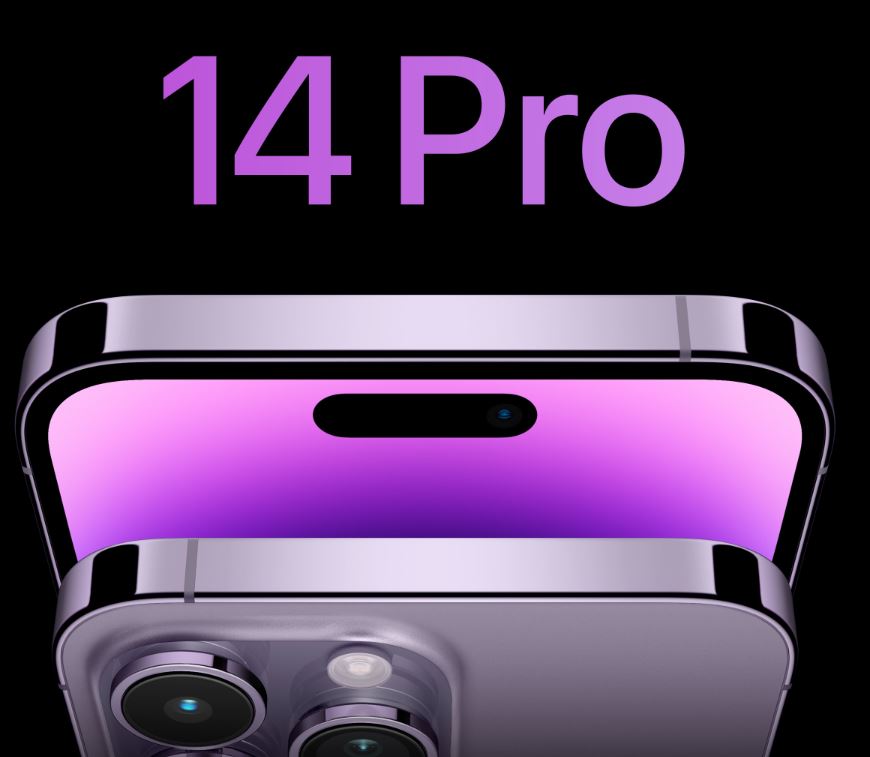
iPhone 14 Pro and iPhone 14 Pro Max

Deep Purple iPhone 14 Pro with new notch on display
Credit: Apple

Display

There are major advancements in display technology featured in the iPhone 14 Pro and iPhone 14 Pro Max. The bezels are smaller, and HDR brightness is now 1600 nits with the highest outdoor brightness of 2000 nits. The larger upgrade to the screen, though, is the new Always-On Display. The clock, widgets, and Live Activities are displayed on the Always-On Display. 

A16 Bionic Chip

The new A16 chip, which is designed on a revised 4nm process for better functionality and effectiveness, is what powers the iPhone 14 Pro in terms of performance. 

Camera

The iPhone 14 Pro and iPhone 14 Pro Max’s cameras are just as spectacular as we anticipated. A 48MP lens with a quad-pixel sensor and an f/1. 78 aperture has been added to the main camera. Every four pixels on this quad-pixel sensor are combined into one as it adjusts to the photo being captured. In doing this, Apple says users may capture “amazing low-light” photographs as well as keep the image photo size low. 

In addition, the quad-pixel sensor allows for a 2x Telephoto option, which employs the center 12 megapixels of the sensor to produce 4K films and full-resolution images without the use of digital zoom. Professional photographers can now capture images at the full 48MP resolution utilizing the ProRAW function. 

Total Worth

Moreover, the iPhone 14 Pro has the previously mentioned features, such as Crash Detection and Satellite Emergency SOS. 

Space black, deep purple, silver, and gold are the four colors offered for the iPhone 14 Pro and iPhone 14 Pro Max. For the iPhone 14 Pro and iPhone 14 Pro Max, the starting price is $999 and $1099 respectively. Pre-orders start on September 9 and the product will be available on September 16. In India, the prices will be 129,900 for iPhone 14 pro and 139,900 rupees for iPhone 14 Pro Max.


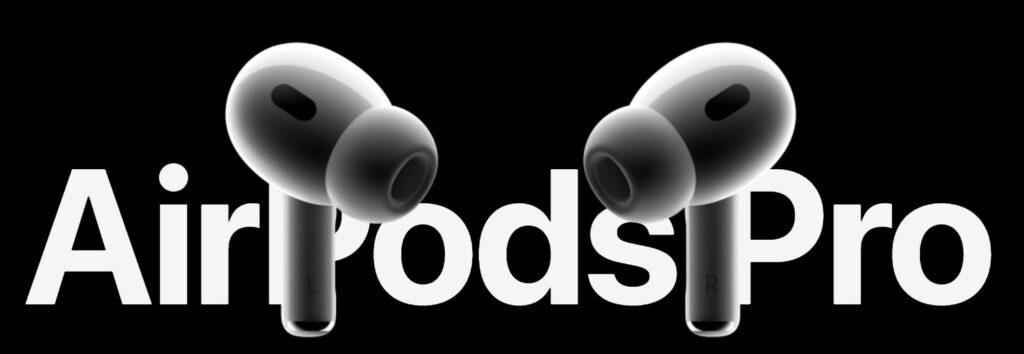
AirPods Pro 2

New Apple  AirPods Pro 2nd Generation on showcase
Credit: Apple

Apple’s new H2 audio chip, which boasts a multitude of improvements over the H1 chip that initially debuted in 2019, powers the AirPods Pro 2. According to Apple, the AirPods Pro 2 will suppress up to twice as much noise as their predecessor. For a rich background and crisper sounds, there is also a powerful low audio driver and bespoke amplifier. 

Apple has added a new Adaptive Transparency feature to its Transparency mode. This feature utilizes on-device processing to suppress loud external noise, such as that from construction equipment, moving automobiles, or show loudspeakers. 

Apple has included an additional touch-sensitive layer of control system on the stem of the AirPods Pro. You can change the volume right away by swiping up or down on these controls. The playback and pausing controls still employ the same force touchpad as previously. 

The charging case now features precision tracking for Find My, built-in speakers for beeping it if lost, and built-in connectors for wrist straps. Additionally, the Apple Watch charging puck can now be used to recharge it. 

Pre-orders of the AirPods Pro 2 can be made starting on Friday, September 9. The cost is $249. The arrival will be on September 16. In India, the price is 26,900 rupees. 

iOS 16

iOS 16 to be launched on September 12, 2022

Apple announced that the latest operating system, iOS 16, will be released on September 12th, 2022. There will be plenty of new features. 

The lock screen gets several improvements, including the ability to add widgets and customize its look, as well as a revamped notification display. Messages can be edited and recalled (with some limitations), photos can be shared with your family using the updated iCloud Shared Photo Library, and you can use Live Text to extract text from videos and photos. 

Conclusion

The theme was space, and the event name was Far out. Apple has definitely made a positive impact with the brand-new features, has given convenience a whole new level, and made enhancements that are ahead of years from its competitors. Let’s see how the users will reciprocate this promising and bewitching announcement.

Kubernetes vs Docker? Choosing the Best Container

If you are one of those who utilize container technologies, you must have come across Kubernetes and Docker. And you might be wondering which one to choose, what features they have. Keep reading to discover how these distinct technologies relate to each other and integrate effectively to develop, deliver, and scale containerized apps.

Table of Contents

What is Container?

To compare Docker vs. Kubernetes, you need to know what Container is. 

Containers provide a crucial solution in the process of developing an application. Developers work in their own local development environment when writing code. Problems start to appear when they are ready to put that code into production. In reality, code that runs flawlessly on their machine doesn’t function in real time. There are many potential causes for this, including various operating systems, dependencies, and libraries.

container and virtual machine process visualized

Containers allowed you to decouple code from the underlying infrastructure it is operating on, which was a significant portability problem. The whole set of binaries and libraries a program needs to function properly could be packaged by developers into a compact Container image. Any computer with a containerization platform can run that Container in production. It helps greatly in scalability and portability.

Container vs. Virtual Machines

Containers have a remarkably little footprint. The application and a list of all the bins and libraries it needs to execute are all that the Container takes to get started. Container isolation is performed on the kernel level without the requirement for a guest operating system, in contrast to virtual machines (VMs), which each include a full replica of a guest operating system. Libraries can also be distributed between containers, removing the need for 10 copies of the same library on a server and saving even more space. If we have three apps that are all using node and express, we don’t need to run three separate instances of those programs; instead, those programs can access bins and libraries. This allows applications to become embedded in self-contained environments, deployments can be made faster, development environments can have more parity, and unlimited scalability can be achieved.

What is Docker

Docker is a commercial containerization platform. It’s a toolkit that makes building, deploying, and managing containers for developers simpler, safer, and faster. 

Even though Docker was initially an open-source project, it now also refers to Docker, Inc., the business that creates the paid Docker product. Whether developers use Windows, Linux, or macOS, it is now the most well-liked tool for constructing containers.

Before the 2013 launch of Docker, container technologies had been around for decades. Linux Containers, also known as LXC, were the most popular in the beginning. Although Docker was originally based on LXC, it swiftly overtook LXC to become the most widely used containerization platform thanks to its specialized technology.

One of Docker’s most important features is portability. Any desktop, data center, or cloud environment can run Docker containers. An application can continue to function while one of its components is getting updated or getting fixed since only one process can execute in each Container.

The following are some of the vocabulary and utilities frequently used with Docker:

Docker Engine 

The runtime environment known as Docker Engine enables programmers to create and operate containers.

Dockerfile 

A straightforward text file that specifies each step of creating a Docker container image, including the OS network requirements and file locations. In essence, it is a set of instructions that Docker Engine will follow to put the image together.

Docker Compose

A tool for creating and operating multi-container applications is Docker Compose. It creates a YAML file to list the services that are included in the application and uses the Docker CLI to deploy and execute containers with only one command.

What is Kubernetes?

A platform for scheduling and automating the deployment, management, and scaling of containerized applications is called Kubernetes. A “cluster” is the name for the multiple container architecture in which containers function. There is a container in a Kubernetes cluster acting as a control plane that schedules workloads for the remaining containers-or worker nodes.

The master node selects how to assemble apps (or Docker containers), where to host them, and how to orchestrate them. By organizing the containers that constitute an application into clusters, Kubernetes helps with service discovery. In addition, it allows administrators to manage large quantities of containers at any point in their lifecycle.

In 2014, Google released Kubernetes as an open-source project. As of now, it’s managed by the Cloud Native Computing Foundation (CNCF). Kubernetes is popular for container orchestration in production environments due to its extensive capabilities, thriving open-source community with thousands of participants, and portability across multiple public cloud providers (including IBM Cloud, Google Cloud, Azure, and Amazon Web Services).

Features of Kubernetes and Docker

KubernetesDocker
Open-source: You can use it on-premises, in a public cloud, or in a hybrid cloud, depending on what you want.The convenience of configuration: Docker makes it easy to deploy your code in a wide range of environments in less time and effort. Infrastructure specifications are no longer tied to the application environment, simplifying and speeding up the configuration process.
Interaction: Kubernetes can manage multiple clusters simultaneously. Scaling is possible both horizontally and vertically.Use Swarm: It’s a tool for clustering and scheduling Docker containers. Docker APIs are implemented by Swarm as a frontend. It also allows us to control clusters of Docker hosts as a single virtual host, enabling us to access various tools for the controller. Pluggable backends are enabled by this self-organizing group of engines.
Self-monitoring: It allows you to self-monitor since it continually checks the adequacy of the nodes and the container. When a container or a node dies, Kubernetes will restart, replace, or reschedule it, and it will kill containers that do not respond to user-defined health checks.Ensures security: Docker allows us to store secrets within the swarm itself. Afterward, select which secrets should be accessible to services. A few crucial commands are included in it, such as secret inspections and secret creations.
Features automated scalability: Adapts to heavy loads by automatically starting new containers based on CPU consumption, memory levels, or custom measurements.Service: A service defines the state of a container within a cluster by defining a list of tasks. Swap schedules each task according to the number of containers it should run.
Dynamic Volume provisioning Facilitates the creation of storage volumes without requiring cluster administrators to contact their storage providers or construct objects.Increase in Productivity: By facilitating configuration & efficient deployment of applications, Docker has enabled applications to run in an isolated environment, thus reducing resources.
Orchestration of storage: Installs persistent storage systems in the cloud or on-premises to minimize lag and enhance user experience.It is Lightweight and Portable: Containerized applications are lightweight and portable, and they run regardless of operating system (where Docker is available). Multiple containers can be managed seamlessly and concurrently using Docker containers.
Automation of rollouts and rollbacks: Applications are updated and monitored for issues, and changes are rolled back if something is wrong.Agile app development: CI/CD processes, agile methodologies, and DevOps can be implemented more easily with containerization. As business needs change rapidly, containerized apps can be tested in one environment and deployed in another.

Kubernetes vs Docker Swarm

The majority of the time, when people use the phrase “Kubernetes vs. Docker” they mean “Kubernetes vs. Docker Swarm” The latter, which uses its API and is strongly integrated into the Docker ecosystem, is Docker’s native clustering solution for Docker containers. Similar to most schedulers, Docker Swarm offers a mechanism to manage several containers dispersed across server clusters. Its filtering and scheduling system makes it possible to choose the best cluster nodes for container deployment.

  • Similar to Kubernetes in terms of orchestration technologies is Docker Swarm. With an emphasis on clustering Docker containers, Docker Swarm is inextricably linked to the Docker ecosystem.
  • The fact that Docker runs on a single node and Kubernetes is intended to run across a cluster is a key distinction between the two technologies.
  • Another distinction between Kubernetes and Docker is that: to orchestrate, Kubernetes requires a container runtime, whereas Docker can be utilized independently of Kubernetes.
  • As a result of widespread adoption since its original release in 2015, Kubernetes has now supplanted other container management and orchestration systems as the industry norm. For coordinating containers at scale and managing user interaction with them, Kubernetes offers an infrastructure-level framework.
  • In a similar vein, Docker has established itself as the industry standard for creating and deploying containers. At a far more fundamental, nuts-and-bolts level, Docker offers a platform for creating, deploying, and operating containers. The Kubernetes framework is positioned on this foundation.

Pick the best container solution

Kubernetes vs. Docker. From what we have shared till now, we hope you have gotten a clearer picture that it is not an either/or question. 

Kubernetes has the opportunity to coordinate and manage all of your container resources from a single control plane, even though containers promise to allow you to write code once and execute it anywhere. All of the Kubernetes nodes that run your containers benefit from its assistance with networking, load-balancing, security, and scaling. Additionally, Kubernetes offers built-in isolation mechanisms like namespaces that let you organize container resources based on things like access permissions and staging environments. Without having to mock up the entire application in their development environment, these constructs make it simpler for IT to give developers self-service resource access and for developers to collaborate on even the most sophisticated microservices architecture. Cloud-native applications can be deployed more quickly and more scalable by combining DevOps practices with Kubernetes and containers.

Conclusion

At the end of the day, it’s up to your team to determine what type of tools it needs to accomplish its goals. Make sure to do a complete thorough analysis of different technologies’ features and how compatible they can be if used collectively. This can turn out well than you imagine.

Let’s Discuss your Idea.