If you are a tech-enthusiast and stay on top of the news, you might know that Google launched the Carbon programming language on 19th July 2022. The tech giant has created many frameworks and has introduced languages in the past like Go and Dart. Golang has gained popularity among developers. However, some groups prefer C++ and JavaScript over Dart. The CPP North Event 2022 was just held, and in essence, it is a gathering of numerous developers to talk about the future advancements of C++. Chandler Carruth (Principal Software engineer) introduced this general-purpose programming language.
What factors led to the development of the Carbon language?
As per Carruth’s explanation, bringing improvements in C++ is difficult. The obstacle to the language’s progress is a bureaucratic committee approach that prioritizes standardization over design. It makes adding new features challenging. Kotlin, Swift, Go, Rust, and many other existing programming languages offer an outstanding development experience.
Developers who are capable of using one of these current languages can keep using those. However, adoption and migration from C++ are severely hindered by the designs of these languages. These aspects led to the development of carbon – an open-source programming language.
Carbon- A successor of C++
Let us know first what is the meaning of the successor language. In line with what Carruth has stated a successor language is defined by the below-mentioned qualities:
Must have built on an existing ecosystem without bootstrapping a new one.
Provide a bi-directional interoperability
Ideally, have tool-assisted migration support
Optimize the learning curve and adoption path
Similar to how iOS developers are aware that Swift is the successor for Objective-C, TypeScript considerably improves JavaScript while still being user-friendly. Android developers know very well that Kotlin is the successor to Java. Furthermore, the original C programming language successor is C++, which is extensively used at Google. Some people would argue that Rust, a Mozilla project that has subsequently gained a sizable public following, is a successor for C++. Without a doubt, Rust is a fantastic language to begin a new project. But, it doesn’t have ‘bi-directional interoperability’ and that is why it is challenging to convert a C++ environment to Rust. And now that brings us to the next point: the goals and promises of carbon language.
Goals
Carbon might be the next step in the evolution of software and programming languages. According to Github documentation, as an experimental successor of C++, carbon language will support the below-listed goals.
Performance-critical software
Software and language evolution
Code that is easy to read, understand, and write
Practical safety and testing mechanisms
Fast and scalable development
Modern OS platforms, hardware architectures, and environments
Interoperability with and migration from existing C++ code
The main emphasis will be on writing and reading simple code. It will also be a language for swift and scalable development. It will support all the existing operating system platforms. It will also include a strengthened and safe testing framework for complicated codes.
Features of Carbon:
Interoperability With C++
For those developers who are proficient in C++, Carbon would be a simple learning curve. It is composed of a fixed set of grammatical constructions that are meant to sound natural and be simple to read and comprehend.
C++ code
Carbon code
Generics System
Carbon provides a modern generics system with verified definitions. Yet, opt-in templates are still supported for flawless C++ interoperability.
The generics system delivers C++ templates many benefits, including:
Generic definitions are type-checked. This eliminates the need to check the definition for each instantiation at the cost of compile time.
Strong, verified interfaces reduce unintentional reliance on implementation specifics and make the relationship with consumers more apparent.
Memory Safety
Carbon strives to handle memory safety, a significant issue troubling C++ developers, by:
Improving the tracking of uninitialized states, toughening against initialization errors, and enhancing initialization implementation.
Having a standard debug build mode that is more detailed than the build modes offered by C++.
Carbon Programming Language Explorer
Want to give it a try? Carbon Explorer is a prototype interpreter demo that can both execute isolated instances and provide a thorough examination of the particular semantic model and abstract machine of Carbon.
Where can I ask questions and get information about Carbon?
You can use the GitHub Discussions or their Discord and use #language-questions to pose queries and hold discussions.
Conclusion:
We hope this gives a proper insight into what Carbon is and what this experiment aspires to execute. There is documentation available for developers and tech-savants to resolve every and any queries there may be available. Also, volunteers can contribute to the development process. This new language by Google may take time to be used for real projects, but this open-source technology seems promising to overcome C++ challenges and might change the face of software development.
We all know the world has shifted to mobile devices. According to Statista, It is estimated that there will be 18.22 billion mobile devices by 2025. This number helps to get an idea of how there are innumerable people who rely on mobile devices for their daily activities, and this also resulted in the booming of the mobile app industry. From shopping and entertainment to different services, mobile apps serve a wide range of purposes. Do you also have an idea for an app and don’t know how to execute it? Or Are you the one who wants to make it big in this exciting mobile app industry? Well. No worries. We will take you through all the steps and make this complicated process a smooth journey.
Mobile App Development Process
App development can be divided into three categories: Pre-development, Development and Testing, and Post-launch. Let’s get into each category.
Write down your idea. There is a saying a problem clearly stated is half solved. Please don’t take it quite literally in this context, but it will certainly help you to get a precise picture of what problem you are trying to address. Your idea doesn’t have to be a new invention or something way beyond expectations. You can also provide extension service for an existing business. The most important thing is to make sure someone else isn’t doing the exact thing you want to do.
Set Measurable Goal
People often mistakenly define goals in monetary contexts, such as ‘skyrocketing sales’. But that goes without saying. The fact is it doesn’t make your business stand out from every other business on the planet. Instead, a meaningful goal should reflect your purpose and mission. A goal is what you strive for, and objectives are how you get there.
Make sure your objectives are SMART:
Specific
Measurable
Achievable
Realistic
Timely
Market research
You must complete market research to determine the users’ pain points. You can conduct surveys or interviews and research the competition. In the case of an app that is part of your existing business, you can use your current customers as a resource for insightful research. In the case of a completely original app, you’ll need to reach out to prospective users who might need the product/service. This way, you can figure out a way to create an app that enhances users’ experience.
Decide Features and Create a Low-fidelity Wireframe
After realizing customers’ needs and wants with proper market research, you can develop a more refined list of features available to users. By collaborating with a top-of-the-line mobile app development company, it gets easier to add innovative functionalities along with primary features. It also allows you to create a low-fidelity wireframe, which is a rough sketch with dummy text to help your team understand how the application will work and map out the user journey.
Analysis and Strategy Development
All visions begin to take shape at this stage. You can build detailed functional requirements for the different use cases. The next step is to build a product roadmap. Convert your strategy into a harmonious set of priorities. At this point, you can have an MVP (Minimum viable product- a development method where only the core functions are developed to solve a specific problem) defined to save money and prepare for the initial launch. When you want to build a native, a cross-platform, or a hybrid mobile application, you need to make a list of technologies required. You can also choose a web and mobile app development company and start hiring developers with expertise in your preferred mode of mobile app development.
You will also need to choose a name for your mobile app. Keep it short and easily remembered, searchable, and probably an action word. Many developers use obvious names for their apps, and sometimes they connect with consumers by trying to appeal to their opinions. Keeping App Store Optimization in mind is also important if you want your app to be found by users looking for similar apps.
UX/UI design
The success of your mobile app relies heavily on how your user easily adapts and benefits from its features. A dedicated UX/UI design team creates an exceptional user experience for your app and makes a pixel-perfect digital product to keep your users engaged.
Developing User flow
This step includes how the data will be displayed to your users, how the interaction will happen and how the user journey is meant to unfold.
Creating Wireframes
Wireframes are the digital form of the sketches that a UX/UI designer has made for app design. These are layouts that focus more on user experience and aesthetics. It is a prompt and cost-effective approach to developing intuitive mobile app design.
Design patterns and elements
This step includes creating a color scheme, typefaces, components, alerts, and graphics. The whole document is called a style guide, and it ensures the consistency of the look and feel of the app.
Mockups
Wireframes and style guides come together in mockups to create a prototype. They are high-fidelity visual designs. During this phase, changes can occur to the structure and workflow to make it look and feel exactly as you envision.
Prototype
The prototyping comprises turning low-fidelity wireframes into ready designs so they can be shared with the team and everyone can use them to offer quality feedback.
App development
There are mainly two types of development approaches:
Native development: utilizing the original programming languages and tools of the mobile OS: iOS or Android
Cross-platform development: involves the creation of mobile applications that are compatible with multiple operating systems at once.
The development of an app involves three critical elements:
Technical architecture
Technology stack
Development milestones
Taking this technological approach will help build the app with an atypical and enriched user experience.
Three parts are integral to most mobile app development projects:
Backend server technologies
It involves creating architecture that makes it quick and easy to sort through information, storing information in a remote database, and scripting to add logic to the interaction.
Application Programming Interface (APIs)
An API is a means of establishing communication between the app and the server database. Microservices-based architecture and proper encryption standards can create a scalable and secure data exchange interface between the front end and back end of mobile apps.
Frontend development
A frontend is what users see when they access your mobile app. The development of mobile frontends involves a variety of technologies. If you are building native applications, you can use technology-specific offerings. For example, iOS applications can be developed with Objective-C, Swift Programming Language, Android applications can be developed with Java, Kotlin, and cross-platform applications can be developed with Flutter and React Native.
Each programming language offers its unique capabilities with your chosen platform. You should be able to choose a team that understands which necessary technologies can be leveraged the most by implementing the appropriate programming language.
Testing
A fully-functional app is meticulously examined and tested by QA specialists in a variety of scenarios to reduce the possibility of errors occurring during real-life usage. To ensure that every planned feature is included in the final version of the product, they go back to the initial documentation. QA engineers ensure that an app is stable, usable, and secure. To create a flawless application, any application must undergo a variety of testing methods. Mobile applications must be tested using the following methods:
Performance testing
Functional Testing
User Experience & Interface Testing
Documentation Testing
Security Testing
Recovery Testing
Platform testing
BETA Testing
Certification Testing
Deployment and Support
After building and testing the mobile application, it’s time to deploy and maintain it. Deploying mobile applications can be a tedious process, especially if the application is comprehensive and requires lots of testing. Apps must be submitted to the appropriate app stores, Apple App Store for iOS applications, and Google Playstore for Android applications. The App’s release in the app store requires metadata including App’s title, short description, category, keywords, launch icon, app store screenshot, and promotional video.
Your goal should be to minimize the number of uninstalls once the user has installed the application. For that, maintaining your mobile application regularly will help you establish a sustainable brand image in the minds of users. You can implement some practices including fixing bugs as well as adding enhanced features from time to time.
Ensure your app’s success after launch
When your app is available in the app store, monitor its usage through mobile analytics platforms and track key performance indicators (KPIs). Keep an eye on crash reports and other reported issues regularly. Encourage your users to provide valuable feedback and suggestions for your app. Support needs to be provided promptly to end users. For a smooth user experience, you should stay on top of technological advancements and routinely update your app.
Turn your idea into a phenomenal reality.
So that was a simple explanation of how mobile apps are developed. Mobile app development is an ongoing process and maintaining your mobile products after launch will help you maintain their use while rewarding you with a multifold return on your investment. At ultroNeous, we provide mobile app development services to companies across the education, impact the healthcare industry, finance, hospitality, real estate development strategy, travel, and many more.Our dedicated team will help you turn your visions into a phenomenal reality. Get in touch now to shape your ideas exactly how you envisioned them.
With the advancement of technology, the transition from paper-based to digital systems has taken the healthcare industry significantly. EMR or Electronic medical records are one of the most emerging technologies taking over the healthcare industry allowing professionals to store patients’ information, deliver care and handle finances. Electronic medical records are all in one package to manage a medical effectively and efficiently providing high-quality patient care.
Let’s look at the major advantage of the EMR, and how web app developmentmakes it the most required app for doctors or clinics.
which makes the medical record keeping and managing process simple and short.
Easy and Accurate Access to Patient Information
Using an electronic medical record app, allows you to store data that has not any possibility of data being stolen, lost, damaged, or altered. Digital records can also eliminate mistakes and errors brought on by illegibility and illegible handwriting which is seen in the paper record.
Furthermore, To provide other healthcare providers with an accurate, up-to-date patient file, doctors can update patient information in real-time using electronic medical record apps. It can be fruitful when the patient changes the doctor, saving doctors from having to start from scratch when a patient switches.
Better Patients Care
Using electronic medical record apps assists you to raise patient health care standards to the next level. As medical recording apps are mostly cloud-based, allowing medical practitioners to access records on a range of mobile devices safely and securely.
With the Medical record app, medical personnel can get instant access to a patient’s medical history. When doctors have access to accurate, full, and up-to-date patient information at the point of treatment, processes become more coordinated and effective which eventually helps to increase the health care service.
Time-saving and Increased Productivity
EMR increases efficiency and saves time in medical practice by streamlining processes. Care coordination is made simpler and the productivity of healthcare providers starts to rise when all the information is reliable and simple to find.
The fact that electronic medical records apps can be integrated with various back-end technologies that facilitate daily work greatly simplifies the work of medical professionals. Medical administrators can arrange data using customizable templates to prioritize activities, communications, and scheduling, among other daily requirements which helps to save time and increase productivity.
Minimizes Errors
Electronic medical recording app systems also lower medical errors by providing access to a patient’s medical history to healthcare providers. It eliminates the chance of getting data misplaced or mismatched as in the paper medical recording methods.
Furthermore, it can also instantly give information regarding a patient’s health, including health risks and negative side effects from prescribed drugs and therapies. This can avoid mistakes with prescription types, dosages, interactions with other medications, and much more.
As we already discussed, EMR apps can provide many advantages for the doctor or clinic adopting them. However, to get all the advantages, the app must consist of the essential feature which is listed below:
Online Appointment Management
No one wants to visit and stay in a long line to get the health care service. Moreover, patients don’t prefer making a phone call over chatting and getting their work done. So the app should consist of online appointments and a live chatting feature so that the patient doesn’t have to get into hurdles.
e-prescription
When you adopt e-prescription you don’t need to worry about whether the receiving pharmacy will appropriately fill the order or not. With the help of e-prescriptions, it allows the creation of prescriptions and transmits the order directly to the customer’s preferred pharmacy or offers the patient a legible printout. So, the electronic medical recording app should be integrated with e-prescriptions.
Patient Portal with Secure Messaging
The patient portal is a most required feature for Electronic medical record apps as patients are the customers of EMR. So, an app should be integrated with the patient portal with the facility such as treatment plans, diagnoses, appointment histories, immunization records, lab results, and balances.
However, it should be made sacred so that the patient doesn’t hesitate while submitting any information or documents.
Document Scanning and Billing
An EMR should be connected with a billing management module to increase EMR system effectiveness. A billing management system reduces the paperwork and makes the process of billing easy, effective, and short.
Moreover, the document scanning feature helps to reduce the document work as a result, there is no longer a need to obtain, copy, or fax documents, and there is less chance of lost documents or delayed billing.
Conclusion
EHR systems offer tremendous potential to enhance healthcare outcomes in addition to facilitating secure data processing and interchange additionally it is the finest app for doctors to increase their efficiency. However, preparing for EMR implementation and launch is a challenging process that needs approval and readiness at all organizational levels.
Are you in need of a specially designed EMR system to manage your medical practices? Contact ultroNeous Technologies for Medical Web App Development, our team of experts will be more than happy to guide you, contact us right away.
In the modern world, being an expert at one thing or a jack of all crafts won’t help you succeed if you can’t cooperate with others. It is impossible to overstate the value of working as a team! Every industry, regardless of size, benefits from having a good team and a clear organizational structure.
A corporation must have a good team and an efficient structure to accomplish its goals. Even if a company has excellent leadership and dedicated workers, it nevertheless could fail if it lacks an organizational structure.
As a result, choosing the ideal project team should be your priority when planning a new project.
The creation of websites and applications is now essential for the expansion and reputation of businesses. This motivates them to hire developers for the development of websites, online applications, and mobile applications. After deciding to start your software development project, you may need to hire a dedicated development team to fill in any IT talent gaps or grow your current development team. As simple as it may seem, it is not.
We’ll look at the perks of having a team of app developers with the appropriate expertise to help you create a high-quality and highly effective app for your company.
The team aims for a project goal and high-quality delivery rather than focusing on personal accomplishments. The team members usually concentrate on the task at hand without dealing with pointless red tape. With more profits, it increases productivity. It encourages a creative work culture, peer influences, debates about process improvement, and brainstorming sessions all boost creativity and innovation. The team’s ability to think creatively is enhanced by the diversity of opinions, skills, and viewpoints.
Better Communication
As the boundaries between departments are broken down, workers are free to move around and exchange useful information. The team works together more because of the open lines of communication, which usually leads to projects being finished on schedule.
They can readily solve problems by working together and drawing on their combined expertise and knowledge. A speedier rate of information sharing and accelerated reaction are both ensured by improved communication.
App Development from ultroNeous Technologies
Not sure where to begin with your app idea 💡? Connect with our expert👇
The project-based structure makes the team members’ reporting links very clear, and they are aware of their accountability. Knowing the boundaries of their authority eliminates the possibility of straying and interfering with others’ duties.
Agile performance at a high-level Rapid iteration and experimentation are the main goals of the committed development team with agile proficiency. Faster time to market, reduced risk, and the ability to adapt to changing demands and trends are all benefits of shorter development cycles.
Ease in Solving Problems
As no one can perform the task perfectly in this world, all are not good at the same thing. The team brings up persons with different ideas, skills, experiences, and mindsets. By working in a team and using the knowledge of each individual it is simple to handle and solve any kind of problem quickly and easily.
Minimize Mistakes and Risks
When you work in a team it brings up positive energy, encourages and inspires one another, and has fun together. As stress and pressure bring the chance of creating a mistake, working in a team is the best way to minimize mistakes and risks.
Conclusion
Your chosen team structure will have a big impact on how the project develops overall. The members of your development team must gain the talents that the project urgently needs.
You can promote creativity, continuity, ingenuity, and superior outcomes when you have the right personnel and the appropriate framework. The highly organized organization, excellent communication, high level of empowerment, and unrestricted information flow guarantee the best coverage for all project-related tasks.
If you are planning to develop an app for your organization then you must choose a company with the necessary team skills to complete the task. Contact ultroNeous Technologies for mobile app development services. As an ideal option with the best team for all of your app development requirements.
FAQ
Why is it necessary to have the right app development team with the right skill?
A disorganized team makes it harder for you to take advantage of opportunities and can have major financial repercussions. If your development team’s organizational structure is hazy, there may be problems with role confusion, a failure to exchange ideas, an imbalanced approach to feature development, and sluggish decision-making that increases complexity, stress, and conflict. This is why it is necessary to have the right app development team with the right skill.
Why is it necessary to have the right app development team with the right skill?
A disorganized team makes it harder for you to take advantage of opportunities and can have major financial repercussions. If your development team’s organizational structure is hazy, there may be problems with role confusion, a failure to exchange ideas, an imbalanced approach to feature development, and sluggish decision-making that increases complexity, stress, and conflict. This is why it is necessary to have the right app development team with the right skill.
What makes the right app development team?
An individual with high skill, experience, and knowledge dedicated to working in a team to brighten the fruitful output makes the right app development team.
Does app development team size matter for teamwork?
When you have a group of people with good knowledge, skill, and experience then it doesn’t matter what the size of the team is. However, having a bigger size might create a misunderstanding and confusion while understanding each other.
What makes the right app development team?
An individual with high skill, experience, and knowledge dedicated to working in a team to brighten the fruitful output makes the right app development team.
Does app development team size matter for teamwork?
When you have a group of people with good knowledge, skill, and experience then it doesn’t matter what the size of the team is. However, having a bigger size might create a misunderstanding and confusion while understanding each other.
The ever-evolving technologies have brought us convenience. Everything we want is just a tap away, from buying products to availing of all kinds of services. With this constant need to search for anything to everything on Google, we have also evolved our searching habits from typing and image search to now voice search.
As you have realized how much search habituation is ingrained in our lives, let’s give you an idea of the burgeoning voice search technology. According to Think with Google, 27% of the global online populationutilizesvoice search on mobile. Not only that, we are surrounded by devices and software with powerful capabilities, like Amazon Alexa, Apple’s Siri, Google Assistant, Microsoft Cortana, and Samsung’s Bixby.
Does it still sound insignificant to you? Well, then get this: Google also states that 62% of those who regularly use a voice-activated speaker say they are inclined to buy something through the device within the next month. We’ve caught your undivided attention, haven’t we? So let’s get into the whys and the hows of voice search tech and how it benefits the eCommerce Development Company.
Why Voice Search is set to rise in 2023 and Beyond.
In a world full of convenience, keeping a work-life balance is difficult, so you may often be multitasking at any given time. For example, if you want to see the weather, get the latest news, or find out where to buy a new laptop, you need accurate and quick results. People can’t just keep typing on search engines every time they have such queries. And that’s when voice search technology comes and wins over your heart!
You have got to admit that voice searches are more immediate and efficient. Human typing speed is 40 WPM on a standard QWERTY keyboard and becomes even less when using a mobile keyboard. As speaking is more innate than writing, you can search and get results effortlessly while doing your chores.
Use of Longer and more Conversational Keywords
When you are typing, you tend to use small words like “Jordan sneakers”. But when you are using voice search you can easily search for the “what are best deals for Jordan sneakers”. You can get results for the exact query.
Results are swift and Precise.
You get faster and more accurate answers when you ask precisely what you want. Voice searches are designed in a way to deliver relevant results in an easy-to-understand format.
What Precise benefits does it bring to eCommerce Apps and Website
Offers a Personalized Shopping Experience
Voice search has become increasingly popular in eCommerce apps to provide seamless shopping experiences. Increasingly, customers prefer this method. As with just a command, they can purchase anything they want.
Enables Smart Shopping
Voice search technology uses Artificial Intelligence and Machine learning technologies to provide frictionless interaction. This makes the feature smart enough to recognize behavioral patterns and habits. For example, when you are shopping for weekly or monthly groceries, it can give you a list of similar items and items missing from the cart that you previously purchased.
Time-efficient
We mentioned earlier that the average person types between 30 – 40 words per minute, while voice search allows customers to be more specific with more words and possibly in a shorter amount of time. Thus, voice search enables them to communicate quickly and efficiently, and they can shop when on the move while doing other activities.
Better User Experience
When you give your shopper a chance to look for the product without the concern of spelling mistakes, you are already developing a more pleasant shopping space. This convenience will not only encourage them to use the feature more but will also leave a lasting impression. Make the user journey simple by adding outstanding features and the latest technologies.
How Does Voice Search Operates For eCommerce Stores?
Customers can initiate a voice search by clicking on the microphone icon on their device. Voice search uses Natural Language Processing (NLP)- Which is a combination of computer-based linguistics with a machine and deep learning to analyze your voice and voice patterns.
In Simpler Terms following steps takes place:
A digital voice assistant transcribes human speech into text.
After analyzing the text, it detects questions/commands.
Accesses external data sources such as search engines to find relevant information.
Delivers easy-to-digest information and fulfills the user’s intent.
What Can You Do to Optimize the Voice Search?
To increase visibility and maximize the visitors, we develop an SEO strategy to rank higher on search engines. In the same way, you need a voice search optimization strategy to capitalize on the ongoing growth of the voice search feature.
Below are Some tips to start right away:
Keyword Selection and Optimization
Natural and Interactive. Yes, it sounds too simple. But it might take up more research than you think. Keep the content as natural and conversational as possible, since this type of language people use in daily life and prefer while doing voice searches.
Optimize the Speed
Everyone does love faster results. By optimizing the speed, you are giving them a chance to explore all the relevant options with a scroll.
Make the Most out of Semantic Strategy
A semantic search focuses more on topics likely to appear in a voice search than traditional keywords. You must consider a customer’s intent (to buy a laptop), when they may make a voice search, and how phrases relate to each other.
Do use FAQs
No matter how irrelevant it sounds to put in use, we have got to admit that we all rely on FAQs from time to time. Using pertinent and customer-centric questions assists in resolving lingering queries of your prospects.
In a Nutshell
Voice Search Technology may seem like a new arrival, but it is becoming an indispensable part of people’s lives. It is a chance to make the whole shopping experience more human-centric and streamlined. Voice search technology not only helps in making your business stand out but also in staying ahead of the curve. Get in on it as soon as possible to rank better on search engines and enrich the digital presence.
Did you like Reading this Article?
To read more such articles, check out our other blogs.
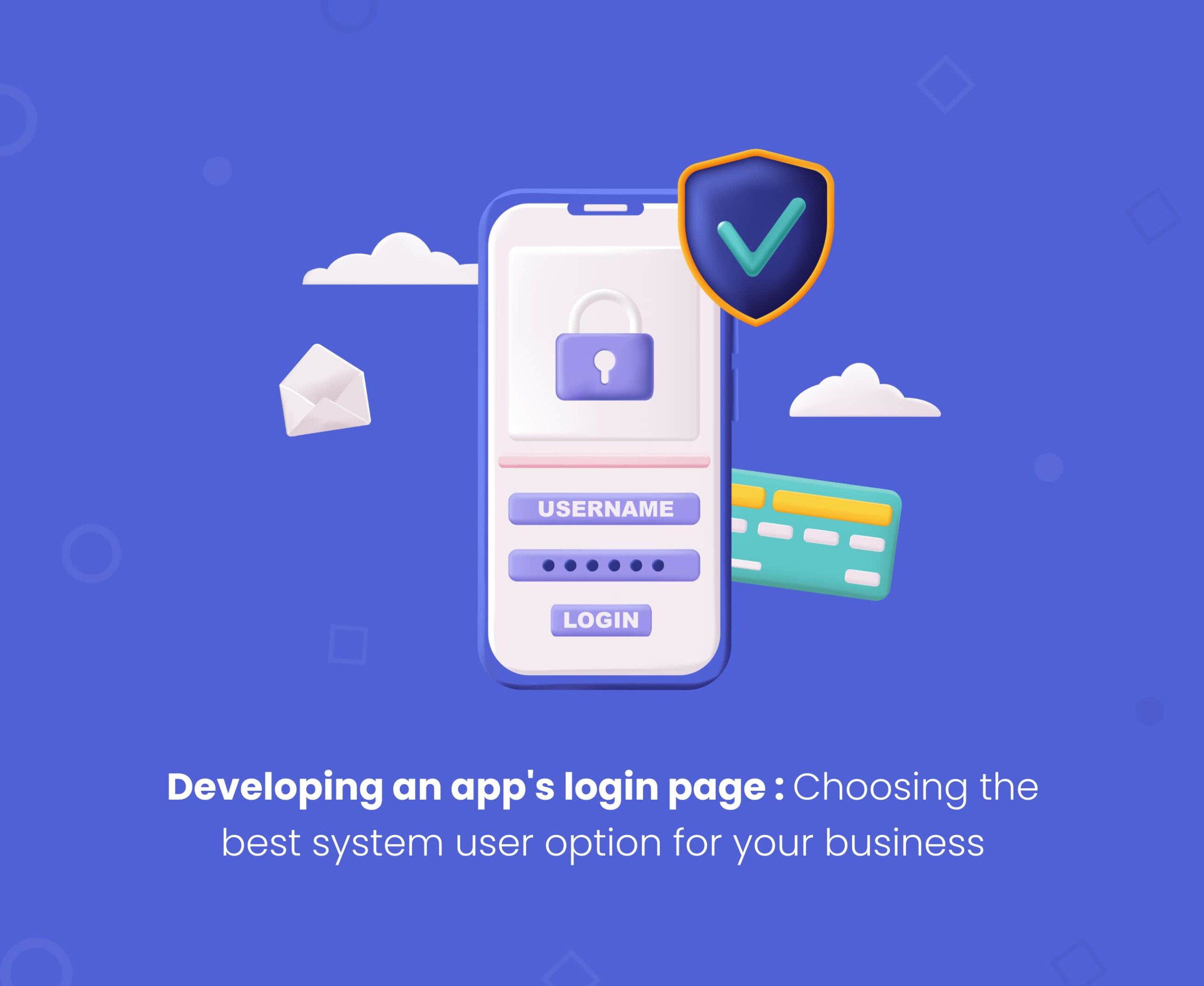
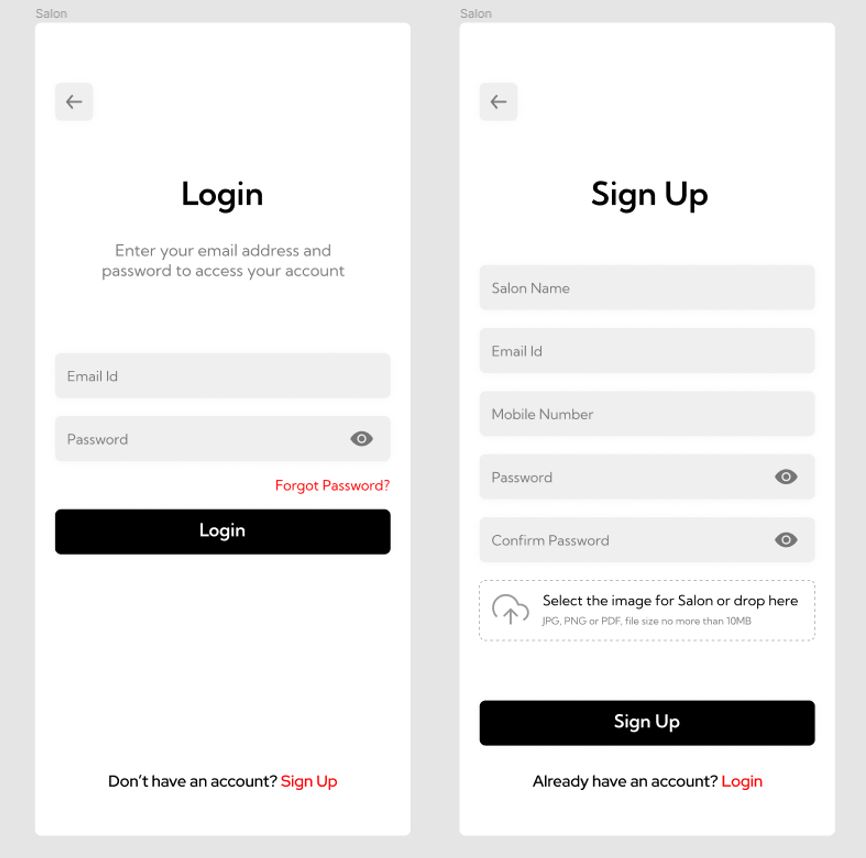
From the consumer’s perspective, an app’s login process and page play a more significant role to attract customers than others feature. As It is a critical component of the user experience of the app and is the first thing consumers see when they download the app. A mobile app’s sign-up page is crucial for conversion rates, yet designing it is difficult. If the design is done correctly in a user-friendly manner then it can lead to high customer intentions and increase the user however if not done correctly may result in the opposite consequences.
The primary goal of this article is to present the design concepts, procedures, and design process for designing a perfect login page for your app whatever your app is related to.
1. Simple Login and Sign Up
Today, nobody has time to fill out long forms while signing up to create an account for any app or online service. So, the amount of registration/signup fields should be carefully considered and should be made as less as possible. The lesser the number of fields, the better the user experience. That is why it is crucial to consult the best UI UX design agency, as the login page is the doorway to getting into the app not the conclusion so, try to make the procedure simple so that users can go as quickly as they can.
Furthermore, users don’t hesitate to share their information on your app if they can share information quickly, easily, and in a trustworthy manner. Users won’t look back to your app if they face a poor or uncomfortable design while submitting and request for personal information.
Here are some of the options for the login and signup process for your app
Social media login such as Facebook, Twitter, and so on
Social media logins enable users to sign up or log in to third-party apps and platforms using their social network credentials such as Facebook, Google, Twitter, and Pinterest.
According to statics, 88% of users claim to have utilized social logins, while 86% of users claim to have an irritating process while signing up and logging in to the app. As social media login is simple and doesn’t require a heavy process, almost all users prefer social media login over filling out a long form. Therefore social media login must be integrated into the app to increase the userbase.
Limit user inputs on registration forms
Another method to create a login page for the app is by creating a registration form with fewer input fields. As all the users might not be accessing your app with the larger screen phone, the number of input fields you ask from the users to complete the login or signup process should always be kept as simple and minimum as possible. If you need to use any verification process use emails rather than usernames, passwords, fingerprints, or phone numbers this will help to build trust and make the app process simple.
Phone number login
App login can be integrated with the phone number which is simple and fast. As it is a quick and easy method of authenticating. Users can easily login into the app using the phone number which will help to increase the user experience.
2. Allow the password visibility option and password suggestion
By allowing users to see their password as they type it, you can ensure that they can quickly access your app on their first attempt as opposed to making several unsuccessful efforts. Use a simple eye icon at the side of the password box to view their password.
Furthermore, users don’t keep on typing passwords again and again if they require a strong password so, add an option of password suggestion.
Are you looking for an attention-grabbing 👀 design for your App or Website? Get in touch with us 👇👇👇
UI should be made clear and must be user-friendly minimizing the user effort. Make the call-to-action obvious, eye-catching, and easily recognizable in any direction. Utilize straightforward layouts to make it easier for your users to quickly and easily find what they’re looking for.
4. Make a separate login and signup page
Login and signup are different parts of the app for the user to get into the app. Give customers a means to get to your sign-up page from your login page if it’s their first time seeing your app. Don’t integrate both login and signup pages on a single page because it will make your app messy and user experience will also be reduced due to a single page for both login and signup.
To sum up
The first engagement users may have with your product is during the registration and login process for an app. Making this process simple and user-friendly requires creating intuitive sign-up and login forms and many more which we have already addressed. Try minimizing the complexity, making UI clear, and integrating social login if you want to gain more users and engagement on your app. Finally, if you still have some doubts, ultroNeous Technologies is here to answer your query as we have already designed and developed a wide range of highly engaging apps it is a doubt we can hand you the app login page as well.
We live in a world where we can build beautiful, high-performance mobile apps for Android and iOS with a single codebase. With the help of Flutter, of course! A free and open-source mobile app development framework created by Google. Just so you know, it is gaining popularity among gamers and other users too!
Flutter offers a rich set of libraries and frameworks for building complex, feature-rich apps. When you hire Flutter developers, they build natively compiled mobile, web, and desktop apps using the Dart programming language, which is fast and easy to learn.
But what sets Flutter apart from other mobile development frameworks is its ability to deliver high-performance apps that are smooth, responsive, and visually stunning. Flutter’s unique design and rendering engine allow developers to create smooth animations, beautiful user interfaces, and fast, reliable apps that perform well on various devices.
So if you’re looking to build top-notch mobile apps, Flutter is the way to go. With its robust tools and features, Flutter makes it easy to build high-performance apps within the budget that delight users with a superior user experience. So, it’s a win-win situation for both developers and users.
Why Tuning The Performance Of Flutter Apps Is So Crucial
As a Flutter developer, you know that Flutter is a powerful tool for developing the finest mobile apps. But with great power comes great responsibility, and it’s up to you to ensure that your Flutter apps are running at their best. That’s where performance tuning comes in.
Performance tuning involves:
Optimizing the performance of your Flutter app by minimizing its resource usage.
Avoid initializing All Resources in advance. Always initialize required resources based on requirements.
Use const keyword to avoid unnecessary widget rebuild.
This is important because users expect apps to be fast and responsive, and if your app fails to meet these expectations, they may lose interest and move on to a competitor’s app.
So how do you tune the performance of your Flutter app? It all starts with understanding Flutter’s performance characteristics. Flutter apps are built using a combination of widgets and layout, and it’s important to choose the right widgets and layout structures for your app to ensure that it performs well. You can use the right libraries and packages to enhance your app.
For example, using too many widgets or inefficient widgets can cause your app to become slow and unresponsive. On the other hand, using the right widgets and layout structures can help your app run smoothly and efficiently.
In addition to choosing the right widgets and layout structures, there are many other best practices you can follow to optimize the performance of your Flutter app. These include implementing lazy loading, caching data and images, and using profiling tools to identify and fix performance bottlenecks. By following these best practices and continuously monitoring and improving the performance of your Flutter app, you can ensure that it delivers a fast, responsive, and enjoyable user experience. And when your users are happy, you’ll be happy too!
Best Practices For Optimizing Flutter App Performance
Reducing the number of unnecessary widgets in the widget tree
One of the key factors that can affect the performance of a Flutter app is the number of widgets in its widget tree. The widget tree is a hierarchical structure that represents the visual layout of an app, and each widget in the tree takes up memory and processing power.
To optimize the performance of your Flutter app, minimize the number of widgets in the widget tree. This can be achieved by:
Avoid using Recursive methods to improve performance
Combining multiple widgets into a single widget where possible
Removing unnecessary widgets from the tree
Using Efficient Widgets And Layout Structures
Using the irrelevant widget or layout structure can cause your app to become slow and unresponsive. You must use efficient widgets and layout structures to make your app run smoothly and efficiently.
Some examples of efficient widgets and layout structures include:
Use the ‘ListView’ or ‘GridView’ widget to display large lists of data
Use the ‘Stack’ widget to overlap widgets; but use it sparingly based on the requirements.
Use the ‘Expanded’ or ‘Flexible’ widget to fill available space and utilize them wisely.
Implementing lazy loading
Lazy loading is a technique that involves loading data or resources only when they are needed rather than loading everything at once. This can be particularly useful for improving the performance of Flutter apps that display large amounts of data, as it helps to reduce the amount of data that needs to be processed at once.
To implement lazy loading in a Flutter app, you can use techniques such as: if you want to display large amounts of data in a ‘ListView’ or ‘GridView’ widget; you can add pagination where the content gets loaded in small chunks.
Caching data and images
Caching is storing data or resources in a temporary location so they can be accessed more quickly in the future. In a Flutter app, caching can improve the performance of data-intensive operations, such as loading images or retrieving data from a server.
Want to have a buttery smooth 📱 experience on your iOS and Android app? ultroNeous helps you 💁🏼 with your mobile app requirements.
Using Profiling Tools To Identify Performance Bottlenecks
Profiling is analyzing the performance of a Flutter app to identify bottlenecks and areas for improvement. Flutter provides several built-in profiling tools to help you understand your app’s performance and identify potential issues.
Some examples of Flutter profiling tools include:
The ‘Flutter DevTools’: The Flutter DevTools is a browser-based suite of tools that allows you to inspect and debug your Flutter app. It includes many features, such as the ‘Performance’ tab, which displays real-time performance data for your app.
The ‘Flutter Profiler’: The Flutter Profiler is a standalone tool that allows you to profile your Flutter app in more depth. It provides detailed information about your app’s performance, including CPU and memory usage. It will enable you to drill down into specific app parts to identify potential issues.
The ‘Flutter Memory Monitor’: The Flutter Memory Monitor is a tool that allows you to track the memory usage of your Flutter app. It displays real-time data about the amount of memory your app uses and can help you identify areas where your app may be using more memory than necessary.
By using these and other profiling tools, you can identify performance bottlenecks in your Flutter app and take steps to optimize its performance. With the new version of Flutter, we see the most demanded and requested features coming to the platform.
Advanced Techniques For Improving Flutter Performance
Using the dart:ui library to access the underlying platform’s native components
The dart:ui library is a Dart library that provides access to the underlying platform’s native components, such as the canvas, text layout, and gestures. By using this library, you can take advantage of the native performance of the platform to improve the performance of your Flutter app.
For example, you can use the dart:ui library to draw custom widgets using the canvas or to implement custom text layouts and gestures. This can help you achieve performance improvements that may not be possible using the built-in Flutter widgets.
Using native extensions to incorporate native code into a Flutter app
Native extensions are libraries that allow you to integrate native code into your Flutter app. This can be useful when you need to access features or APIs that are not available in Flutter or when you want to take advantage of the native performance of the platform.
To use native extensions in a Flutter app, you can use the ‘flutter_native_extension’ package, which provides a simple API for integrating native code into your Flutter app. This can allow you to access platform-specific features and APIs, such as camera or geolocation, and incorporate them into your Flutter app.
Note: These techniques are more complex and may require more development effort than using the built-in Flutter widgets and APIs.
Tips For Optimizing Performance By Adding Flutter Animations
Use the ‘AnimationController’ class to control the speed and direction of the animation
The ‘AnimationController’ class is a central part of the Flutter animation framework, allowing you to control the speed and direction of the animation. Using it, you can specify the duration of the animation and the animation curve, which determines the rate at which the animation progresses. You can also use this class to pause, reverse, or loop animation or to control the animation using user input.
Use the ‘Tween’ class to specify the range of an animation
The Tween class allows you to specify the range of animation. It will enable you to select the start and end values of an animation, as well as the curve that determines how the animation progresses.
Using it, you can create animations that smoothly interpolate between two values, such as the size or color of a widget. You can also use multiple Tweens to create more complex animations, such as those that involve multiple properties.
Use the ‘AnimatedBuilder’ widget to build widgets that depend on an animation
The ‘AnimatedBuilder’ widget is a convenient way to build widgets that rely on animation. It allows you to specify a widget that will be rebuilt whenever the animation changes, and it takes care of animating the widget for you.
With it, you can easily create complex animations without managing the animation state yourself. This can help you create smooth and efficient animations that are easy to maintain.
Avoid using complex layouts or nested animations that may affect the smoothness of the animation
Using too many nested widgets or inefficient layout structures can cause your animations to become slow and jerky. Similarly, using too many nested animations or animations with long durations can also impact the smoothness of your animations. So, avoid using complex layouts or nested animations that may affect the smoothness of the animation.
Wrapping up
So that’s about it! We’ve covered a range of best practices and advanced techniques for optimizing the performance of your Flutter apps. These include:
Reducing the number of unnecessary widgets in the widget tree
Using efficient widgets and layout structures
Implementing lazy loading
Caching data and images
Using profiling tools to identify performance bottlenecks
Using the dart:ui library to access the underlying platform’s native components
Using native extensions to incorporate native code into a Flutter app
Optimizing Flutter animations
By following these best practices and techniques, you can ensure that your Flutter apps are fast, responsive, and visually stunning. This can help you deliver a superior user experience and stand out from the competition.
So put these tips into action, or just contact us to take your Flutter app performance to the next level! Your users will thank you.
Viewing habits have changed over time, and technologies have made people shift from radio, Television to different OTT platforms. We all can see the massive advancement of Video Streaming Apps. According to a report from Statista, There were 3.28 billion OTT video users worldwide in February 2022, with soaring penetration rates in countries such as the United Kingdom, Canada, and the United States. Many users pay for more than one service at a time, like Netflix users who also subscribe to Amazon Prime or Hulu. The surge in viewers prompted traditional TV service providers to shift into the digital space by collaborating with video streaming platforms.
So, are you intrigued by the numbers and impact? Then read on to discover all about what goes into developing a Video Streaming App.
Types of Video Streaming Apps
We’ll go into how streaming apps get developed, but first, let’s see how many types of Streaming Apps there are.
On-demand Video Streaming Platforms that Provide Original Content.
These reside in practically every household these days. Some of the roaring names include Netflix, Hulu, Amazon Prime, Disney plus, and Apple TV. Not only do they provide access by subscription to different movies and series, but also the original content produced by them.
Video Streaming Apps from TV Networks
HBO and Comedy Central, for example, offer apps that deliver only their own content. On the other hand, Youtube TV takes another approach and provides on-demand video streaming services from various TV channels.
ESports Streaming Platform
ESports streaming service where gamers upload gaming content. Chat rooms and live scores are also available in some of these apps.
As the trend and competition are gaining steam, apps like these are accumulating more subscriptions, and time spent on the app is also increasing. In the current environment, building a streaming app appears to be a smart move for businesses, but there are factors to bear in mind, and we will get into detail about each one.
What is Involved in Building a Streaming App:
You might think that you are not bringing anything fresh to the table, as many platforms are delivering the same service with various features. But let us break this bubble. With a Reliable web and mobile app development company, Your app project may follow a defined wireframe, but you can address users’ concerns with some market research. Based on that, you can decide on what unique attributes your platform will offer.
Now let’s look at some of the Essential Features:
Getting Started
Onboarding is the first step for your user. It doesn’t sound overwhelming, but by keeping it effortless, fast, and reflexive, the sign-in process can win users’ hearts quickly. Additionally, using the social media profile to register can make the process seamless.
Search and Discover
Including a search box is vital. By keeping it on the first screen, users can search for any specific thing they might want to watch. Discover features are crucial as they give users a chance to explore various categories.
Watch list
You can provide recommendations based on your users’ watching history and make them create a bucket list of what they might want to watch later. And feeding a list of similar movies or series based on what they watch regularly will help to build up a lasting impression.
Video library
You may have witnessed this feature on popular platforms like Youtube, Amazon Prime, and Netflix. It is crucial to give your customers ready access to the video library, as it is a seamless way to give users a chance to look into what is available.
Review and Ratings
The Review and Rating feature can give your users a chance to express themselves about the broadcasts. Furthermore, it will help you increase engagement, and you will be able to tell what is more favored by consumers to enhance the recommendations.
Downloads
The provision of storage for their favorites is one way to gain a reputation. As it gives viewers an option to watch whenever they want.
Multi-language Support
Get ready to adopt as many as many languages as possible to make the app reach a more diverse spectrum of consumers and enhance user-friendliness.
Notifications
Give the users the freedom to have this feature or not. As too many notifications might frustrate your users. If they choose to have a notification alert system, it should only send notifications when it is necessary.
Options for Payment
By providing different methods to pay for the subscription, you are providing convenience to your users. You can put multiple options like UPI pay, Card payment, and digital wallets. The use of cryptocurrency is an option, as several countries accept digital currencies for payment.
UI/UX Design
Design influences people in more ways than one can imagine. A smooth user experience makes users spend more time on the app. For example, Netflix has a skip intro button on the top right side which helps users to click on it without a hassle.
Recommended Tech Stacks
You can implement specific technologies based on the platform on which your app will run.
You will need:
A method of encoding data for transmission
Data storage
Deployment mechanisms
Integrations for numerous functionalities
The Technologies For Different Stages
Programming languages: Swift, Kotlin (if you want to make an app for Android or iOS)
Streaming protocols: MPEG-DASH/HLS
This protocol is a standard method through which streaming (the delivery of data before the device loads it) executes.
CDN refers to the use of a distributed group of servers that allows content to be delivered more quickly via the internet.
Hosting and Database: Amazon S3
API server: Node.js
Media processing platform (enables content streaming): DaCast/IBM cloud video/Wowza
Payments: PayPal and E-Wallets
Keep in mind that these may vary based on different platforms and requirements.
Benefits of Streaming Apps
Access to Diverse Content
As worldwide viewers are increasing, customers always want to explore various interesting video content. This way, you don’t have to narrow down the pool of multimedia.
Accessible to multiple platforms
The development of streaming apps is not limited to desktops and mobiles. It can be adjustable to any device, which helps in more conversions.
Tracking and analytics
You can track and analyze what your viewers love to see, skip or download. This will help you drive up the engagement with better suggestions.
Which Industries can Utilize Streaming Apps
Leisure and Entertainment
Medicine
Training and education
Sports
eCommerce
How to Monetize
There are three main subcategories for OTT platforms, and the monetization model is different in all of them. You can use any of the models or a combination of them that suits your requirements.
Subscription-based Streaming Platform
Users have to pay for using the app and get access to certain features for a particular amount of time, and then they have to keep recharging as long as they want. Typically the rate is monthly, but this period may vary depending on the use case.
Transactional-based Streaming Platform
TVoD refers to the process of buying or renting a piece of content. Google Play is a prime example of this. Users only purchase the video content they want to watch.
Advertisement-based Streaming Platform
This option is not favored by users, as it allows the partners to showcase ads on the platform. You can offer a premium version that provides the same services without ads.
How Development partner helps
A web and mobile app development company can assist you in defining clear objectives, a better tech stack, and determining the budget. A dedicated team will not only complete the whole project on time but also give suggestions for the up-gradation and maintenance of the app.
Conclusion
Now you have a clearer idea of all aspects of the development of a video streaming app and how you can gain recognition and generate a new revenue influx. It is time for you to get a professional idea with an engagement model that fits your needs. Our team assembles the end-to-end solutions just how you have envisioned them.
Planning to build a live streaming app?
Get a free consultation to help you build your digital product ideas a reality.