How Mobile Apps are Transforming the Travel and Tourism Industry

The travel and tourism industry is a massive global industry that encompasses all aspects of travel, including transportation, accommodation, food and beverage, and recreation. It is one of the largest and fastest-growing industries in the world and has a significant impact on the global economy. With the advent of technology, the travel and tourism industry has seen massive growth and transformation, making travel easier and more accessible. 

This blog aims to explore the impact of mobile apps on the travel and tourism industry and how they are transforming the way we travel. We will look at the benefits of using mobile apps for travel, the challenges faced by the industry in adopting mobile apps, and some real-life examples of how mobile apps are changing the travel and tourism industry. So buckle up and join us on a journey to discover the wonders of mobile apps in the travel and tourism industry.

The Rise Of Travel Apps

Smartphones and tablets have revolutionized travel and contributed to the popularity of travel apps. With more affordable options for these devices becoming available, people are increasingly turning to travel apps to meet all their travel needs. Gone are the days of calling brick-and-mortar travel agencies, flipping through guidebooks, or using a compass to navigate a new place. Instead, travelers can now access the latest information and services through their mobile devices, no matter where they are.

Improving the Travel Experience 

Travel apps have become an indispensable tool for many travelers, offering a convenient way to book online tickets and hotels, find local attractions, and even share their travel experiences with others. With these apps, travelers can research their destination, get recommendations on local food and activities, and access information about buildings and monuments in a fun and engaging way. Some travel apps, such as Wikitude, even use augmented reality to overlay information and images onto the user’s camera view, providing an immersive experience.

The Marketing Power Of Apps

Apps have become a powerful marketing tool for travel companies looking to stand out in a competitive market. By embracing the SoLoMo trend of utilizing social, local, and mobile platforms, companies can increase their visibility and reach, leading to a higher return on investment (ROI). Apps like Groupon and Foursquare show how businesses can leverage social media to reach new audiences and build brand loyalty. With the ability to reach millions of users with a single click, travel companies can stay ahead of the curve and keep their competitive edge.

Expanding The Customer Base And Foster Loyalty

Travel companies can use apps to attract new customers by offering special promotions and discounts, such as first-time user discounts, seasonal deals, and cost-effective holiday packages. Offering loyalty programs and discounts on future bookings to repeat customers will keep them coming back and increase overall revenue. By providing a convenient and user-friendly platform, travel companies can use apps to reach new customers and nurture loyalty and ensure repeat business.

24/7 Direct Connection to Users Worldwide

Mobile apps provide a direct and constant channel for travel companies to connect with their users, even before, during, and after their travels. By analyzing user behavior and preferences through the app, companies can gain valuable insights into their customer’s needs and preferences and offer tailored holiday packages that meet their specific budgets and requirements. This information can also inform future marketing campaigns and help companies build a closer relationship with their customers. TripAdvisor is an excellent example of this approach, providing travelers with trusted information and feedback.

Streamlining Transactions & Reducing Costs

The use of mobile apps can streamline transactions and reduce paperwork, making the process of traveling more efficient and convenient. By storing electronic versions of travel documents, invoices, receipts, and tickets, businesses, and customers can reduce their reliance on paper and cut down on time and resources spent on administrative tasks. This saves time and money and provides peace of mind knowing that all important travel information is accessible from your phone or tablet.

Mobile Apps Bring The Travel World Right To Your Fingertips

Having a travel app on your phone means you have the world of travel at your fingertips. No more lugging around heavy guidebooks and maps. You can get maps, directions, and even last-minute route changes to unfamiliar destinations with geolocation-enabled services such as Google Maps and GPS. The latest and greatest invention in travel technology is wearable apps like the Triposo travel belt. Using Wi-Fi or Bluetooth, you can link your smartphone to this handy device to find all the tourist attractions you should not miss. Not only that, some travel apps even offer a real-time view of the destinations you are browsing and the accommodations available there. Through Airbnb’s videos and pictures, you can review rentals and homestays anywhere in the world using its booking site.

Why Are Mobile Apps The Go-to Option For Travel?

  1. Fly High And Rest Easy: Mobile apps allow you to check and book flight tickets and hotels with a few taps. No more waiting in long lines or navigating through confusing websites!
  2. Trip Planner Extraordinaire: With travel apps, you can arrange accommodations, plan out activities and sightseeing tours, and even book travel packages across multiple destinations, all from your fingertips.
  3. Never Get Lost In The Sauce: These apps come equipped with tools that help you find nearby restaurants, hospitals, banks, and other essential services, ensuring a smooth and stress-free trip.
  4. One-stop Shop: From organizing your itinerary to booking activities and hotels, mobile apps have covered you. No more jumping from website to website; everything is just a tap away.
  5. Convenience On The Go: Whether you’re commuting, on a layover, or just lounging at home, mobile apps make it possible to plan and book your next trip with ease.

Examples of Mobile Apps Transforming the Travel and Tourism Industry 

Booking & Accommodation Apps

Airbnb

Airbnb App

This app has revolutionized the way we book accommodations while traveling. With a vast network of properties ranging from apartments to entire homes, Airbnb offers travelers the option to stay in unique and comfortable spaces. It allows travelers to choose their accommodations and location based on their preferences and budget.

Booking.com
Booking.com App

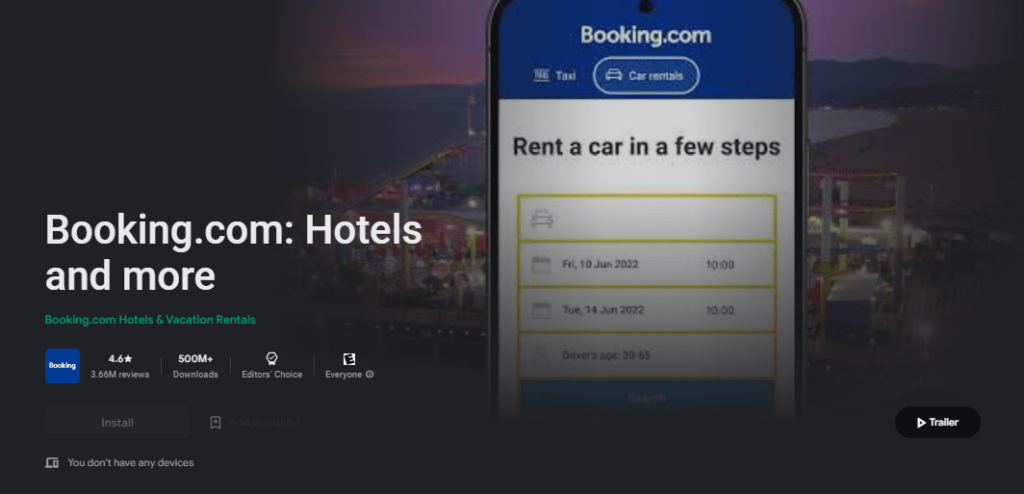
This app has made it easy to find and book the perfect hotel, resort, or vacation rental. With a wide range of properties, Booking.com allows travelers to compare prices and select the best deal. From luxury to budget-friendly, Booking.com caters to all kinds of travelers, making it a go-to app for accommodation needs.

Transportation and Navigation Apps

Uber
Uber App

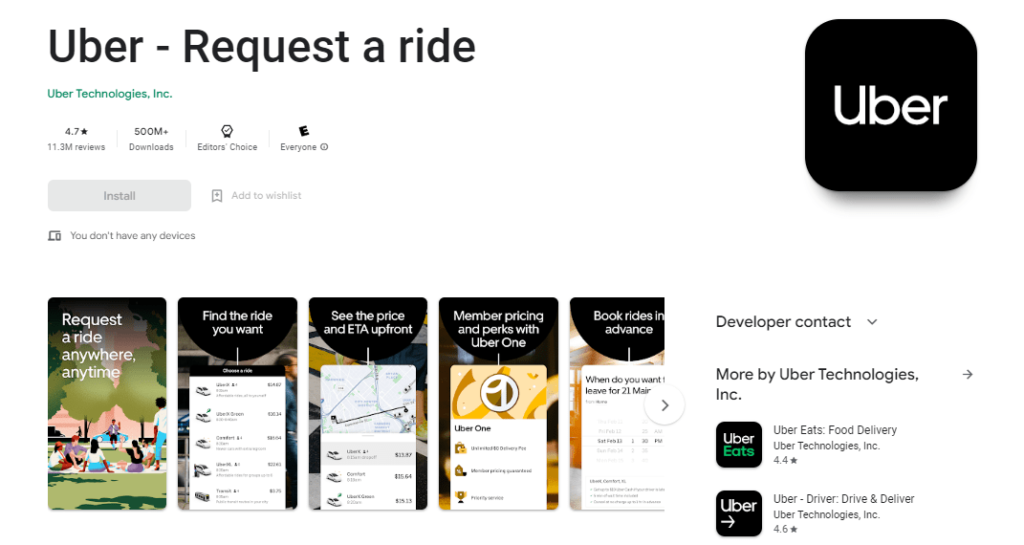
This app has changed the way we travel from one place to another. With the touch of a button, travelers can book a ride from the comfort of their homes or hotel. Uber has become the go-to mode of transportation for millions of people worldwide, making it a must-have app for anyone traveling.

Google Maps
Google Maps

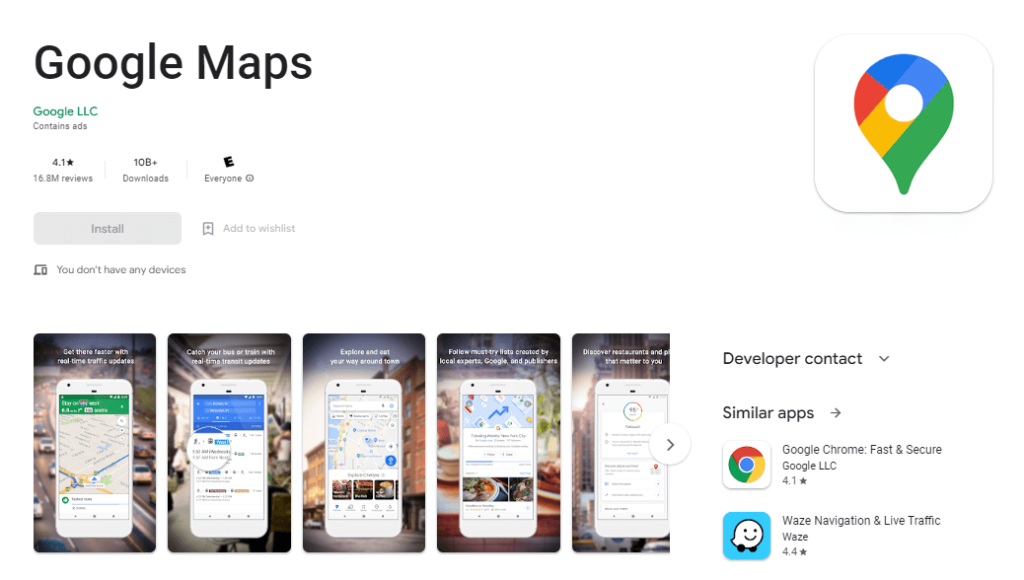
This app has revolutionized the way we navigate new places. With its accurate turn-by-turn directions and real-time traffic updates, Google Maps has made it easy for travelers to reach their destination without getting lost. It’s a lifesaver for those new to a city or country, providing them with the information they need to get around quickly.

Travel Planning and Experience Apps

TripAdvisor 
Tripadvisor: plan & book trips apps

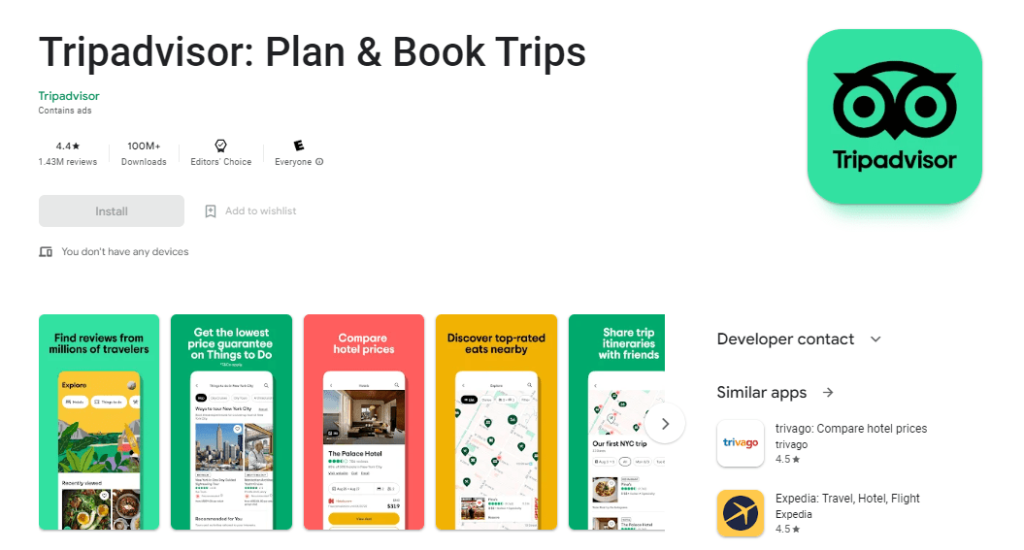
This app has made it easier for travelers to plan and experience their trips. With its vast database of travel information and user reviews, TripAdvisor provides travelers with the insights they need to make informed decisions about their travel plans. From finding the best restaurants to the must-visit tourist attractions, TripAdvisor has everything travelers need to make their trip memorable.

Hopper 
Hopper App

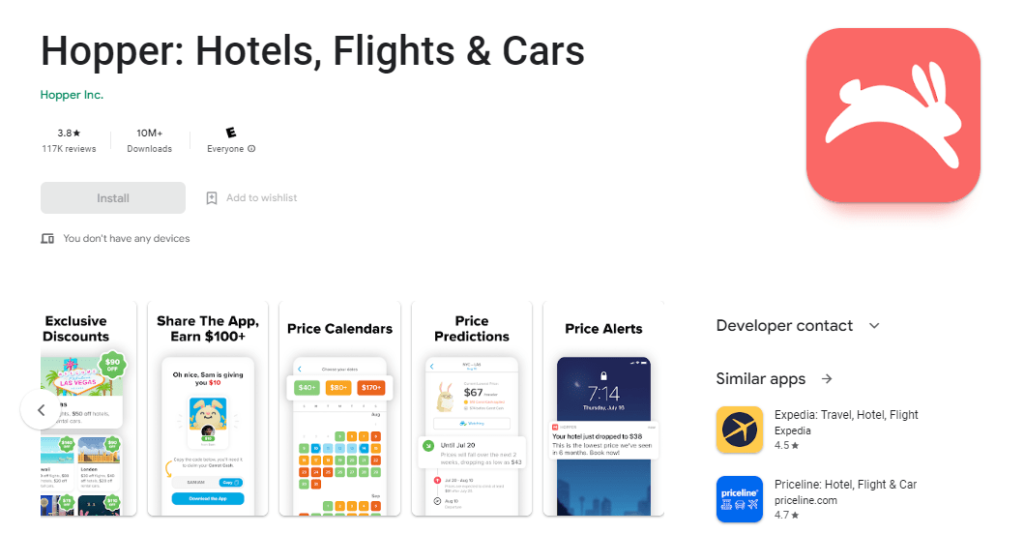
This app is a game-changer for budget-conscious travelers. Hopper uses sophisticated algorithms to predict the prices of flights and helps travelers find the best deals. With Hopper, travelers can save money on their trips and experience more for less. Hopper makes travel more affordable and convenient, from planning to booking.

Challenges Faced By The Travel & Tourism Industry In Adopting Mobile Apps 

Data Privacy and Security Concerns

One of the major challenges the travel and tourism industry faces in adopting mobile apps is the concern for data privacy and security. With the increasing number of hackers and cyber attacks, it becomes imperative for travel companies to ensure that their customer’s sensitive information is protected. Companies must take proper measures to prevent unauthorized access, data theft, and cyber-attacks.

Integration with Traditional Systems

Another challenge is integrating mobile apps with traditional systems. Many travel and tourism companies still rely on legacy systems that may not be compatible with modern technology. This makes it difficult for them to adopt mobile apps smoothly, and there can be technical glitches in integrating the two systems.

Competition From Established Players

The travel and tourism industry is highly competitive, and established players have been in the market for a long time. These established players have a vast customer base and already have their own mobile apps offering various services. It is difficult for new entrants to compete with established players, as they already have a solid online presence. To overcome this challenge, new entrants need to find unique ways to differentiate themselves from the established players and provide customers with value-added services that the established players do not offer.

Get Your Travel App Idea Rolling with ultroNeous

After covid-19 pandemic, people are eager to return to the road domestically and internationally. However, how people use travel services has changed dramatically, with a growing number of bookings and plans being made online. Everything is done through the digital medium, from ordering tickets and cabs to booking hotels and exchanging currency.

For businesses providing services to the tourism industry, having a strong web presence and a mobile app is no longer a luxury but a necessity. This is where ultroNeous comes in, understanding the needs of travelers who want to stay connected to their habits and routines while on the road. Contact us, and we will be the perfect partner for you to develop a travel app that meets your customers’ needs and maximize your profits.🚀

Why Progressive Web App Makes Sense for Your eCommerce Business

When choosing between selling on a marketplace or creating your own website, each option has its own advantages and disadvantages. While some businesses may find marketplaces like Amazon, Etsy, eBay, or Walmart Marketplace great sales channels, we believe that serious eCommerce businesses should have their own website. Although marketplaces have their benefits, they also come with limitations. In fact, according to the History of eCommerce by BigCommerce, customers will soon expect a seamless shopping experience across different devices and platforms, including standalone web stores and Amazon. Hence, relying solely on a marketplace may not be sufficient.

What is Progressive Web App?

A Progressive Web App (PWA) is a web application that uses modern web technologies to deliver an app-like experience to users. PWAs are designed to work seamlessly on any device, regardless of the platform or operating system. They can be accessed directly through a web browser and can be added to a user’s home screen, allowing them to be used like a native app. PWAs offer benefits such as offline functionality, push notifications, and faster load times.

Why Progressive Web App is Ideal for eCommerce Business?

There are several reasons why Progressive Web Apps (PWAs) are preferred:

1. Improved User Experience

PWA helps in improved user experience

PWAs can provide a fast, smooth, and responsive shopping experience similar to a native app. This is achieved through a combination of features such as faster load times, smoother navigation, and simplified checkout processes. PWAs can be optimized for mobile devices, which can improve the user experience for customers who prefer to shop on their smartphones or tablets.

Another advantage of PWAs is their offline functionality. With PWAs, customers can access their shopping cart and product information even when they’re not connected to the internet. This is especially important for ecommerce businesses that want to cater to customers who may not have access to reliable internet connections.

PWAs can also offer push notifications to customers, which can help increase engagement and remind them about items in their shopping cart or special offers. This can lead to increased conversions and repeat business.

2. Increased Conversions

Progressive web apps helps with increased conversions for an ecommerce business

PWAs offer several features that can help improve conversion rates. For example, faster load times and smoother navigation can reduce the likelihood of customers abandoning their shopping cart due to slow or clunky website performance. Simplified checkout processes can also make it easier for customers to complete their purchase, reducing the likelihood of abandoned carts.

In addition, PWAs can be optimized for mobile devices, which is important since many customers now prefer to shop on their smartphones or tablets. By providing a fast and seamless mobile shopping experience, PWAs can help increase conversion rates and reduce cart abandonment.

Push notifications can also be sent to customers through PWAs, which can help increase engagement and remind customers about items in their shopping cart or special offers. This can lead to increased conversions and repeat business.

3. Lower Development Costs

Screen showing programming code, PWA can lower ecommerce development cost

One reason for this is that PWAs can work on any device with a modern web browser, eliminating the need to develop separate apps for each platform. This can significantly reduce development costs and save time, as businesses can focus on building a single PWA instead of separate native apps for iOS and Android.

Additionally, PWAs are built using web technologies such as HTML, CSS, and JavaScript, which are widely known and easily accessible. This means that businesses can often use their existing development resources to build a PWA, without having to invest in additional specialized resources.

PWAs can also be updated instantly, without requiring users to download and install new versions. This can save businesses time and money by reducing the need for ongoing maintenance and updates.

4. Cross-platform Compatibility

Laptop and smartphone, PWA for cross platform functionality

PWAs can run on any device with a modern web browser, including desktop computers, laptops, smartphones, and tablets. This cross-platform compatibility means that businesses can reach a wider audience and offer a consistent shopping experience across all devices and platforms.

Additionally, since PWAs are built using web technologies such as HTML, CSS, and JavaScript, they can work seamlessly across multiple platforms and devices without requiring significant modifications or adjustments. This can save businesses time and money on development costs and maintenance.

Furthermore, PWAs can be installed on a user’s device just like a native app, providing a similar user experience without requiring the user to download and install a separate app. This can be particularly useful for customers who may not have enough space on their devices to download a native app or who may not want to clutter their device with too many apps.

5. Offline Functionality

Progressive web apps can cache data and content, allowing users to access the app even when they are offline. This can be particularly useful for ecommerce businesses, as customers may not always have a stable internet connection, but still want to browse products and make purchases.

PWAs can load faster than traditional websites, even when a user is offline because they can cache important resources like images, product descriptions, and other content. This means that customers can still access key information about products and services, even when they are not connected to the internet.

Since PWAs are designed to be mobile-friendly, they can provide a seamless user experience even when a user is offline. This can be particularly useful for ecommerce businesses that target customers in areas with limited or unreliable internet connectivity.

6. Push Notifications

With push notifications, ecommerce businesses can send targeted messages to customers based on their interests, behaviors, and purchase history. This can be an effective way to notify customers of sales, promotions, new product releases, and other important updates.

Push notifications can be personalized and contextual, making them more likely to be noticed and acted upon by customers. Since push notifications can be delivered even when the PWA is not open, businesses can engage with customers in real-time and encourage them to make purchases.

Push notifications can be automated, allowing ecommerce businesses to set up targeted campaigns based on specific triggers or events. For example, a business could send a push notification to a customer who has abandoned their cart, reminding them to complete their purchase.

7. Easier Updates

Unlike traditional mobile apps, which require users to manually update them through app stores, PWAs can be updated in real-time through the web. This means that businesses can make changes to their apps instantly, without needing to wait for users to download updates.

PWAs are built with web technologies like HTML, CSS, and JavaScript, making them easier to update than native apps, which require specialized knowledge of platform-specific programming languages.

This can be especially beneficial for ecommerce businesses, which often need to update their apps frequently to stay competitive and meet customer needs. For example, a business could quickly update their PWA to add new product pages, change their checkout process, or improve their user interface based on customer feedback.

Evaluate based on these questions for Your eCommerce Business

  • Are you looking to improve the user experience of your ecommerce website?
  • Do you want to increase conversions and sales on your website?
  • Are you interested in reducing development costs while still providing a high-quality app experience?
  • Do you want your website to be accessible on multiple platforms, including desktop and mobile devices?
  • Would you like to provide offline functionality to your website, allowing users to continue browsing and shopping even when they have a poor internet connection?
  • Do you want to take advantage of push notifications to engage with your customers and drive repeat business?
  • Are you interested in being able to update your app quickly and easily, without needing to rely on app store updates?

Conclusion

In conclusion, Progressive Web Apps (PWAs) offer a range of benefits that make them an ideal choice for ecommerce businesses. With improved user experience, increased conversions, lower development costs, cross-platform compatibility, offline functionality, push notifications, and easier updates, PWAs provide a powerful combination of features that can help businesses reach new customers and drive revenue growth. By adopting a PWA strategy, ecommerce businesses can stay ahead of the competition, offer a seamless and engaging experience to their users, and achieve their goals for success in the digital marketplace. Whether you’re a small startup or a large enterprise, a PWA can be a smart investment that pays dividends in the form of improved customer satisfaction, higher engagement, and increased revenue.

How ultroNeous can help you With eCommerce Solution

We are a reputed company that specializes in developing top-notch eCommerce web applications that are scalable, reliable, and robust across various devices. We possess expertise in the latest technologies such as Node.js, Flutter, and React Native, among others, that allow us to create highly responsive, adaptable, and fast applications. We are always ready to discuss your eCommerce project with you, and we can initiate the conversation over a quick phone call or email.

What’s new in Angular 14?

One of Google’s outstanding products is Angular, a typescript-based web application framework. Its most recent version, Angular 14, has been released. In this article, we’ll discuss what Angular 14 has to offer Angular developers in terms of upgrades and features. Let’s get this party underway as soon as possible.

Let’s take a look at what’s new in the Angular 14 release

Standalone Components will make the Angular Development Process Easier

By reducing the need for NgModules, standalone components help to speed up the creation of Angular apps. Standalone components are in the developer preview in Angular 14. They’re now ready to employ in your applications for the development and exploration phase.

 However, there’s a chance that the API won’t be stable and will change outside the normal backward compatibility method.

 Furthermore, the framework will continue to develop schematics (such as ng new app-name> –standalone), as well as explain use cases and the learning experience for this improved, streamlined mental model.

Typed Angular Forms

The top GitHub issue for Angular v14 is providing a strict type for the Angular Reactive Forms package. For the first time, FormControl accepts a generic type that indicates the sort of value it holds. The Angular team incorporated an automatic migration in Angular v14 to ensure that existing apps were not broken during the upgrade. Changes must be disseminated smoothly, and the ecosystem must remain intact as long as API complexity is considered.

 The good news is that the template-based form will not be affected by this new version.

Angular 14 released on June 2, 2022

Angular CLI Auto-Completion

If you’re an Angular developer, you may have had experience with the prior version of Angular CLI. You can also agree on how it improves productivity by providing the necessary commands for creating project artifacts such as components, modules, and directives.

 You can use a variety of commands, but you’ll nearly always need to look up commands and, more precisely, command options in the official manual. On the plus side, with the release of Angular 14, this option is no longer required.

 The new Angular 14 CLI functionality allows for real-time type ahead auto-completion in the terminal. To do so, use your terminal to run the ng completion command for the first time.

Simply type ng, then press Tab to see all the options, then Enter to choose one. If you’re working on an Angular 14 project, you’ll have more auto-completion options, such as the ng create command options.

Streamlined best practices

Starting with new change detection instructions on angular.io, Angular v14 delivers built-in tools that help developers to build high-quality apps, from routing to your code editor.

Streamlined page title accessibility

Another best practice is to make sure that your app’s page titles express the page’s information in a distinctive way. The new Route. Title property in the Angular Router in v13.2 simplifies this. Because of an incredible community contribution by Marko Stanimirovi, adding a title now requires no additional imports and is strongly typed.

A custom TitleStrategy can be used to configure more elaborate title logic.

Enhanced Template Diagnostics

Better template diagnostics are included in the current version of Angular 14, allowing Angular developers to be protected from common errors by the compiler, similar to how TypeScript code is protected. In prior versions of Angular, such as Angular 13 and earlier, the compiler did not issue any warnings. It only fails to build if a defect prevents it from doing so otherwise.

Minor mistakes like inappropriate two-way binding syntax or the inclusion of unnecessary operators like?? It’s easy to get warnings when a variable isn’t nullable.

Diagnostic tests that produce warnings or information diagnostics for user templates that aren’t always deadly would be available with the addition of a new private compiler option.

“Banana in a Box” Error

In two-way binding, a typical developer syntax error is to reverse the brackets and parentheses, writing ([]) instead of [()]. This error is called the “banana in a box” error since () looks like a banana and [] looks like a box, and the banana should belong in the box.

 While this is theoretically correct grammar, our CLI recognizes that this is rarely the intent of developers. We added thorough messaging and instructions on how to fix this mistake in the v13.2 release, all within the CLI and your code editor.

Catch Nullish Coalescing on Non-nullable Values

In Angular templates, extended diagnostics also raise errors for pointless nullish coalescing operators (??). This error is raised when the input is not “nullable,” that is, if the type of the input does not include null or undefined.

Extended diagnostics appear as warnings in ng build, ng serves, and the Angular Language Service in real-time. The diagnostics can be configured in tsconfig.json, where you can choose whether they should be a warning, an error, or suppressed.

Tree-shakable Error Messages

New runtime fault codes are included in this version of Angular 14. Robust error codes make identifying and referencing information on how to debug your failures a breeze. This allows you to create an optimizer that keeps error codes while removing large strings of error messages from production bundles.

Angular recommends visiting the Angular reference guides and reproducing the error in a development environment to detect the entire content while diagnosing a production problem. Current mistakes will be gradually restructured by developers in order to adopt this new format in future editions.

Conclusion

The introduction of Angular 14 has made it easier to develop Angular apps. The Angular developer community works to guarantee that web developers have access to improved versions of the TypeScript-based framework, allowing them to keep up with the rest of the online ecosystem and the demands of their users.

It’s time to update to Angular 14 now that you’re aware of the latest Angular 14 features and enhancements. We recommend that you update to Angular 14 if you are familiar with the newest Angular advancements and features. If you have any queries regarding your Angular project, ultroNeous Technologies is here to help you out, contact us now.

The On-Demand Service Marketplace Business and Revenue Model

The on-demand business model has been a popular and constantly evolving trend for quite some time. It’s not surprising that business owners are switching to on-demand services, as technology has made convenience a top priority. It’s something we can all relate to – ordering pizza from the comfort of our couch while watching a movie or easily getting a ride without having to face endless rejections early in the morning.

We’re all dreaming of a world where everything can be accomplished with just a few clicks. This is why many small and large businesses are embracing the on-demand model. The benefits are not just for customers but for businesses as well. The on-demand model allows for ease of management and efficient operations. But,

What Is an On-demand Service Marketplace?

The on-demand service marketplace is a platform that connects service providers with customers. These marketplaces offer a fast and convenient way for customers to access various services from different providers. One of the key characteristics of the on-demand service marketplace is that it operates in real-time, allowing customers to get the services they need quickly and easily. This marketplace is enabled by mobile apps and websites, which allow customers to request services, view service provider profiles, and make payments.

The market for on-demand marketplaces continues to grow and is expected to experience tremendous growth shortly. Among the 310 companies valued at $1 billion by January 2019, 23 belong to the On-Demand industry, according to the CBInsight report of Global Unicorn Club, encouraging more entrepreneurs to invest in this thriving sector. According to HBR, nearly 49 percent of users who use on-demand services are millennials. Among the rest, 30 percent are between 35 and 54. To be part of this rapidly expanding economy, you must be prepared for the growing competition.

Types Of On-Demand Solutions 

Service On-demand Model

The service on-demand model combines various services, ranging from hair coloring to plumbing, under one platform, providing customers with a comprehensive and integrated solution for their hyperlocal service needs.

An on-demand platform allows consumers to find, book, and review professional services without leaving their homes. This has been made possible by companies such as UrbanClap, Fiverr, and Upwork, which have successfully bridged the gap between service providers and customers.

By integrating different services onto one platform, the on-demand service model has created a convenient and efficient solution for consumers, allowing them to access a wide range of services easily.

On-Demand Logistics Model

While traditional courier services may get the job done, they often have many obstacles. Moving something from point A to point B can be complicated and costly, leading to delayed deliveries.

The on-demand logistics services simplify the delivery process by transporting goods quickly and efficiently, often on the same day or earlier. A survey predicts that the on-demand logistics market will reach $75 billion by 2030! Switching to an on-demand logistics model saves time and money and allows consumers to track their deliveries in real-time, giving them peace of mind.

Food On-Demand Model

Food Delivery Apps

The food on-demand model has revolutionized the food industry by providing customers with quick and convenient access to food through food delivery apps. These apps have transformed how we consume food by saving time and effort and only requiring a few taps on our mobile phones.

Food startups have witnessed exponential global growth in recent years due to the constant and eternal demand for food solutions. In fact, by 2027, the market volume for revenue is predicted to be around $1.45 trillion, with an annual growth rate of 12.33% (CAGR 2023-2027). This makes it a great opportunity for entrepreneurs to set up their on-demand food apps and capitalize on this growing trend.

Some of the key players in the on-demand food industry include Uber Eats, Instacart, Grubhub, and many more.

On-Demand Delivery Model

The on-demand delivery model has transformed traditional delivery methods in the same way as logistics businesses. By employing available resources and time efficiently, this model ensures that orders are delivered to their destinations quickly and efficiently. According to a survey, 60% of US customers are willing to pay an extra $10 for same-day furniture delivery.

Postmates is an excellent example. It is an on-demand delivery solution that has dominated the American market. With Postmates, customers can have anything delivered to their doorstep for a minimal fee. By addressing a significant barrier in the delivery segment, the company has attracted funding from investors and has become a household name in the market.

The Revenue Model of On-Demand Service Marketplace

The on-demand service marketplace operates on a unique revenue model that differentiates it from other business models. The revenue model of on-demand service marketplaces is based on their services. Here are some of the most popular revenue models used by on-demand service marketplaces:

Commission-based Revenue Model

The commission-based revenue model is the most commonly used for on-demand service marketplaces. Under this model, the platform charges a commission fee from the service providers for every transaction made through the platform. For example, Airbnb charges a commission fee from hosts for every booking made through its platform.

Advertising-based Revenue Model

Under the advertising-based revenue model, on-demand service marketplaces earn revenue through advertising. They offer advertising space to third-party companies and earn revenue from advertising fees. For example, Yelp earns revenue through advertising fees from businesses that want to advertise on its platform.

Subscription-based Revenue Model

This revenue model is based on subscription fee charges. It takes some amount of money from the users. For example, LinkedIn charges a subscription fee to businesses that want to use its hiring platform.

Transaction-based Revenue Model

The transaction-based revenue model is similar to the commission-based revenue model. Still, instead of charging a commission fee, the platform charges a transaction fee for every transaction made through the platform. For example, Square charges a transaction fee from merchants for every transaction made through its platform.

Comparison of Revenue Models

The revenue model of an on-demand service marketplace depends on various factors, such as the type of services offered, the target audience, and the competition. Each revenue model has its advantages and disadvantages. For example, the commission-based revenue model is easy to implement and can generate significant revenue. However, it may not be suitable for all types of services. The subscription-based revenue model can provide a predictable revenue stream, but it may not be ideal for platforms with a high churn rate. Ultimately, the choice of revenue model depends on the unique needs and goals of the on-demand service marketplace.

Factors that Influence the Success of On-Demand Business 

Reliability and Accuracy 

To build a loyal customer base, meeting expectations consistently is important. Your delivery partners should be reliable and skilled to ensure the timely delivery of orders. However, quality should not be compromised for speed. If customers encounter any issues, a prompt and fair resolution is necessary.

User-Friendly Interface 

Customers are always looking for convenience and simplicity. They want easy-to-use apps and platforms that require minimal effort to access. Optimizing your website and app for a user-friendly experience is crucial as an on-demand service provider. The interface should be easy to navigate, and customers should be able to track their orders in real-time.

The on-demand economy is constantly evolving, and to remain competitive, it’s essential to stay informed of market changes. Keep track of technology updates and trends in the last-mile delivery industry. It’s also important to know the customer’s location, inventory, and delivery partner’s location to provide the best service possible.

The Growing Popularity of On-Demand Business Models 

On-demand services have been a game-changer in the business world and are here to stay. As the industry continues to grow, much must be explored and developed. Therefore, businesses must use these innovative solutions to their fullest potential.

It is conceivable that customers will rely entirely on on-demand services in the future. Thus, providing customers with convenience and reliability is critical to keep them engaged and satisfied with your services. This opportunity should not be missed, so businesses should embrace the on-demand business model and stay ahead of the curve.🚀

On-Demand Service market place

Mobile Apps are helping Supply Chain & Logistics, Here’s How

Not too long ago, well. Let’s say 20 years ago, supply chain/logistics were a headache. Consumers keep waiting for their packages, keep calling customer support for various queries, and naively believe the driver who keeps saying that he/she is just 10 minutes away from reaching their destination. But now, those times are behind us. 

The smartphone has changed and is changing each sector of the world’s economy. More and more traditional tasks are shifting to the ‘tech-savvy’ category. Meaning, people are doing the conventional chores with just a ‘tap’ button. 

There are numerous ways in which mobile apps benefit supply chain/logistics management for company owners. It helps them provide first-class service to their customers and improves the brand image, not to mention it becomes easy to handle all the queries, and you can have quick access to all the necessary data at your fingertips.

So without any further ado, let’s jump right into

Here’s how mobile apps are helping the supply chain/Logistics industry.

Easy management

Logistics services cover everything from picking, packing, and transportation to warehousing and managing stock inventories.

Inventory management

A logistics business consists of more than just transportation. It also involves storing inventories before dispatching them. Businesses can manage their supplies more efficiently by using mobile technology. It helps to simplify and accelerate data entry. Getting rid of redundancies and inaccuracies quickly allows for higher data accuracy. The owners can easily keep a check on storage and the information stored in the database.

Vehicle and fleet management

Mobile apps come with a GPS that allows employers to keep an eye on all their employees’ whereabouts. It becomes easier to trace drivers, cargo, and vehicles. As a result, a problem can be solved before it arises.

More flexibility

Route optimization helps the drives to deliver quickly, as they can avoid traffic difficulties. Also, users can schedule the delivery according to their convenience. This way, organizations can increase flexibility and build better customer relations.

Time-saving and reducing cost

Applications enable routes and dispatches to be easily managed, and the miles to drive can be reduced, which reduces fuel consumption and time spent driving.

Supply chain / logistic worker utilizing smartphone tablet to in his day-to-day warehouse work
Photo: Tiger Lily

Data-driven decision-making

Mobile apps are able to collect and organize a lot of data. The applications will be able to provide more actionable insights when this data is processed with advanced data technologies.

Performance monitoring

As there are many stakeholders in supply chain management, keeping them on the same page is a task. A mobility solution is a way to go. Logistics managers can keep a log of goods received and transported, communicate with suppliers, and review performance. This way, it becomes easy to identify and resolve performance gaps. For instance, if there is a possible delay, it is easy to communicate and provide real-time information via an app.

Customer satisfaction

To give your customers the best experience, taking feedback is essential. On-time delivery, booking status, shipment tracking, contactless delivery, and customer support are the features that lure your desired customers to your side and help them to build trust in the service provider.

Cost optimization

Efficient administration with paperless documentation, increasing workforce productivity, reducing driving distance, and resource optimization are just a few ways apps can provide greater value for the money.

Take advantage of the supply chain app

To Increase Revenue

In the coming years, e-commerce will continue to dominate retailers. They require supply chain management that is capable of fulfilling their promise of one-day or same-day delivery. This means there will be plenty of opportunities to progress logistics business and generate revenue, and mobile app development will play a pivotal role in increasing the brand’s demand.

Better user experience

In earlier times, people used to go to courier offices to deliver the package they wanted to ship. These methods can be exhausting and frustrating as the population is growing and demand is increasing exponentially. These days, thanks to easy-to-use apps, the whole scenario has changed. Customers can request anything from small to big package delivery by simply clicking a button. Shippers can pick up and deliver the products using the app at the doorstep. A smoother and slick user experience helps in word-of-mouth marketing.

Assist in managing peak urbanization 

Retailers and e-commerce companies rely heavily on logistics services, and more orders are being placed online and offline. Which ultimately results in a higher number of logistics assistance requests. A mobile app allows logistics services providers to meet these ever-increasing demands. Apps are easily adaptable and help in the distribution of assets to keep up pace with the population’s needs and wants.

Conclusion

Supply Chain or logistics service apps are not only helping to build up the brand’s image, but also helping to reach a better and wider audience set without the traditional complexity. If you have a specific business idea in your mind or just want to enhance your performance and reach out to global consumers, our team at ultroNeous Technologies is keen and highly skilled to create customized apps for you. Get in touch with us to discuss your idea.

How Food Delivery Apps Can Boost Your Restaurant Business

In today’s fast-paced world, people want their food fast and at their doorstep. The popularity of food delivery apps has skyrocketed in recent years, with more and more people relying on them to order food. If you own a restaurant, it’s important to tap into this trend to stay ahead of the competition. In this article, we’ll explore how food delivery apps can boost your restaurant business.

The Popularity of Food Delivery Apps

Food delivery apps such as Uber Eats, Grubhub, and DoorDash have become increasingly popular in recent years. In fact, the global online food delivery market is expected to reach $161.7 billion by 2023. People are turning to food delivery apps for convenience and variety. With just a few clicks, customers can order food from their favorite restaurants and have it delivered to their doorstep in no time.

Benefits of Food Delivery Apps for Restaurants

Wider Reach For Target Audience

First and foremost, they allow restaurants to reach a wider audience. By partnering with food delivery apps, restaurants can reach customers who might not have otherwise known about them. This can lead to increased sales and brand awareness. Attracting fresh clients entails enhancing your restaurant business’s brand and improving customer engagement. So, what strategies can you employ to entice customers to download your on-demand delivery app, and how can you encourage them to use your mobile ordering app frequently?

Well, it’s critical to provide your target audience with high-quality content and engagement. This should include a mix of appealing app notifications, blog posts updating clients about your restaurant, and rewards when appropriate. However, avoiding overwhelming your customers with too much information is also important. Using a well-designed food delivery application gives you access to built-in features that can help keep your clients engaged and connected to your business.

Orders Can Be Delivered Anywhere

Food delivery apps also provide a streamlined ordering and delivery process. Instead of handling phone orders and deliveries themselves, restaurants can rely on the app’s technology to handle the process. This saves time and resources for the restaurant and provides a more efficient experience for the customer. A food delivery app allows customers to order from anywhere without interrupting their daily routines or requiring them to live close to the restaurant. This has revolutionized the way customers enjoy their food and could attract new customers from neighboring cities and states. Such a remarkable customer experience can lead to an increase in patronage for the restaurant.

Data Analysis

Additionally, food delivery apps can provide valuable data and insights for restaurants. By tracking orders and customer behavior, restaurants can gain insights into what’s popular, and what’s not, and how they can improve their menu and customer experience.

Win-Win Situation

Yes, you heard it correctly! A mobile ordering app is a win-win situation for everyone involved in the food industry. This includes you, other restaurants, customers, and even the job market. Restaurants can benefit from increased sales, better branding, and more exposure, while customers can relish their food with the convenience of delivery to any location during the restaurant’s operating hours. Moreover, more jobs are being created as delivery agents are needed to fulfill the demand for food delivery. In summary, a simple yet captivating food delivery app can benefit everyone in the food industry.

How to Choose the Right Food Delivery App for Your Restaurant

With so many food delivery apps to choose from, it’s essential to choose the right one for your restaurant. Here are a few factors to consider when making your decision:

  • Fees: Different food delivery apps have different fee structures. Make sure to choose one that fits within your budget.
  • Customer base: Some food delivery apps cater to specific demographics or geographic areas. Choose one that aligns with your target audience.
  • Integration: Ensure the app can easily integrate with your existing POS system.
  • Support: Choose a food delivery app that provides reliable customer support.

Tips for Optimizing Your Restaurant’s Food Delivery Experience

Once you’ve chosen a food delivery app, you need to optimize the experience for your customers. Here are a few tips to keep in mind:

  • Menu optimization: Make sure your menu items are optimized for delivery. Some foods, such as fried foods or soups, may not travel well.
  • Packaging: Invest in high-quality packaging that keeps food fresh and warm during delivery.
  • Communication: Provide clear communication with the customer about delivery times and updates.
  • Branding: Use the food delivery app to showcase your restaurant’s branding and personality.

The Impact of Food Delivery Apps on the Restaurant Industry

Food delivery apps have had a significant impact on the restaurant industry. They’ve made it easier for restaurants to reach new customers and provide a more efficient delivery experience. However, they’ve also changed the way people order food, leading to a shift away from traditional dining experiences. Restaurants need to adapt to this shift to stay competitive.

Potential Drawbacks of Using Food Delivery Apps

While food delivery apps offer many benefits for restaurants, there are also some potential drawbacks to keep in mind. One of the main concerns is the fees associated with using food delivery apps. These fees can vary greatly depending on the app and can cut into the restaurant’s profits.

Another concern is the potential for negative reviews on the app. If a customer has a bad experience with the app’s delivery service, it can reflect poorly on the restaurant, even if it was not their fault. Restaurants need to make sure they are providing high-quality food and service to avoid negative reviews.

Finally, some restaurant owners worry about the loss of the dining experience. Food delivery apps make it easier for people to eat at home, which can lead to a decline in traditional dining experiences. Restaurants need to find ways to create an experience that is worth leaving home for in order to stay competitive.

Uber Eats 

Uber Eats is a popular food delivery app that connects customers to a wide range of local restaurants. Customers can browse menus, order their favorite meals, and track their delivery in real-time.

Grubhub

Grubhub is another popular food delivery app that offers a wide selection of local restaurants and cuisines. It also features a rewards program and allows customers to schedule orders in advance.

DoorDash

DoorDash is a food delivery app that partners with local restaurants to offer customers various food options. It also features a subscription service that offers free delivery and other perks.

Postmates

Postmates is a delivery app that offers food delivery and delivery for other goods such as groceries and alcohol. Customers can also track their deliveries in real-time and receive personalized recommendations based on their ordering history.

Conclusion

Food delivery apps have become an increasingly popular way for people to order food, and they offer many benefits for restaurants. By tapping into this trend, restaurants can reach new customers, provide a more efficient delivery experience, and gain valuable insights into customer behavior. However, it’s important to choose the right app, optimize the experience for customers, and be aware of the potential drawbacks. Contact us to get the right guidance and estimation for your culinary adventure.

Frequently Asked Questions

Are food delivery apps safe for restaurants to use?

Yes, food delivery apps are generally safe to use for restaurants. However, choosing a reputable app and following best practices for food safety and handling is vital.

Can food delivery apps help restaurants reach new customers?

Yes, food delivery apps can help restaurants reach new customers who might not have otherwise known about them. This can lead to increased sales and brand awareness.

How can restaurants optimize their menu for delivery?

Restaurants can optimize their menu for delivery by choosing foods that travel well and investing in high-quality packaging that keeps food fresh and warm during delivery.

What are some potential drawbacks of using food delivery apps?

Potential drawbacks include high fees, negative reviews, and declining traditional dining experiences. Restaurants must be aware of these concerns and find ways to address them.

Best Hybrid App Development Framework in 2023

The use of smartphones is increasing at skyrocketing speed, and it has become one of the important parts of human life. So, Mobile phones are becoming an essential part of most businesses in order to get their products and services exposed to the people. Enterprises and business are rapidly increasing their efforts, largely on mobile strategy. According to Oberlo in May 2022, 58% of all traffic come through mobile phones.

There are many frameworks that allow the creation of mobile apps. However, Hybrid app development has gained popularity among enterprises and businesses because hybrid apps run on both Android and iOS platforms utilizing a single codebase. There are a lot of hybrid mobile app development frameworks on the market, and it can be tough for you to figure out which one is right for your business.

In this post, we’ll go through the Best Hybrid App Development Framework in 2023 and how to pick the best one for your business.

Flutter

Flutter for hybrid framework

Flutter is an open-source framework for developing both Android and iOS apps, launched by Google in May 2017.

It uses the same code base to construct a cross-platform mobile application, rather than creating new code for each operating system. Flutter comes with highly configurable widgets and uses the same code to create mobile apps more quickly and effectively.

If you are planning to have an app for Android and iOS it is ideal to hire Flutter developer is a must.

  • Developer:- Google 
  • Release:- 2017
  • Language:- Dart
  • Platform:- Android, iOS, Desktop, Web, macOS, tvOS.

Pros

  • UI designs feature a variety of design components and Widgets.
  • Cross-platform compatibility with native performance.
  • Own rendering engine.
  • Strong community backing.
  • Hot reload features, resulting in faster development.
  • Moderate learning curve.

Cons

  • iOS’s support is limited as it is new.
  • Comparatively, larger app than a native app.

React Native

React Native for hybrid framework

React Native is an open-source JavaScript framework created by Facebook that allows you to create apps for multiple platforms, including iOS, Android, and the web, all from the same code base.

One of the most important aspects of React Native is its performance. It renders at 60 frames per second by default and may go up to 120 frames per second. Developers may build code that is equivalent to the original Swift or Java code using native APIs and a JavaScript-based interface.

 Reusable components, connectivity with third-party plugins, and component-based GUI creation for front-end apps are significant characteristics of React Native.

  • Developer:- Facebook
  • Release:- March 16, 2015
  • Language:- JavaScript
  • Platform:- Android, iOS, Desktop, Web, macOS, tvOS.

Pros

  • Supports third-party plugins
  • Intuitive modular architecture that makes changes and upgrades simple.
  • Almost all the code may be reused across the iOS and Android platforms, which speeds up the development process.
  • Faster speed application with native performance
  • The quick reboot features two screens, one for editing the code and one for evaluating the changes.

Cons

  • Keeping the app up to speed with the current React Native version is difficult.
  • Slower in performance than native.

Ionic

Ionic for hybrid framework

Ionic is a toolkit that allows us to develop mobile apps for both Android and iOS devices utilizing Web technologies such as HTML, CSS, JavaScript, and AngularJS. Ionic provides tools and services for developing hybrid mobile applications with native performance.

It is one of the most cost-effective hybrid app development frameworks, with a large library, built-in tools, front-end development, and premium user interface components, allowing app developers to create high-quality PWAs. It is based on the Cordova platform. Cordova provides an API for Native devices to connect with JavaScript code.

  • Developer:- Drifty
  • Release:- 2013
  • Language:- JavaScript
  • Platform:- Android, iOS, Windows.

Pros

  • Inbuilt UI components are available for stunning designs.
  • Easy to update and highly scalable.
  • App testing is simple and convenient.
  • Strong community support with timely updates.
  • Allows for high-end integration of a large number of customizable plugins.

Cons

  • No hot reload facility.
  • Native plugins aren’t always reliable and might cause conflicts.

Xamarin

Xamarin for hybrid framework

Xamarin is an open-source platform that uses .NET to create clean and performant apps for iOS, Android, and Windows owned by Microsoft.

Xamarin is unique in that it provides a single language and runtime, C#, that works across three mobile platforms (Android, iOS, and Windows). Xamarin gives developers access to a variety of tools for creating cross-platform mobile apps.

Xamarin apps may be built on a PC or a Mac and then compiled into native app packages, such as an APK file for Android or an IPA file for iOS.

  • Developer:- Microsoft
  • Release:- 2011
  • Language:- C#
  • Platform:- Android, iOS.

Pros

  • Inbuilt collection of tools for developing mobile apps.
  • Updates, testing, and maintenance are all simple.
  • Cross-platform compatibility with faster speed and native performance.
  • Simple testing process.
  • Several components, widgets, and plugins are available.

Cons

  • Developed applications are of massive size.
  • Not suitable for apps with complex UI.

It’s your task to determine which framework is best for you. Determine your business’s strategy and goals before adopting a platform. As a result, you can properly prioritize platforms. Flutter, React Native, Ionic and Xamarin are three of the most popular hybrid app development frameworks for developing hybrid apps. 

Conclusion

Each framework is different from others, as they have different characteristics and features. To choose the best hybrid framework for mobile app development, you must consider both its pros and cons, which we have already listed. We expect that this blog has aided you in making an ideal selection and in realizing your hybrid app idea.

Flutter 3: What is New for Developers and Owners?

As the trend of cross-platform app development is snowballing. Many new frameworks are introduced and launched in the market. The world of cross-platform app development used to be dominated by React Native before. However, now the time has changed.

Since the announcement of Flutter by Google in 2017, the world of cross-platform has completely changed. Since then google is constantly upgrading and updating its version along with new features. With the new updates, Flutter Development is gaining more and more popular among developers.

In this article, we will explore What are the new features in Flutter 3.0 that developers and owners should know?

Flutter 3: What is new for developers and Owners?
Source: Medium

Introduction to Flutter 3.0

So, we are here with google  Google’s latest masterpiece, Flutter 3, which is the latest version of Flutter with the major update as six platform support with a single code base.

With the constant effort from google finally Flutter 3, it was announced on May 11, 2022. Flutter 3 allows developers to create attractive experiences across six platforms from a single codebase, allowing entrepreneurs to offer innovative ideas to the whole addressable market from day one

On the previous version i.e 2.0 Web, Windows iOS and Android support was only available. Now Flutter 3.0 is backed with stable support for macOS and Linux apps. The goal is to provide you the freedom to use the underlying operating system to its full potential while sharing as much UI and logic as you like.

What’s New in Flutter 3.0?

There are many new updates to share with you in this 3.0 release, including an update to Flutter’s macOS and Linux support, substantial speed improvements, Mobile and Web enhancements, and much more! Some major updates :

Six Platform Support:-

When Flutter was first launched, it garnered a lot of positive feedback from the development community. Until recently, Flutter has been regarded as the most dynamic cross-platform development framework with six platform supported with the latest update.

Previously on Flutter 2.0 macOS and Linux support were not available and the developer couldn’t do production for macOS and Linux. Now, with Flutter 3.0 you are ready for production for macOS and Linux without any hurdles. With this, you can get the app running on six platforms: Android, iOS, macOS, Windows, Linux, and Web with a single code base.

iOS Variable Refresh Rates:-

On iOS devices with ProMotion displays and the latest iOS version, such as the iPhone 13 pro and iPad pro, Flutter 3 will enable variable refresh rates.

With the Flutter 3.0 update now, you can run apps on a 120Hz refresh rate on devices with the latest iOS version which was not available in the previous version. Allowing users for a smooth and better run time experience.

Also read this: How Food Delivery Apps can Boost Your Restaurant Business

Foldable phones support:-

Flutter 3.0 is integrated with the foldable phone support which was not available in the previous version. In collaboration with Microsoft, new features and widgets such as DisplayFestureSubScreen, and DisplayFeatures are added allowing you to build dynamic and entertaining experiences on foldable devices.

International text input support:-

International text input, including third-party input methods such as Sogou and Google Japanese Input, is supported on all three desktop platforms Windows, Linux, and MAC, including languages that employ text input method editors (IMEs) such as Chinese, Japanese, and Korean.

Discontinue windows 7/8 for development:-

With the release of Flutter 3.0 Flutter development for windows, 7 / 8 is not recommended.

While previous versions of windows (Windows 7, Windows 8, and Windows 8.1) are not blocked from development however this version and we only provide limited testing during release as Microsoft no longer supports them.

Flutter apps running on Windows 7/8 will be supported; however, they are encouraged to upgrade.

Faster iOS release :

Flutter 3.0 comes up with the new IPA command “Flutter build IPA” for the simplified launch of your iOS application.

Image Decoder :

Flutter web now automatically finds and is able to use the ImageDecoder API in browsers that support its uses such as (Chrome, Edge, Opera, Samsung Browser, and others). The new API uses the browser’s built-in image codecs to decode pictures asynchronously this will improve picture decoding by 2x.

Material 3:-

This is an update on the existing features of Flutter. Material Design 3, the next evolution of Material Design, is supported by Flutter 3.0.

Material 3 elements like as dynamic color, an improved color system and typography, improvements to several components, and new visual effects introduced in Android 12 such as a new touch ripple design and a stretch over-scroll effect are all supported by Flutter 3. Try material 3 and take your existing Flutter project to next level.  

Summary:-

We have tried to summarize and offer you the most important features in Flutter 3.0 which you must know as a developer or as a business owner. We’d hope that reading our blog article has given you a complete picture of what’s new in Flutter 3.0.

Thank Flutter Team at Google for all of your hard work in helping Flutter maintain its position as the most popular cross-platform UI toolkit with regular update and upgrade.

If you want to be part of the google framework and use the most popular cross-platform UI tool kit on your next project or if you want to upgrade your project with Flutter 3.0. We are here to help you out. 

Let’s Discuss your Idea.