Which JavaScript Framework/Libraries to Consider for your App

In today’s world, mobile apps have become an integral part of our daily routine. In the third quarter of 2022, an average smartphone user spent nearly 4.86 U.S. dollars on mobile apps. With the skyrocketing number of app developments in recent years, mobile apps are generating billions of dollars in revenue. It’s a cut-throat competition among mobile developers to build apps that provide the best user experience and effectively solve problems. To achieve this goal, JavaScript has emerged as a viable solution for building mobile apps. If you’re wondering which is the best JavaScript framework for mobile apps, you’re in the right place. In this article, we’ll help you find the perfect JavaScript framework to build mobile apps that are both user-friendly and effective.

Understanding of JavaScript Frameworks

JavaScript is one programming language that has captured the imagination of millions of people. Its ability to construct dynamic websites and mobile apps has become a popular choice for both startups and large corporations. If you’re interested in learning more about JavaScript, we’ve covered you with a comprehensive guide.

When developing efficient mobile apps, mainly for Android, JavaScript frameworks are the go-to choice. These frameworks consist of pre-written code libraries that web developers can use to speed up their development process. Many people looking to create mobile apps have discovered that JavaScript is the perfect choice because of its cost-effectiveness, robust community support, and easy learning curve. To dive deeper into JS test frameworks, check out our guide to JS test frameworks.

JavaScript frameworks work seamlessly across various platforms, including Windows, Android, and iOS. With a solid understanding of HTML, CSS, and JavaScript, developers can create mobile apps that are both powerful and efficient.

JavaScript Frameworks For App Development

React Native

React Native is a powerful tool that empowers developers to create native mobile apps for iOS and Android platforms. With React Native’s hybrid nature, you can use the same codebase to build a mobile application. The primary goal of React Native is to enhance the mobile user experience. It also offers fast and high-performance development, making it a great choice for creating cross-platform mobile apps.

Key Features

  • Its one-way data flow feature gives developers more control over the development process. This feature also helps increase user engagement and reduces the likelihood of users leaving the app. 
  • It is simple and easy to use, leveraging the widely-used Node Package Manager for installation. 
  • Thanks to React Native’s modular and user-friendly interface, it’s easy for multiple developers to collaborate on building an app. 

Vue.js

VueJS is a rapidly growing framework that outperforms many others in size, reactivity, reusability, documentation, and ease of use. This robust framework boasts many unique features, making it an outstanding choice for developers and organizations. Despite its versatility and flexibility, Vue.Js is in high demand as it provides solutions for creating modern and high-performing apps.

Key Features

  • The use of virtual DOM, data-binding, components, and HTML templates. The framework’s data-binding feature allows for the manipulation and assignment of values to HTML attributes, the assignment of classes, the changing of styles, and much more. 
  • Components are another critical aspect of Vue.JS, allowing developers to build custom elements that can be reused in HTML. 
  • With VueJS, HTML templates can bind with the DOM and the instance data of Vue, making it a powerful and flexible choice for app development.
  • VueJS uses a more efficient and faster virtual DOM implementation compared to React, making it more performant and allowing for quicker updates to the user interface.

Mobile Angular UI

Mobile Angular UI is an open-source framework designed to support online and mobile application development. The framework is based on the MVC and MVVM architecture, making it one of the most sought-after platforms for app development. Mobile Angular UI’s popularity is due to its easy-to-use plug-and-play components, intuitive directives, and native-like experience for hybrid apps.

Key Features

  • Mobile Angular UI is a low-code framework that enables users to build apps quickly and easily. 
  • MVC and MVVM architecture allows developers to change the model layer and see the updates automatically reflected in the view layer. This results in faster development time and quicker debugging. 
  • Mobile Angular UI leverages the power of Bootstrap and AngularJS to enable developers to create HTML5 mobile apps. 
  • The framework provides unique functionality like overlays, scrollbar regions, and switches that rely on the performance of fastclick.js and overhtrow.js. 
  • Angular redefines the current JavaScript virtual machine by converting templates into code, resulting in faster loading times than other front-end frameworks.
  • Even beginners can quickly learn React Native’s commands and build powerful mobile apps.

Ember.js

EmberJS is a powerful and widely-used tool for building intricate and demanding mobile apps. It is an open-source JavaScript framework that features Fastboot.js and Ember.js, allowing for two-way binding.

Key Features

  • Ember is an excellent solution for companies needing to onboard new developers quickly and efficiently transfer team members across projects. 
  • It is built to handle complex routing and enables shared URLs, making maintaining and reusing code easier.
  • Ember.js uses templates to automatically update the model as the app’s content changes, making it an efficient framework. 
  • It is an adaptable solution, allowing developers to improve the performance of their apps without requiring full-page refreshes. 
  • And if developers encounter issues, Ember Inspector is a handy tool for troubleshooting Ember apps.
  • Ember’s cutting-edge features make it an indispensable tool for building robust, efficient, and scalable mobile apps. 

Backbone.js

Backbone.js, a lightweight JS framework created in 2010, has become famous for web developers due to its Model View Presenter (MVP) architecture. With its RESTful JSON interface, Backbone.js helps create client-side web apps by structuring web apps with models for custom events and key-value binding, collections with an efficient API, and views using declarative event handling.

Key Features

There are several features and benefits of Backbone.js that make it an excellent option for web development. 

  • Firstly, it is a free and open-source framework with over 100 extensions available. 
  • Backbone.js allows for impressive designs with fewer lines of code and offers structured and organized app development. 
  • The code is simple and easy to maintain. While it has a softer dependency on jQuery, Backbone.js is stronger on Underscore.js.
  • It is ideal for developing simple-page apps, creating smooth front-end JS functions, and building organized and well-defined client-side mobile or web apps. 

jQuery Mobile

jQuery Mobile is a highly versatile and user-friendly framework that allows developers to create responsive websites and apps compatible with a wide range of devices. This powerful tool combines HTML5, jQuery, and jQuery UI, which enables developers to build complex web apps with minimal programming.

Key Features

  • One of the most notable features of jQuery Mobile is its built-in theme system, which offers developers the flexibility to customize the look and feel of their apps. 
  • This framework provides touch-based user input functions designed to work seamlessly across different browsers and devices.
  • Thanks to its lightweight size, jQuery Mobile is ideal for developers looking to create fast-loading web apps that deliver an exceptional user experience. 
  • With its powerful combination of features and ease of use, jQuery Mobile is an essential tool for any developer looking to create cutting-edge web apps that are both responsive and highly functional.

Apache Cordova

Apache Cordova is an adaptable and open-source JavaScript framework widely used for mobile development. It enables developers to access the native features of mobile devices and operating systems through its built-in JavaScript API. The framework also works with PhoneGap, allowing developers to use their JavaScript, HTML, and CSS scripts seamlessly.

Key Features 

  • Apache Cordova comes with a range of pre-made plugins that provide access to the device’s camera, GPS, and file system, among other features. 
  • With Cordova’s basic components, developers can quickly create the app’s framework and concentrate more on implementing their logic.
  • Cordova’s CLI is another crucial feature that allows developers to create new projects, compile them on multiple platforms, and run them on actual devices or emulators. This feature significantly reduces the time and effort required to develop and test mobile apps.

Wrapping Lines

In conclusion, choosing the right JavaScript framework/library is crucial for building high-performing web apps. Ember.js, jQuery Mobile, Apache Cordova, Vue.JS, and Backbone.js are some of the most popular frameworks available, each with unique features and benefits. It’s important to evaluate your project requirements and choose a framework that fits your needs. Doing so ensures your web app development is structured, organized, and efficient. We hope this article has provided actionable insights to help you choose the suitable JavaScript framework/library for your next project. And if you want us to be the one who gives the wings to your project, then contact us and set your goals now!🚀
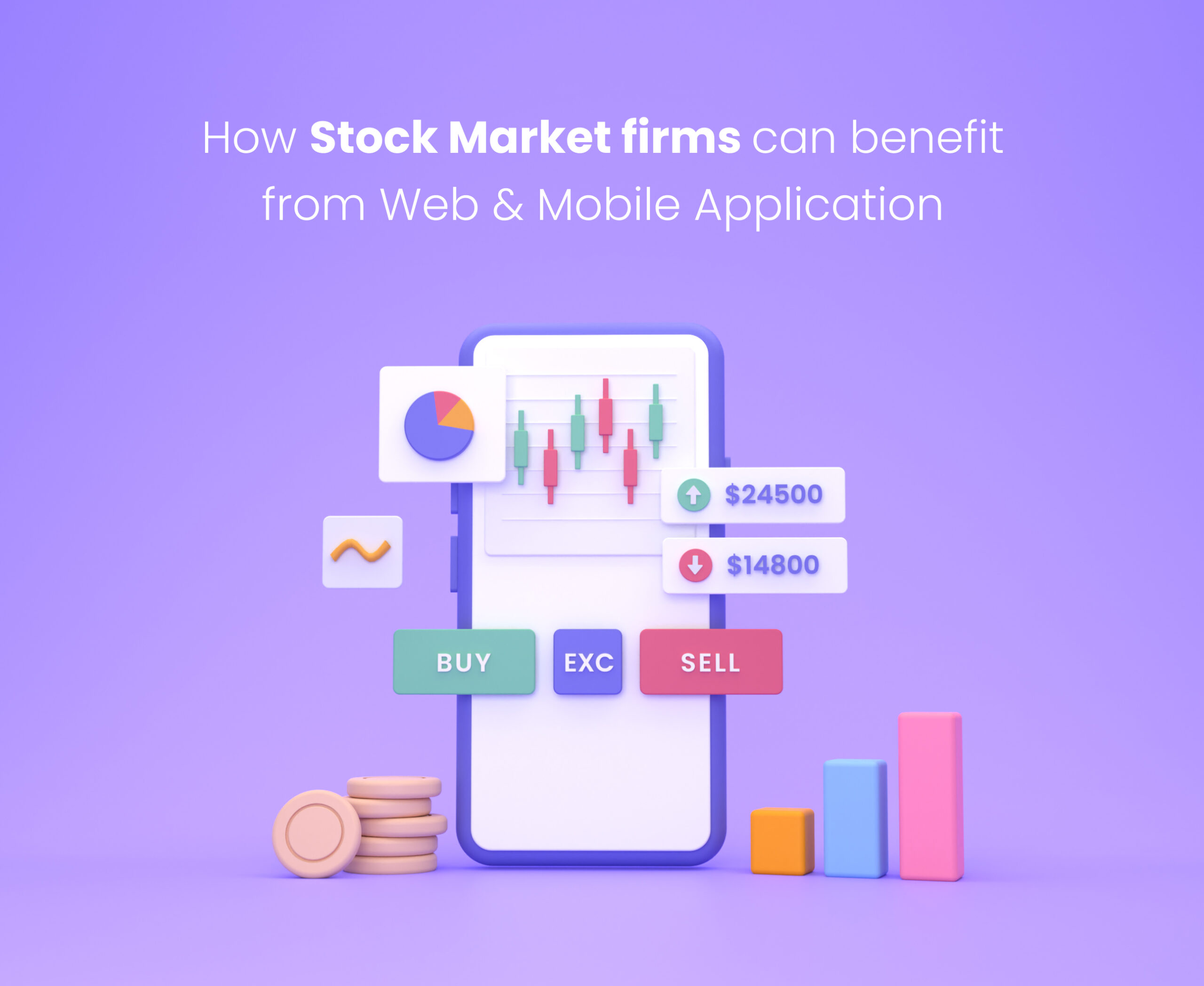
How Stock Market Firms can Benefit from Web & Mobile Application

According to Statista, Over half of Americans have stock market investments. As mobile app technologies make numerous activities simple and quick, various fields are also making strides in this area and reaching global consumers with minimal effort. Checking smartphones for tasks like ordering food, paying a bill, and counting footsteps have become a habit of millions of users. And now stock trading and investing are on the list as well. Investing has become easier than before. And one doesn’t need to be a pro to start a journey in the world of trading.

There are various ways to grow money when it comes to investing. Individuals buy shares of companies and make mutual fund investments, invest in cryptocurrencies, etc. In traditional trading, people used to call stock exchanges, and then they put them on hold while connecting them to stockbrokers. The brokers will charge for making them invest their money. Now, all that has been behind us. Online trading has taken place rightfully.

Do not fret. It is still not too late. Stock market firms can also use mobile app development to gain investors and mark their standards of success. Wondering how? Well then, let’s go straight to what unique features firms can offer brokers and investors, so both can benefit from them. 

The following are some standard components you should consider before diving into features: 

  • Sign-in and dashboards for both brokers and users. 
  • A secure transfer of funds

Stock Market App Features that investors are counting on

Chat and Call Facility

Secure chat service is a perk that nobody can ignore. An encrypted service helps Brokers and investors intercommunicate and share the necessary information without worrying about the loss of essential data. Also, a record system can be introduced to allow them to keep track of all the details. 

Reminder/Alert System

Unlike the stock market, the web app/mobile app operates 24/7. It can give you access to information anytime, anywhere. Plus, it gives you a real-time analysis of the market. Hence, an alert system can be set, so users can check their favorable stocks’ updates from time to time. 

Customized push notification system

Based on what investors have invested and what they are interested in, a watchlist can be made so that they can keep track of all their capital, and a push notification feature can be developed so that it can give alerts for SIPs, Mutual Funds, digital gold, etc. Also, whenever a major occurs in a market that might influence the clients’ investments, it sends alerts to both the respective brokers and users. 

Portfolio Management

Some investors look for long-term investments, so they can get better returns, and some are traders who look for short-term investments. They buy and sell preferred stocks hassle-free. Portfolio management is crucial whether the user is an investor or a trader. It helps them keep a check on all the returns while keeping in mind the investment objective, attitude towards risk, and asset sensitivity. With portfolio management, clients can get insightful suggestions, and the experts help them formulate an investment strategy based on their requirements. 

stock marketing trading app benefits to firms
Image Source: unsplash

Stock Market app features that Brokers should be counting on

Market research and prediction tool

A search tool to keep a check on all the clients’ favorite stocks as well as those stocks they might get interested in. So that, it helps to predict the market scenario. This will help analyze which investors like what type of shares and make recommendations accordingly. 

CRM

To develop customer relation management, brokers can send messages daily to their investors with the option of buying when a certain percentage of particular shares go down and with the option of selling when a certain percentage of their owned shares go up. This helps investors’ time, and brokers can easily make decisions too. 

Trading functionalities

As the trading function is one of the key factors on any stock market web/mobile app, it has to run smoothly and steadily. Therefore, all relevant information such as company profiles, real-time data, etc., should be provided consistently. 

Monetization model

the stock market firms can create monetization opportunities with mobile/web apps. They can create a module of payment on a month/week basis, as per their requirement. It helps them to keep track of all transactions. 

So these are some of the salient features that benefit investors and brokers. 

Owner needs these stock market app features in check

UI Components

Most merchants use more than one medium to track and handle their investments. Adding a synchronization feature can be striking and helps to have consistent access. The whole UI/UX design should be easy to understand, responsive, and attractive. Private Policy agreements, in-app purchases, terms, and condition features make an app reliant. So keep those in mind too. 

Learning tools

For those who are just beginning their journey with small investments; tutorials, and webinars will help them clear out the confusion and gain more confidence. 

Takeaway

The time of shares, mutual funds, and SIPs being the puzzling terms and “only angel investors and brokers can understand” is gone. The growth in the percentage of people making investments through mobile/web apps is increasing as more millennials and tech-savvy people are getting into it. So if you have an online trading platform idea and are facing obstacles, our team at ultroNeous Technologies will help you out in every way possible. Get ready to approach a mobile and web application development company and put ease into your stock trading application development. 

Why ReactJS is a Good Choice for the eCommerce Frontend?

ReactJS, developed and backed by Facebook, has become one of the most widely used front-end web development technologies globally. It is a robust and versatile JavaScript library. And it effectively manages the front end of websites, mobile apps, and other eCommerce touchpoints.

As the most widely adopted front-end development framework, it is used by over 10 million websites and drives complex customer-facing platforms like Netflix and PayPal. React is an ideal solution for eCommerce websites requiring dynamic user experiences that can be scaled efficiently.

React is highly effective in displaying large JavaScript libraries, which is especially beneficial for eCommerce websites that need to be reactive and respond immediately to actions such as adding items to a shopping cart. This is why many eCommerce platforms, both big and small, trust React for their customer-facing front-ends.

Table Of Content📜

Features of ReactJS
Choose React For an eCommerce Website
Factor of eCommerce App using React
Tips and Best Practices 
Examples of eCommerce platforms
Other Use Cases Of React
Use ReactJS With Redux For eCommerce
Build React eCommerce App Using Redux
FAQs 

Features of ReactJS

React is a constantly evolving technology, but certain features have remained integral to its success. Here are some of the most important aspects of React that make it a popular choice for front-end web development.

Virtual Document Object Model (Virtual DOM) 

React’s Virtual DOM is a virtual replication of web pages in its memory, which speeds up development time by updating only the components that have been changed.

Native Components

React is open-source, meaning it benefits from a huge community of developers who contribute components that can be used to build custom solutions. In addition, it comes with a set of core native components that are ready to use right out of the box.

JavaScript XML (JSX) Syntax

JSX is a syntax extension to JavaScript commonly used by React developers to describe a site’s appearance or app’s user interface.

Component-based Architecture

React introduced the concept of breaking down complex user interfaces into smaller, independent components. This allows for the creation of reusable components and a more flexible development process.

One-way Data Binding

In React, data and the UI are connected, with changes to the data reflected in the UI and vice versa.

Declarative User Interface

React’s declarative UI approach describes the final user interface in code, making it more readable and easier to understand. It does not require step-by-step instructions on how the UI should function.

Why Choose React For an eCommerce Website Development

React’s versatility and stability make it an excellent choice for developing dynamic and user-friendly eCommerce websites. Its ease of use appeals to developers who can rapidly adapt to changing customer requirements.

Efficiency

React’s component-based architecture and extensive JavaScript library enable developers to reuse code snippets, streamlining the development and maintenance process.

Intuitive Design

Being an open-source platform, React boasts a large community of developers contributing to its growing library, making it easy for developers to integrate well-constructed code into their projects.

Optimal Performance

React’s an innovative approach to frontend development, such as its use of a virtual DOM, results in faster load times and improved customer experiences on eCommerce sites.

What To Consider When Building An eCommerce App Using Reactjs

When building a ReactJS eCommerce app, the following factors should be considered:

  1. Scalability: As your eCommerce business grows, so will your website’s traffic and user base. ReactJS is designed to scale efficiently and handle large amounts of data, ensuring your website remains fast and responsive even under heavy traffic conditions.
  2. Security: Ensuring the security of sensitive customer data is a top priority for any eCommerce website. ReactJS includes built-in security features such as server-side rendering, which can help to reduce the risk of security breaches.
  3. Search Engine Optimization (SEO): ReactJS is known for its fast performance and dynamic user interfaces, but this can sometimes pose a challenge for search engines to crawl and index your website’s content. Careful consideration should be given to how your ReactJS eCommerce website is structured and optimized for search engines.
  4. Mobile Optimization: With most eCommerce traffic now coming from mobile devices, it’s essential to ensure your ReactJS eCommerce website is optimized for mobile devices. This includes designing a responsive layout, optimizing images, and ensuring fast load times.
  5. Payment Processing: An eCommerce website is incomplete without a secure and reliable payment processing system. There are many different payment gateways available, and the choice of which one to use will depend on factors such as security, fees, and support for your desired payment methods.

By considering these factors, you can ensure that your ReactJS eCommerce app is built with the right balance of functionality, performance, and security to provide an optimal customer experience.

Tips and Best Practices 

Here are some tips and best practices to keep in mind while developing an eCommerce website with ReactJS:

  1. Keep your components small, simple, and reusable.
  2. Use state management libraries like Redux to manage your app’s state.
  3. Utilize server-side rendering to improve the performance and SEO of your website.
  4. Keep your code organized and modular using tools like Webpack and Babel.
  5. Regularly test and optimize your website’s performance using tools like Lighthouse.

Famous Examples of eCommerce platforms that use React

Some popular eCommerce websites that use React:

  • Amazon:
Amazon

One of the largest eCommerce websites in the world, Amazon uses React.

  • Walmart:
Walmart shopping and Grocery

Walmart, another major eCommerce player, uses React to build its online shopping platform, providing customers with a seamless and fast shopping experience.

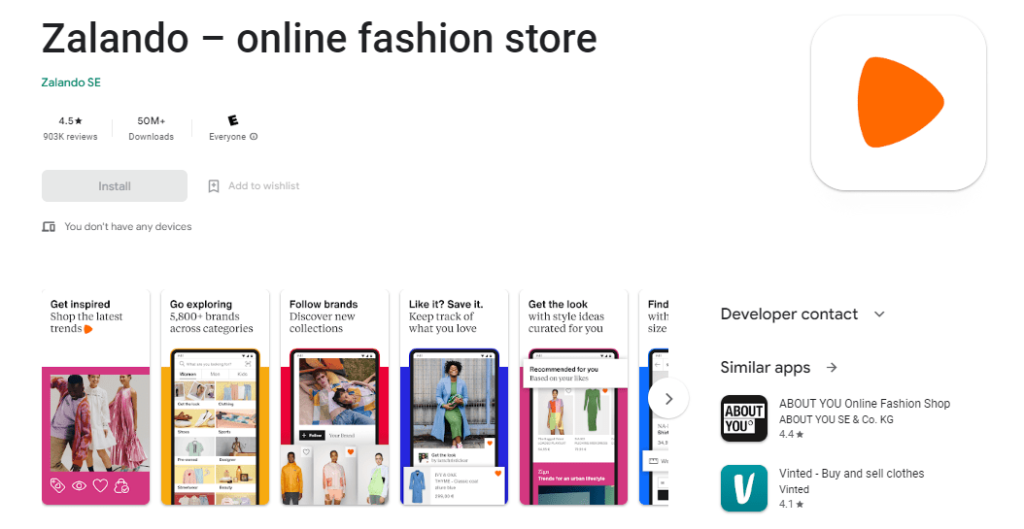
  • Zalando:
Zalando Online Fashion store

Zalando, Europe’s leading online fashion and lifestyle retailer, uses React to build its eCommerce website, offering customers a wide range of clothing and accessories from various brands.

  • Airbnb:
Airbnb

Airbnb, the popular home-sharing platform, uses React to build its user-facing apps, including its search, booking, and payment features.

  • Uber Eats:
Uber Eats- Food Delivery

Uber Eats is a food delivery service from Uber. It allows customers to order food from local restaurants and track their delivery in real-time.

  • Sephora:
Sephora app

Sephora, a leading beauty retailer, uses React to build its eCommerce website, providing customers with a wide range of beauty and skincare products from various brands.

  • Myntra:
Myntra App

Myntra, India’s leading online fashion and lifestyle retailer uses React to build its eCommerce website, offering customers a wide range of clothing, footwear, and accessories from various brands.

Other Use Cases Of React

The following are just a few examples of how React can be leveraged for creating user-centric experiences.

Single Page Apps with User-friendly Experience 

Single-page apps (SPAs), much like Facebook, offer an experience that loads data in real-time within the same page. React’s comprehensive library makes it easier to create an engaging UI that efficiently organizes and displays information. Furthermore, React-powered SPAs are SEO-friendly.

Incorporating Interactive Elements in User Interface

React’s declarative UI approach is suitable for creating personalized and interactive experiences that load quickly. With React, you can develop UI-driven designs that encourage users to engage with the app and stay longer.

Fast-loading Web Apps 

Creating complex and interactive experiences can often be a performance bottleneck, but React’s Virtual DOM functionality helps overcome this challenge. Pages load faster by keeping parts of an experience in virtual memory, making it easier for users to navigate complex experiences.

Use ReactJS With Redux For eCommerce

  • ReactJS is a fantastic tool for building eCommerce applications, but it only serves as the view layer.
  • When navigating between web pages, adding items to a cart, or doing other data-related tasks, we need more than just the view layer.
  • This is where Redux comes in, helping to manage and organize your application’s data (or state).

Making Sense Of State

  • The state of a React component can change in response to actions or events, such as a user interaction or a network message.
  • For example, when a user taps a “Start” button in an Android app, the app’s state changes to reflect the navigation to the onboarding screen.
  • The state of an app can include things like what the user sees, what information is being fetched, the URL being displayed, selected items on a page, and error messages.
  • As your app grows and becomes more complex, storing the state within a parent component becomes less practical. This is where Redux comes in, helping to manage and organize the state of your eCommerce web app.

Best Way To Build React eCommerce App Using Redux

The best way to architect a React eCommerce app using Redux would involve the following steps:

  1. Identifying the application’s state: Start by identifying the different states that the eCommerce app will need to manage, such as user details, cart items, and selected products.
  1. Deciding on the state management tool: Decide on the state management tool to use, in this case, Redux.
  1. Implementing actions and reducers: Based on the identified states, implement actions and reducers to manage the state. Actions are responsible for triggering changes in the state, while reducers are responsible for updating the state in response to the actions.
  2. Organizing the components: Organize the components into smart and dumb components, where smart components are connected to the Redux store and handle the application’s state, and dumb components only receive data and callbacks from the smart components.
  3. Connecting the components to the Redux store: Connect the smart components to the Redux store using the ‘connect’ function from the ‘react-redux’ library. This allows the smart components to access the application’s state and dispatch actions to modify the state.
  4. Testing the implementation: Test the implementation to ensure that it meets the requirements and that the components are connected to the Redux store correctly.
  5. Refining the implementation: Refine the implementation based on the test results, fixing any issues and optimizing the performance.

Following these steps, you can architect a React eCommerce app using Redux that is scalable, maintainable, and performant.

FAQs on React for eCommerce Websites

1. Is React a Good Choice for Your eCommerce Website?

Absolutely! React offers the perfect combination of flexibility and performance, making it an excellent choice for eCommerce sites that aim to keep up with the fast pace of business and provide customers with consistently engaging and dynamic experiences that encourage them to complete a purchase.

2. Does ReactJS help in Making a More Interactive Website?

React makes it easy to create customized sites that meet your specific needs, and its performance boost means developers can be more liberal in using interactive elements without worrying about slow loading times. So, if you want an eCommerce website that features personalized product recommendations, video content, and chatbot functionality, React is the way to go.

3. How do ReactJS reduce development Time?

With its reusable components, React streamlines the development process, allowing developers to focus on creating new experiences without having to recreate an entire website from scratch. Plus, site expansion and maintenance become much easier, as changes can be made to individual parts of a page without affecting the rest of the site.

How Cloud Kitchen is Benefiting from Web/Mobile Apps

Have you ever wondered what it would be like if there wasn’t a single food delivery service available on this planet? Got scared? Relax. Food delivery services do exist, and there are plenty of options you can choose from. Want to have a pizza party? Let’s order. Got a late-night craving? Order right away. Problem Solved. The need to wait in long queues in front of restaurants to get our favorite dishes has become history. We live in a world where you name your demand, and service appears right in front of you. No, it does not appear just like that. First, you have to search on your mobile or use apps, but we hope you get a general idea. So let us have a look at this industry: Cloud kitchen.

Well, many of us are familiar with this concept. For those who don’t know, let us put this in simpler words: Cloud Kitchen, a.k.a. Virtual Kitchen is a restaurant that exists only online. It runs without a storefront, so consumers can take away or order their favorites online.

Lifestyle has changed significantly over the years. More people now have jobs, and due to busy schedules, they are inclining toward Food delivery service. More and more people want homely, healthy, and delicious food delivered to their doorstep.

Cloud kitchen market is expected to reach $112.7 Billion in 2030.

So, Many restaurateurs, hoteliers, and budding entrepreneurs are not only taking an interest but also investing significantly in this venture. As you now know, the future of cloud kitchen is like a recipe for success in itself. Its numerous benefits include low investment costs on labor and infrastructure, no fuss about finding a prime location, better reach, compelling marketing, access to user data, higher profit margins, etc.

Cloud kitchens are heavily reliant on websites and Apps

Let’s take a dip into how a slick and engaging cloud kitchen app can benefit the cloud kitchen business. Before jumping onto what things can benefit, you need to keep in mind some fundamental features: A standard sign-in/registration process and dashboard are essential. Additionally, for customers, a secure payment gateway and order tracking feature are most important.

Cloud Kitchen: from store to customer's door step

How web app/ mobile app can benefit cloud kitchen business

Easy and Fun Interaction Experience

How often do people just scroll through the variety of sections endlessly and hardly buy anything? That was a rhetorical question. It is going to happen a gazillion times. Did you think that it won’t happen while ordering food? Well, it can happen as there is fierce competition in cloud kitchen apps. 

But you can stand out by making your user’s experience easy and fun. Turn your targeted audience into loyal consumers by offering them an engaging experience with superb UX and compelling content. We always want to create a buzz-worthy App with mind-blowing features. 

Storage Tracking Management

One of the things that people always need is the management of what they need and don’t need. In Cloud kitchen, it becomes necessary to keep track of all the ingredients so that the business never fails to satisfy consumers’ appetites. An alert system can be set so that it won’t fall short of necessary ingredients.

Consumer Data Analytics

An app developed by a prominent mobile app development company can give you a detailed analysis of what your customers like to order most and least. As you get to know customers’ cravings, you can get an idea of how you can maximize your revenue. With the help of an analytics tool, you may be able to notice things that you may not even think about.

Better Customer Relationship

To turn your desired audience into loyal customers, you need to develop a bond with them. 

You have to make their whole food ordering experience personalized. You can give them recommendations based on their previous orders. And provide them information regarding food quantity, ingredients, and how much you take care of health and hygiene standards. This will help gain their trust, and they will stay with you for a longer period. You can also introduce an incentive program to give your loyal customers rewards from time to time.

Feedback

To give your consumers the best experience, you have to understand their needs and wants too. A feedback system will help you know how the customer’s experience was and what you can do to make it better. After all, A way to a man’s heart is through their stomach, right? No, seriously, A review system can work wonders if you are looking to gain loyal customers.

Also read this: The On-Demand Service Marketplace’s Business and Revenue Model

Technologies that can be used to build an innovative cloud kitchen app

Creating the app, which not only caters to users but also supports the cloud kitchen owner, is a task in itself. However, when you have a clear mindset about what you want and how you are going to ease the consumers’ load, you can reach heights of success. 

If cloud kitchen app development is not your cup of tea, you can always hire a professional IT company like ‘ultroNeous Technologies’ who can help with all the technicalities.

You can get your app developed by using native technologies like Swift, and Java, or cross-platform technologies like Flutter, Xamarin, and React Native. Depending on what you want to offer and what technologies are best for developing the desired features, you may use either approach.

Wrapping up

The Cloud kitchen industry is on the boom. And if you want in on this, then Cloud kitchen apps are a way to go. Nowadays, people want more things with minimal human interaction. So the cloud kitchen apps have the upper hand compared to dine-in restaurants. We’ll help you generate the revenue you need with cloud kitchen app development. If you want to be on cloud nine with cloud kitchen business (pun intended), feel free to get in touch with ultroNeous technologies. Contact us now.

7 Ways How Flutter is Influencing Mobile App Development

Mobile and web-based apps are transforming how we communicate, think and perceive things. App technology is reforming every sector that exists in this world. So if you haven’t thought about making an App for your business, now is the high time.
Why? Well, think of any person you have met. Everyone has a smartphone, and that too, with at least a dozen apps.
Businesses are moving toward Mobile apps in today’s world, where demands are increasing daily. So they can give their particular consumer set one of the best experiences.
There are so many technologies to build and achieve whatever you want. You can develop your App using native technologies like swift and java or cross-platform technologies like Flutter, Xamarin, and React Native. You may use either approach depending on what you want to offer and what technologies are best for developing the desired features, and Flutter releases patches and new features regularly.
Let us take you on a journey through cross-platform app development, Flutter, and how it is influencing the mobile app development landscape. Buckle up!

Table of Content

What is a cross-platform app and why it is so preferred?

Flutter, a cross-platform framework

Main benefits of using Flutter

What you get out of it

Popular apps developed using Flutter

Thoughts

What is Cross-platform app development, and why is it necessary?

Businesses don’t want to spend their time on separate development teams for Android and iOS devices. The UX team has to keep coordinating with them and navigating the projects. It is time-consuming and makes it twice as hard to generate the expected revenue.
Cross-platform app technology is compatible with the different mobile operating systems and allows users to make smooth and robust apps. This gives you a chance to connect with more audiences, and the time and effort you spend developing an app drops by half. Popular cross-platform frameworks are Flutter, React Native, Ionic, and Xamarin. Flutter is widely used in many industries including Automobile, and eCommerce, so it is ideal to hire Flutter developer for app development.

What is Flutter?

Google created this open-source software development kit in 2017. It is an SDK that allows for building captivating apps across multiple operating systems from a single codebase. You can use it to develop applications for both iOS and Android.

Benefits of Using Flutter in App Development

1. Single Codebase

Mobile app developers don’t have to write different codes for different platforms. The framework reduces the efforts not only for developers but for users too. The single codebase and write-once approach are why millions of developers favor it.

2. Hot Reload

Flutter’s hot reload feature allows the to build the widget tree that helps the programmer see changes’ effects. When Developers are coding, they can check the progress and changes simultaneously. It helps them to increase productivity and bug fixing. This also helps them to experiment easily and add customizable features.

3. Effortless Maintenance

Easy maintenance is possible with Flutter. Since it has a single Codebase, developers can check errors and issues without going back and forth again and again. It also improves the application’s performance compared to other app development platforms, making maintenance easy. As the maintenance is efficient, clients don’t have to spend too much on changes and modifications.

4. Support From Google

Being an open SDK from Google, there is a huge community to help speed up the development process and problem-solving. Flutter’s, open for everyone community, provides different tutorials for programmers and a meet-up facility to get in touch with other developers around the world.

5. Performance

According to millions of developers, Flutter is the only framework that provides unmatched speed and quality performance compared to other cross-platform development technologies. It also provides best-in-class security as it complies with native codes.

6. Easy Testing

Since Flutter is a single codebase platform, testing for the App, a crucial part of development, becomes easy. Also, Flutter provides tutorials so that developers have plenty of support.

7. Customizable Widgets

The Complete UI of Flutter is about customizable widgets. These provide style, layout, fonts, colors, scrolling, and navigation customization regardless of screen size. As Flutter offers a range of built-in animations, designers can tailor their apps to suit their needs. These animations include motion effects like transition, sliding, etc. It is possible to customize them as well.

How Can You Benefit from Flutter?

  • Development is cost-effective:
    • When you don’t have to use different platforms for different app development, the cost of making your desired App becomes less. You don’t have to separate teams for the same applications.
  • Fast time to market:
    • Flutter is one of the best choices when you need the quick launch of your desired App. It offers the best UI and flawless UX with reliable and faster results.
  • International reach:
    • When you want to reach an international audience, Flutter makes it easy by giving support in 20 Different languages. The SDK Simplifies localization with built-in features, including currencies, dates, units, etc. Now, if you want to increase your reach with Flutter, we are a flutter app development company, and we always want to give the best of the best.
  • Superb user experience:
    • Since using Flutter, You don’t have to rely on platform-specific UI components. It also makes it possible to share the UI and business logic, which ultimately saves time and effort while customization and does not affect the end product’s performance.

The following companies are using Flutter for their Apps

Source: Flutter

Closing Up

To build an app that reaches a broader set of audiences, Flutter is making its mark on Cross-platform mobile development technologies. It is one of the best choices when you want to deliver quality products/services and also need a wide range of solutions to deliver the best.

Flutter is quick, adaptable, and efficient, so businesses can build robust apps based on their requirements and achieve high-quality results. Do you have unique ideas or want to reach your desired audience with minimal effort? Feel free to get in touch with ultroNeous. Contact us now.

Farming Apps: The Next Generation Solution for Agricultural Businesses

The farmer app, which is becoming more and more popular in the twenty-first century, is the main type of mobile technology. Farmers are all in when it comes to using new and emerging technology to grow their businesses. When we think of agriculture, pictures of tractors, bullock carts, and people working hard in the fields spring to mind. However, everything has changed with the new technology which has penetrated every field including agriculture. Because of the spread of mobile technology, both developed and developing countries have come up with new ways to help farmers. Let’s look at how mobile apps can help in the farming business.

How Mobile Applications Can Help in the Farming or Agriculture Industry?

Mobile applications come with various features allowing the farmer to increase their productivity within a short period of time. 

Mobile apps can boost agricultural output and intelligently link farmers with other farmers. The farmer can share their knowledge with each other with the help of mobile applications. A farmer needs to be able to predict the weather because it helps them make better decisions about their crops. Mobile apps are one which can provide the weather forecast so, that the farmer can take the right decision at right time. 

Soil analysis and water management are essential parts of farming. Mobile applications can gather soil data and water needs from a variety of sources, allowing farmers to be more precise in their decision. Through mobile apps, farmers can capture each piece of land data and animal behavior data. Paperless records and reports are no longer necessary. Similarly, Geographical Information Systems may be used to provide farmers with early warnings about pests and animal illnesses so, they can respond on time.
So, mobile apps can be a fruitful solution for your agriculture industry to modernize agriculture and increase revenue. If you are willing to maximize revenue through the agriculture app, hire a mobile app development company to help you out.

Farmer App for Next generation of Farming Solution

Benefits of Farmer App  

Farmers must adopt modern technologies in farming and agriculture to fulfill the food demand. One of the emerging modern technology includes farmer app development which can assist farming and agriculture output.

Farmers will benefit greatly from agricultural applications, which will have a substantial impact on the business. They provide several benefits for your agriculture industry, including the following.

Easy Market Access and Expansion

Every business should have a good market to sustain in the competition. The farmer too needs market knowledge. The farmer apps are particularly significant for farmers who live in rural regions.

Farmer apps provide details about the market demand and supply, through which farmers can decide the price they should sell. This will help the farmer to get more revenue from their production. 

Weather Forecasting

Weather is a key component for the farmer that helps them make better decisions about their crops.

The farming app can predict whether the weather will be gloomy or sunny beforehand. So, they choose the crops to plant and the field of work for the day based on the weather prediction. They might also take vital preventative measures to protect their products from the effects of climate.

Getting in Touch with Experts and Doctors

Various problems and diseases may be seen in the plants and animals raised by the farmer. So, they require experts to solve the problems on time.

Farmers may quickly contact experts via the farming app if they required assistance. They may communicate through chat or use the app’s video calling feature available on the app. Further, farmers can also seek professionals and experts for advice on how to handle diseases or illnesses in crops through the app. This will help the farmer to solve the problem immediately.

Increasing Efficiency 

Like any other business, agriculture businesses can take benefit from technological advancements that allow them to boost efficiency.

High-tech equipment combined with mobile applications increases productivity tremendously. Farmers can save time and become more effective by integrating smart irrigation equipment, enhanced communication, GPS trackers, and smart monitoring systems in their agriculture industry through apps.

Also Read: The Benefits of Food Delivery Apps for Restaurant Businesses

Future of Farming Apps 

The beauty of digitization is that it can be used on any size farm. According to Farm Journal Media’s research, 59 percent of farmers use smartphones, and 44 percent use tablets. In this scenario, mobile apps will assist us in entering Agriculture 2.0 leaving behind the traditional agriculture methods.

The use of digital technologies and data science in farming apps allows for the transfer of information and farmer “know-how” in ways that have never been feasible before. Furthermore, agricultural digitization has given farmers, as well as stakeholders at various levels of the agroecosystem, a better understanding of the processes involved in food production and distribution. With certain cloud-based management apps, managing the full agricultural business, including harvesting, spraying, and playing, has become as simple as clicking a button. As a result, the overall agriculture industry has been taking a lot of advantages through farming apps.

So, the use of farming apps in the agriculture industry is skyrocketing day by day. It is certain that most of the farmers who haven’t adopted farming apps are going to adopt farming apps in near future. The future of agriculture is going to be agriculture 2.0 with the use of farming apps.

So, it’s your time to adopt agriculture apps for your agriculture industry. Don’t be late, get your app developed right away and move your traditional agriculture to modern agriculture 2.0.

Conclusion

Our daily lives are being increasingly dominated by technology. The advancement of technology provides farmers with several options to develop their agriculture industry. Not only that, but it also boosts productivity. They don’t have to move about the farm to keep an eye on their crops or make a prediction about what the weather will be like in the near future. Agriculture apps have completely transfigured traditional agriculture to the next level. We also provide dynamic multiple-farm management, allowing agricultural firms to manage all of their farms from a single location. These solutions include cultivation, product, and procurement management, all of which contribute to increased production. ultroNeous help you with all your farming mobile application development, contact us now for more details.✔

Impact of Mobile Applications on the Healthcare Industry

Healthcare organizations are exploring the use of mobile apps to provide exceptional services beyond their geographic boundaries. In recent times, mHealth apps have gained significant traction as they redefine the healthcare ecosystem. They play a critical role in extending the reach of the medical and healthcare industry by enhancing efficiency, communication, and the quality of care services. Did you know that according to research, the mHealth Market size was valued at approximately USD 56 billion in 2020 and is projected to grow at over 30% CAGR from 2021 to 2030? Statista also estimates that the mobile health industry is expected to surpass $189 billion by 2025. In this blog post, we will discuss the advantages of mobile health apps and help you understand why investing in them is a worthwhile endeavor to provide more patient-centric care. Are you interested? Let’s explore this further.

What are the types of healthcare apps?

Healthcare mobile apps are digital tools that operate on smartphones and tablets, revolutionizing the delivery of healthcare services beyond traditional care settings. They are considered an innovative resource to enhance healthcare professionals’ productivity and improve patients’ health outcomes. These apps can be broadly categorized into several groups, including clinical reference and diagnostic apps, telemedicine apps, health management apps, and wellness and fitness apps.

  • Clinical reference and diagnostic apps help doctors and practitioners manage their clinical practice and perform medical exams. 
  • Telemedicine apps enable virtual patient care by licensed practitioners and doctors. 
  • Health management apps assist individuals in assessing their health conditions such as diabetes, mental health, cholesterol level, heart rate, and more. 
  • Wellness and fitness apps include nutrition-tracking apps that help count calories, stress-management apps, sleep apps, and other tracking apps that support individuals in leading healthier lifestyles.
Healthcare app development

How can healthcare app development assist doctors and medical professionals? 

Undoubtedly, mobile app development for the healthcare industry has simplified the lives of medical professionals. Mobile apps cover all aspects of healthcare such as emergency response, health monitoring, maintaining health records, clinical documentation, treatment tracking, and enabling direct communication with patients regularly. For instance, medical facilities that utilize mobile app services can handle emergency cases with greater efficiency. Upon using the app, alerts doctors about the emergency and transmits all critical information to their device, saving valuable time and enabling doctors to prepare in advance for such situations. Furthermore, healthcare mobile apps aid medical providers in speeding up documentation and treatment procedures, which can be life-saving in critical situations.

Benefits of Mobile App Development on the Healthcare Industry

Mobile app development has had a tremendous impact on the healthcare industry. Here are some of the ways mobile app development has influenced the industry:

Improved Patient Care

Mobile apps have made it easier for patients to access healthcare services and information. Patients can now schedule appointments, receive reminders, and access their medical records from their mobile devices. Mobile apps have also enabled healthcare providers to remotely monitor patients’ health, track medication adherence, and provide telemedicine services.

Enhanced Communication

Mobile apps have improved communication between healthcare providers and patients. Patients can now communicate with their healthcare providers via secure messaging or video conferencing. This has improved the accessibility of healthcare services, especially for patients in remote areas.

Increased Access to Information

Mobile apps have increased access to healthcare information for patients. Patients can now access information on various health conditions, symptoms, and treatments from their mobile devices. This has empowered patients to make informed decisions about their health.

Improved Patient Engagement

Mobile apps have improved patient engagement by providing patients with interactive tools to manage their health. Patients can now track their diet, exercise, and medication adherence through mobile apps. This has improved patient outcomes and reduced healthcare costs.

Effortless Payment

With mobile healthcare applications, payments for medical bills have become more convenient for both patients and hospital staff. Long queues and waiting times are no longer an issue, as secure payment gateway integration allows for hassle-free transactions in just a few clicks. Users can choose their preferred payment method, such as debit or credit card, and even connect with their insurer if needed, all through the app’s highly secure payment system.

Upgraded Medication Alerts 

Numerous healthcare applications incorporate electronic reminders to notify patients of upcoming appointments with specialists, prescription renewals, and other therapy-related tasks. These alerts provide patients with greater autonomy over their treatment regimen, as they need not worry about forgetting a scheduled session. In addition, these automated reminders eliminate a substantial portion of tedious and repetitive administrative tasks, resulting in a better patient experience.

Improved Data Handling 

Healthcare institutions handle copious amounts of personal data daily. As a result, organizing this data is crucial. When healthcare apps are integrated with EHR, they automatically capture important patient information from connected devices or wearables and store it in the system. This facilitates the creation of a comprehensive profile for each patient and ensures compliance with HIPAA regulations by healthcare providers.

Improving Medical Settings with IoT Integration 

Incorporating IoT-connected healthcare apps, such as fitness trackers and other wireless gadgets such as glucometers, blood pressure, and heart rate monitors, provides real-time monitoring capabilities to physicians, enabling them to obtain precise medical information about their patients regardless of location or time. Moreover, ultrasounds, electrocardiograms, thermometers, and other devices are gradually becoming interconnected, allowing patients and medical personnel to monitor their health status.

The data collected by IoT medical devices empower doctors to make informed decisions and provide exceptional care.

How ultroNeous can assist you on your journey of mobile app development? 

We have created numerous distinctive and inventive mobile apps for our clients, intending to assist organizations and providers in developing exceptional tech solutions that would be embraced and loved by customers. Given our experience in developing top-of-the-line mobile apps for various industry domains, we understand that the key to success is delivering an engaging user experience. Hence, if you are planning to launch a healthcare mobile app or would like to learn more about mobile health technology, get in touch with our growth strategists right away.

FAQs

Are mobile apps secure for healthcare use?

Yes, mobile apps are secure for healthcare use. Developers of healthcare mobile apps must comply with strict security standards to protect patient information.

How do mobile apps improve patient outcomes?

Mobile apps improve patient outcomes by providing patients with tools to manage their health, and access to information, and improving patient engagement.

Can mobile apps replace traditional healthcare? 

No, mobile apps cannot replace traditional healthcare. Mobile apps are meant to complement traditional healthcare by improving accessibility, efficiency, and patient engagement.

What is Progressive Web App (PWA)?

It’s been more than a decade, where Android and iOS are the two major market shareholders, and both platforms are written with different principal and programming languages. Many businesses are confused about developing an app or a website. There comes the “Progressive Web App“, is it an app or a website? Sure, it looks like any app but opens up in your browser. We cover the PWA in-depth below.

Table of Content

PWA explained

How it works

Why PWA in the first place

Benefits of PWA

Conclusion

Progressive Web App Explained

The most straightforward definition of a progressive web app is a browser-based application that has the appearance and capabilities of a native mobile app. They are applications that are developed utilizing web-based technologies such as HTML, CSS, and JavaScript, among others. Progressive web applications can be run in any browser and are built to be very responsive. They can include all the features and functionality of native mobile applications, as well as a mobile design. Progressive web apps are designed to take over Native mobile app functionality without forcing the end-user to go to an app store or play store to buy or download something. Progressive web apps are developed with React and similar frameworks, hiring a React developer is ideal for developing a progressive web app.

The main advantage of progressive web applications is it doesn’t ask the user to go to an app store and download an app. Instead, users can get access to the app directly from the internet by clicking on a link or by a simple google search. This reduces the barrier to use, resulting in skyrocketed user engagement with applications.

Furthermore, like a smartphone app from an app store or play store, they can send web push alerts, function offline, and be accessed from the home screen. Tech giant like Tinder, Twitter, Alibaba, Pinterest, Uber, TikTok, Spotify, and Jumia has adopted progressive web apps for their business due to their ability to function on both Android and iOS without much change.

Two screenshots of Twitter screen on the Native Android App and another on Browser based Progressive web app

As you can see from the above picture, Twitter’s native android app and web app are identical, and the web app gives the same look, feels, and similar functionality of a native android app on a browser. JavaScript library like React is ideal for front-end development.

How Does a Progressive Web App Work?

A PWA must be downloadable and installable on your device (phone, tablet, PC, or Mac), with an app icon/shortcut and all. Each time a user accesses a progressive web app, it will download updates automatically in the background. When you update your web application, not just visitors to the app site, but also PWA users, will receive access to all new features without having to do anything.

A service worker script in a PWA which runs on the browser is responsible for doing background operations like alerts, push messages, and sync. When a user interacts with a PWA, the PWA can check their device’s capabilities and run a service worker script in the background to perform the task. To, store and display the details like the program’s icon, background color, name, short name, and so on to the user, PWA consists of a simple JSON file known as a Web app manifest. Only when PWA is launched does it start running in the background. This is how the progressive app works.

Why Progressive Web Apps?

Every business needs to target customers on mobile devices to get a fruitful outcome from their business. The major concern is how to target customers. The major options to target the mobile audience is building a responsive website, developing a native app, or developing a progressive web app.

You could build a web platform to target a mobile audience, however, web apps have typically been less powerful than native apps and are often found to deliver a less pleasant user experience. Native applications offer the best user experience, but they’re only available on a few devices and have adaptation barriers. The native app involves a longer process to operate, which most people don’t prefer. In such a scenario, the progressive web app is the optimal solution for your business with every feature of Native apps and web apps such as push notifications and add to Home Screen and offline functionality.

What can a Progressive Web App do for you?

Web App comes with a lot of new, powerful features that make big changes to how you use the web. Take a look at some ways progressive web apps may help you, both as a business owner and as a user.

For owner

  • Save your expense.
  • Increase conversion rate.
  • Skyrocket organic search traffic.
  • Improve user experience.
  • All the aforementioned lead to improved overall performance and client engagement, as well as increased revenue.

For users

  • Save your time.
  • Better, more intuitive experience.
  • Makes for accessible as you can browse offline.
  • Save data uses.

Conclusion

Progressive Web apps are flexible to use as they can be installed directly on the device through the website. It also comes with the app’s features such as push notifications, adds to Home Screen, and offline functionality. This will provide users with a more App-like experience on their smartphone without any long process. So, progressive web apps are an ideal solution for your business to increase revenue.

As a result, creating a progressive web app for your company is a tried and true method for competing in the worldwide market. If you want to build a Web App for your business, ultroNeous Technologies gives consultation for web app development services.

Let’s Discuss your Idea.